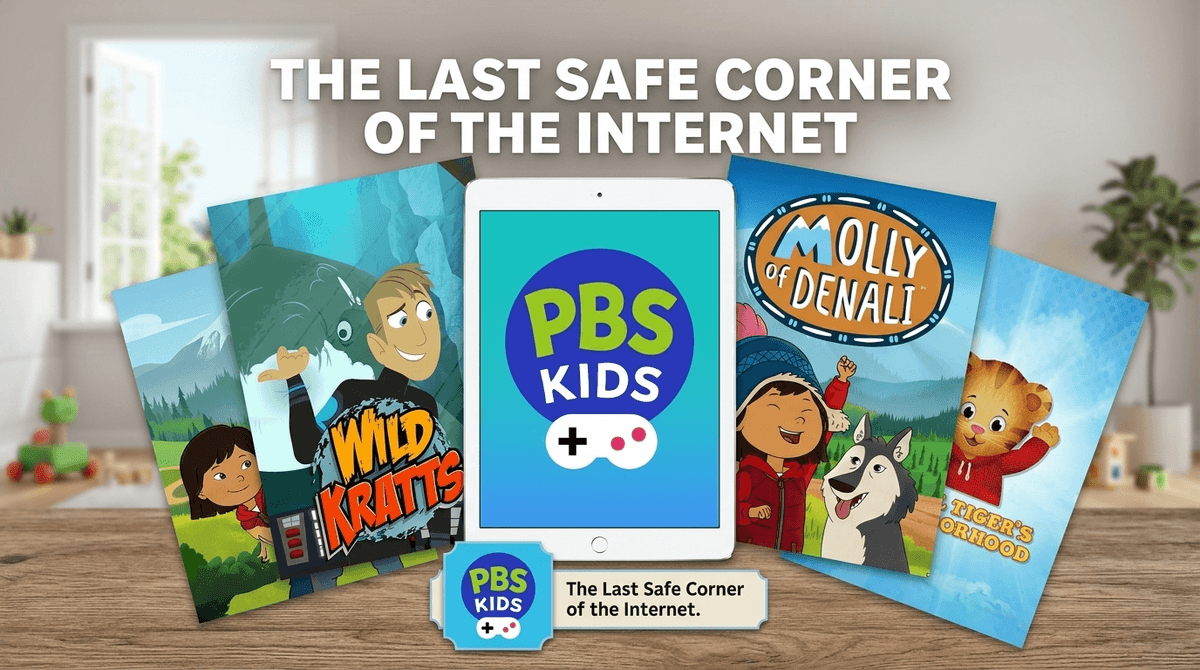
PBS Kids is the closest thing to a guilt-free kids' app that actually exists. | Screenwise

A parent’s playbook

PBS Kids is the closest thing to a guilt-free kids' app that actually exists.

Built for ages 2–8. Hand it over without hovering — just set a timer and download a few games for the road.

WISE 95

The bottom line

The unicorn of kids' apps—educational, ad-free, safe, and actually fun. PBS nailed it.

This is the app you can hand to your preschooler without guilt.

PBS Kids Games is what every kids' app should be but almost none are: genuinely educational, completely safe, ad-free, and designed by people who actually understand child development.

The 250+ games aren't just digital candy—they're curriculum-based activities that teach math, reading, science, and social-emotional skills through characters kids already love.

No predatory monetization, no chat features, no surprise content.

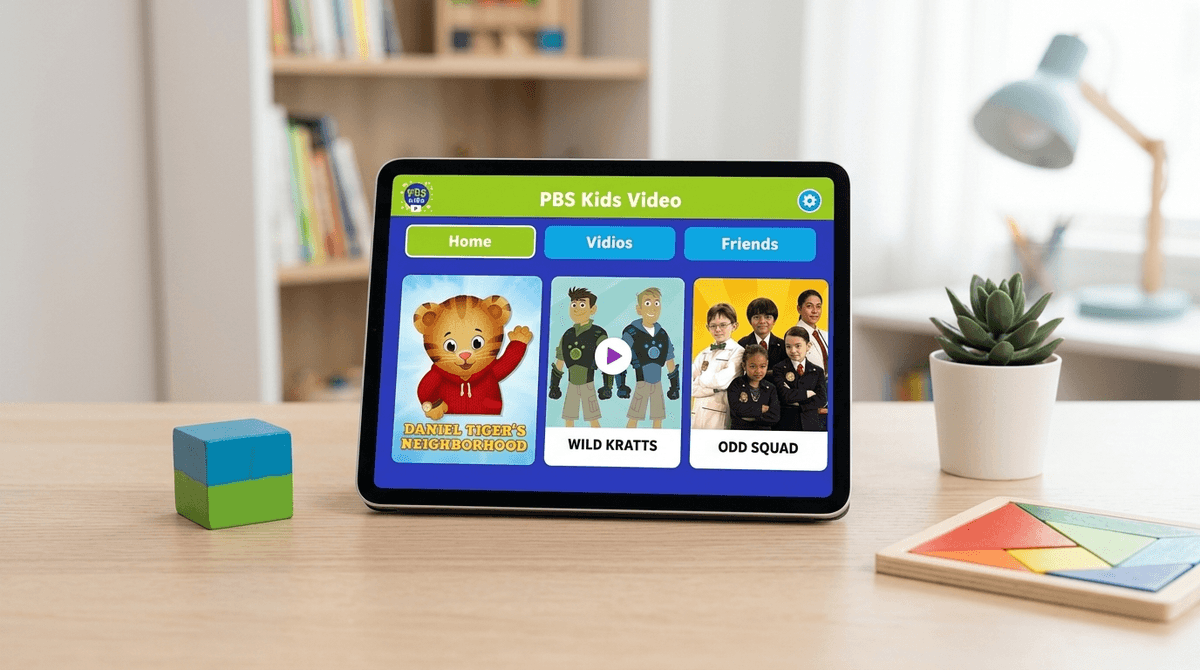
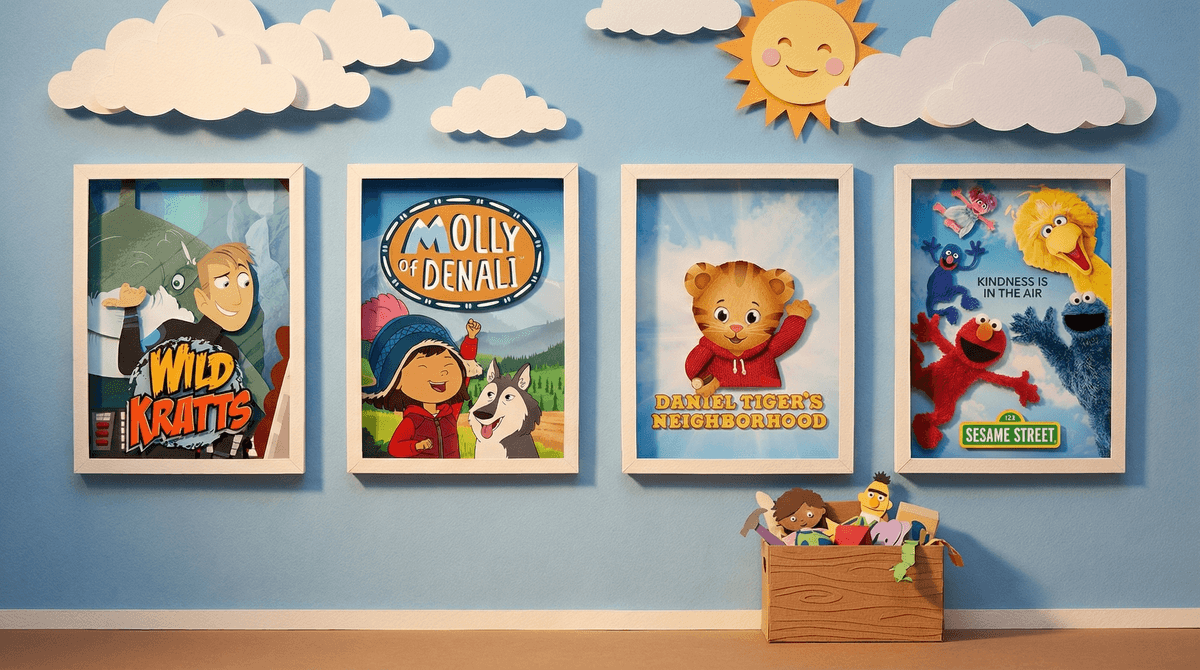
Just Daniel Tiger teaching feelings, Wild Kratts exploring animals, and Alma solving problems.

The offline download feature is clutch for travel, and the bilingual support is a nice bonus.

Yes, it's still screen time, and yes, balance matters.

But if your kid is going to use an app, this is the one to choose.

PBS continues to be the MVP of children's media.

Wholesome

98/100

PBS Kids Games delivers the gold standard of wholesome content for young children. Every game features beloved educational characters modeling kindness, cooperation, and emotional intelligence (Daniel Tiger, Rosie, Alma). The interface is designed specifically for kids with no chat features, no web browsing, and zero commercialism. Games explicitly teach social concepts like mindfulness, emotions, and healthy routines. This is as emotionally healthy and age-appropriate as digital content gets.

Imaginative

82/100

The app offers 250+ games spanning creative activities (art, dress-up, coloring), exploration (mazes, puzzles), and STEM challenges. Shows like Wild Kratts and Elinor Wonders Why encourage curiosity about nature and science. Games are designed to spark creativity and imagination according to the description. However, these are ultimately guided mini-games rather than open-ended creative tools—kids follow prescribed activities rather than building entirely from scratch. Still, for the preschool/early elementary set, the variety and character-driven play invite solid imaginative engagement.

Safe

99/100

Multiple independent sources confirm this is exceptionally safe. Bark.us explicitly states 'no chat or web browsing features' and '100% wholesome and educational games.' Common Sense Media calls it 'safe, kid-friendly.' PBS Kids has a transparent privacy policy and has won multiple Kidscreen and Webby awards. The app is free with no ads, no in-app purchases, no social features, and downloadable for offline play. Parents have full control over device storage. This is about as safe as a kids' app can be.

Enriching

94/100

This is curriculum-based educational content designed by PBS, the number one educational media brand for kids. Games cover math, science, reading, art, and social-emotional learning for ages 2-8. Common Sense Education praises 'strong learning design and attention to kids' cognitive, social, emotional, and physical development.' New games added weekly keep content fresh. Bilingual support in English and Spanish adds language enrichment. Parent resources include learning goals for each show. The app is explicitly designed to build STEM skills, creativity, and healthy habits while being genuinely entertaining with characters kids already love.


Is PBS Kids right for your kid specifically?


The PBS Kids Games app is what every kids' app claims to be and almost none actually is: completely free, zero ads, zero in-app purchases, no chat, no web browsing, and 250+ games that are genuinely curriculum-backed. Daniel Tiger teaches emotional regulation. Wild Kratts builds science vocabulary. Alma and Rosie teach in English and Spanish. The whole thing was built by the same organization that's been producing rigorous children's educational media since 1969.

What the app actually feels like in practice: a digital Saturday morning. Your kid taps on a Wild Kratts creature-adventure game, learns something real about animal adaptation, moves to a Daniel Tiger feelings puzzle, and never once encounters a pop-up, an upsell, or a YouTube-style autoplay into chaos. The interface is clean enough for a two-year-old to navigate independently.

The WISE scores land at 98 / 82 / 99 / 94 — Wholesome, Imaginative, Safe, Enriching. The 99 for Safety reflects what Bark.us confirmed independently: no chat, no web, no ads, COPPA-compliant, fully downloadable for offline play. The 94 for Enriching reflects real curriculum design — Common Sense Education praises the "strong learning design and attention to kids' cognitive, social, emotional, and physical development." The 82 on Imagination is honest: these are guided mini-games, not open-ended sandboxes. A kid who wants to build a Minecraft world from scratch will find the PBS app too scripted. A kid who loves Daniel Tiger and wants to play alongside him will be completely absorbed.

The age window is real. For 2- to 5-year-olds, this is the obvious first app. For kindergarteners and early elementary kids (6–8), the math, reading, and science games grow with them. Odd Squad's logic puzzles and Xavier Riddle's history challenges are legitimately engaging for a smart second-grader. But once a kid hits third grade and starts wanting multiplayer, creation tools, or anything with stakes, they'll find the PBS ecosystem too small.

The honest parent's read: this is the one app you can hand a preschooler without guilt and hand a kindergartener without monitoring every thirty seconds. PBS has been making children's educational media longer than most parents have been alive, and the Games app is the distillation of everything they know about how young kids actually learn. It isn't flashy. It isn't trying to eat your child's attention for profit. That is, in 2026, a genuinely rare thing.


The one thing to watch out for: The "It's Educational" Halo Effect.

The single most common pattern with PBS Kids: parents see the PBS logo, feel the educational glow, and let screen time drift longer than they intended. "It's Daniel Tiger" becomes the rationalization for a second hour. The app itself is excellent — but screen time is still screen time, and the research on young children (especially under 5) is consistent: even high-quality media benefits from a limit and from a grown-up occasionally sitting alongside to extend the learning into a real conversation. The PBS app gives you great raw material. It doesn't replace the debrief.

The other thing worth knowing: some kids will hit the creative ceiling quickly. The 250+ games are genuinely varied, but they're all structured mini-games — your kid steers through prescribed activities rather than building something entirely their own. A child who's deeply into open-ended construction, storytelling, or creative tools may exhaust what PBS offers faster than you'd expect. If your kid is already demanding more autonomy, Scratch Jr or the Piknik app fills a different need — creation, not guided play.

One more thing: the app is rated for ages 2–8, and that upper bound is real. Many 8-year-olds will still enjoy pockets of it, but the majority of kids hit a wall around age 7 or 8 where PBS Games starts feeling babyish. When that happens, it's worth having a plan for what comes next — because the jump from the PBS walled garden to the open internet or platforms like Roblox is a large one, and kids who hit that wall without an intermediate step sometimes land somewhere their parents didn't anticipate.


Where to start.

Daniel Tiger's Neighborhood Games

**The emotional-intelligence on-ramp.** The Daniel Tiger section is the right first stop for kids 2–5. Games teach feelings identification, calming strategies ("ugga mugga"), and daily routines in the exact same gentle register as the show. If your kid watches the show, they already trust Daniel — and that trust transfers immediately to the games. Perfect for the 2–4 set starting from scratch.

Wild Kratts Creature Adventure Games

**The science hook for kids who love animals.** Wild Kratts games are where the app shines brightest for 5–7-year-olds with any curiosity about the natural world. Kids activate creature powers, learn real animal facts, and move through challenges that build vocabulary and classification skills. The production values match the show, and the games reward kids who've seen episodes — but they work cold too.

Odd Squad Math Games

**The surprise sleeper for 6–8-year-olds.** Most parents don't think of Odd Squad as the math game destination, but it is. The show's logic-puzzle DNA translates directly into the games: kids solve number problems to defeat villains, with genuine escalating difficulty. For a kid on the older end of the age window who finds the app babyish, Odd Squad is often the entry point that changes their mind.


After they play.

A few things worth asking when they put the controller down:

  • Wild Kratts games have you activating creature powers — if you could have any real animal power, which creature would you pick and why?
  • Daniel Tiger uses the 'ugga mugga' calm-down trick in the games. Did any of those strategies feel like something you'd actually try when you're upset?
  • The Odd Squad games are all about solving problems with math. Did any of the puzzles trip you up? How did you figure them out?
  • Alma's Way games work in both English and Spanish. Did you try switching languages? What was different about it?
  • If you could design a new PBS Kids game for any show, what would the rules be — and what would kids learn?

If PBS Kids is too fast-paced

Slow it down.

Calmer alternatives across shows, games, and books — for the youngest viewers or for winding down before bed.

Browse all rated media

If your kid has outgrown PBS Kids

Graduate to these.

Same warmth, slightly older audience. Mix of shows, games, movies, and books for kids ready for more plot.

Browse all rated media


The extended universe.

Featured Media

What other families are actually doing.

The next time your kid says “but everyone” about a phone, a TikTok account, or a new app — here’s the actual data by grade.

What kids are watching, by grade

Sign in to personalize this guide with data from families in your school, city, and community

YouTube Access by Grade

No YouTube
Supervised
Independent

TV Access by Grade

No TV
Has TV

FAQ.

Real questions parents actually ask about PBS Kids


Go deeper

Read more.

More PBS Kids-adjacent guides — episode breakdowns, comparisons, voice-tested takes on related shows, and the screen-time conversations every parent eventually has.

The PBS Kids App: Your 'Guilt-Free' Parenting Secret Weapon

The PBS Kids App: Your 'Guilt-Free' Parenting Secret Weapon

Everything you need to know about the gold standard of ad-free, educational screen time for toddlers and preschoolers.

Read the guide
The Best PBS Kids Learning Apps: Screen Time You Can Feel Good About

The Best PBS Kids Learning Apps: Screen Time You Can Feel Good About

Educational games and videos from Daniel Tiger, Wild Kratts, and more—what makes PBS Kids apps stand out.

Read the guide
PBS Kids Video: The No-Guilt MVP of Your Digital Parenting Toolkit

PBS Kids Video: The No-Guilt MVP of Your Digital Parenting Toolkit

Escape the YouTube rabbit hole with a free, ad-free sanctuary designed by actual educators for your preschooler or early elementary student.

Read the guide
PBS Kids: Is it Still the Gold Standard for Safe Screen Time?

PBS Kids: Is it Still the Gold Standard for Safe Screen Time?

Cut through the noise to see why this ad-free 'walled garden' remains the best first app for your preschooler's digital diet.

Read the guide
Beyond the Alphabet: PBS Kids Shows That Actually Teach Emotional Intelligence

Beyond the Alphabet: PBS Kids Shows That Actually Teach Emotional Intelligence

Your guide to the shows that help little ones navigate big feelings, friendship hurdles, and the art of the apology.

Read the guide
PBS Kids Apps Ranked: Which Ones Are Actually Worth the Download?

PBS Kids Apps Ranked: Which Ones Are Actually Worth the Download?

A parent's guide to the best educational apps from PBS Kids, from Daniel Tiger to Wild Kratts.

Read the guide
Best PBS Kids Shows: 15 Top-Rated Programs for Toddlers

Best PBS Kids Shows: 15 Top-Rated Programs for Toddlers

Daniel Tiger and Wild Kratts lead our rankings for educational value. See which shows are best for toddlers and what they actually teach your kids.

Read the guide
The Daniel Tiger Effect: Turning PBS Kids Into a Tool, Not a Crutch

The Daniel Tiger Effect: Turning PBS Kids Into a Tool, Not a Crutch

Leverage the gold standard of educational media while building healthy boundaries and smooth transition habits for your little learner.

Read the guide
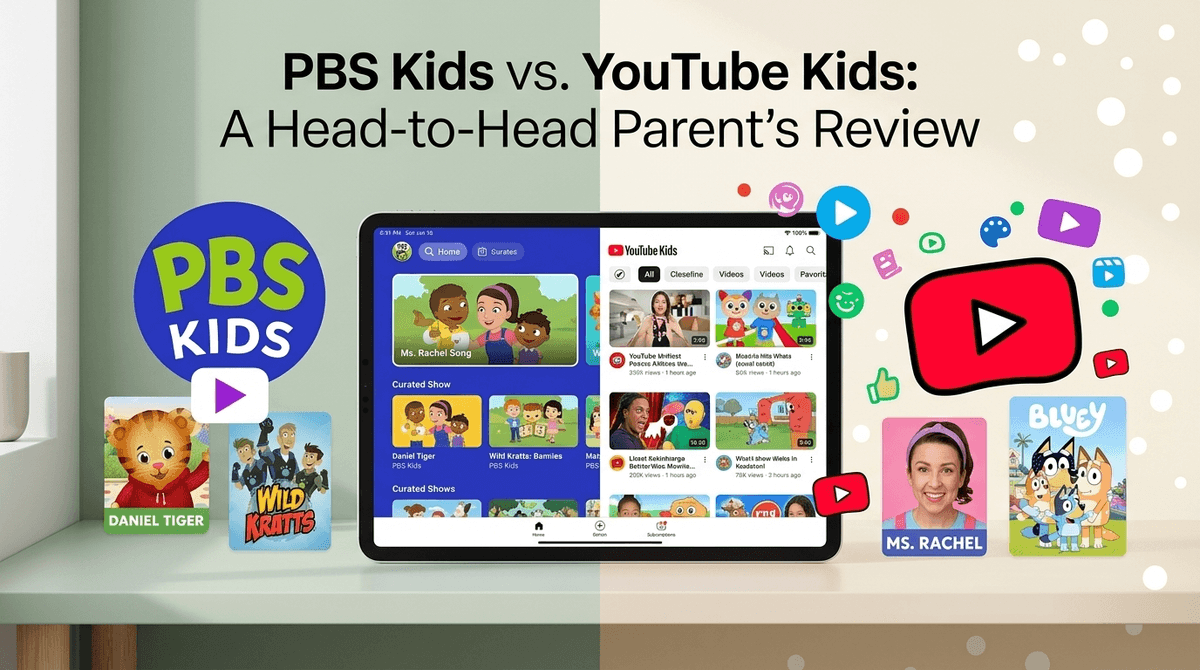
PBS Kids vs. YouTube Kids: What’s Actually Different?

PBS Kids vs. YouTube Kids: What’s Actually Different?

From curated curriculum to algorithmic rabbit holes, learn which platform fits your family's boundaries and your kid’s brain.

Read the guide
Is PBS KIDS Games App Safe? No Ads or In-App Purchases

Is PBS KIDS Games App Safe? No Ads or In-App Purchases

Yes, the PBS KIDS Games app is 100% safe and COPPA compliant. It has zero ads and no hidden in-app purchases, making it perfect for preschoolers.

Read the guide
Life After Daniel Tiger: When Your Kid Outgrows PBS

Life After Daniel Tiger: When Your Kid Outgrows PBS

Learn how to navigate the bridge between the safety of the 'walled garden' and the wilder world of streaming and gaming for your elementary child.

Read the guide
From Daniel Tiger to Bloxburg: Navigating the Big Jump from PBS Kids to Roblox

From Daniel Tiger to Bloxburg: Navigating the Big Jump from PBS Kids to Roblox

Learn how to manage the shift from curated educational content to the social, creative, and sometimes chaotic world of user-generated gaming.
Read the guide
From Curiosity to Coding: The Best PBS Kids Shows for Building Preschool STEM Interest

From Curiosity to Coding: The Best PBS Kids Shows for Building Preschool STEM Interest

Turn screen time into a learning lab with the top shows that teach inquiry, engineering, and coding logic to your little scientist.

Read the guide
Xavier Riddle Review: Best for Ages 4-7 (PBS Kids Guide)

Xavier Riddle Review: Best for Ages 4-7 (PBS Kids Guide)

Xavier Riddle and the Secret Museum is ideal for kids ages 4 to 7. It teaches history through time travel with very low 'scary' factors. Read our full review.

Read the guide
The PBS Kids Playbook: High-Quality Screen Time for Toddlers

The PBS Kids Playbook: High-Quality Screen Time for Toddlers

Navigate the 2026 guidelines and discover why these free, ad-free apps are still the gold standard for early learning.
Read the guide

Want recs for your kid specifically?

Take the 5-minute Screenwise family survey. We’ll use it to surface the shows, games, and books that actually fit your kid — not just the generic top 10.
Take the 90-second Gut Check