

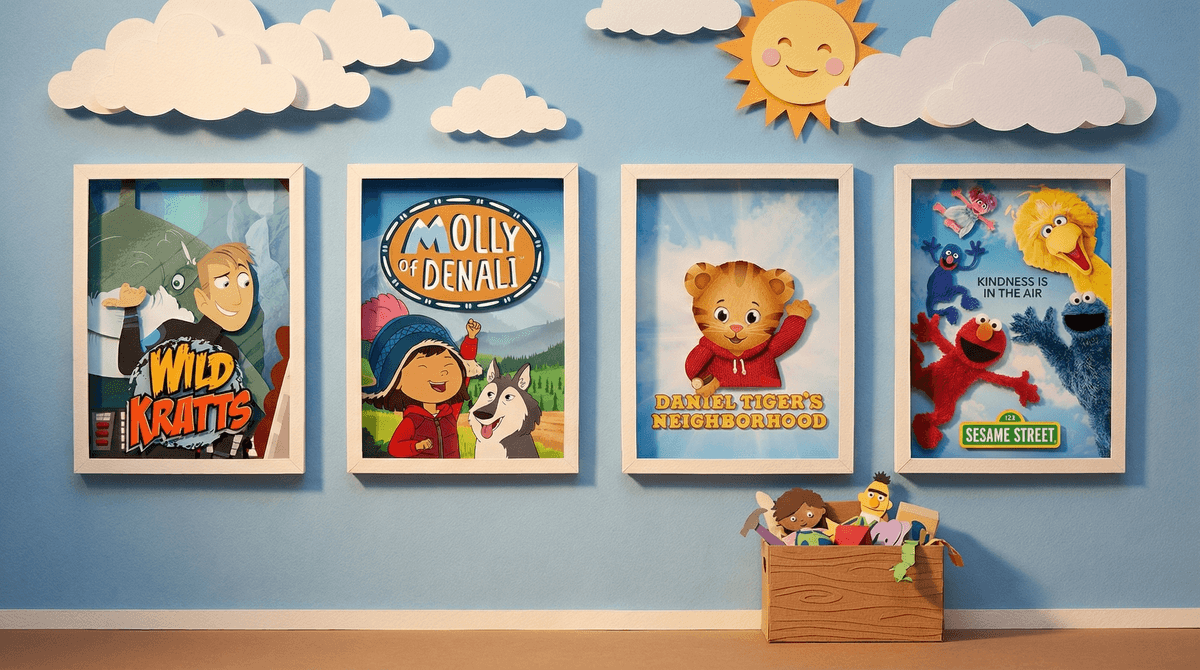
Look, if you're reading this, you probably already know what PBS Kids is. It's that safe harbor in the chaotic sea of children's content—the place where you can confidently hand your toddler the remote without worrying they'll end up watching unboxing videos or whatever fever dream YouTube's algorithm serves up next.
PBS Kids shows are publicly funded educational programs designed for children ages 2-8, and they've been the gold standard for quality children's programming since before most of us were parents. Think Daniel Tiger's Neighborhood, Wild Kratts, and Sesame Street. These aren't just babysitters—they're curriculum-based, research-backed, and genuinely trying to teach your kid something beyond how to beg for toys.
But here's the thing: not all PBS Kids shows are created equal. Some are absolute gems that'll have you watching alongside your kid. Others are... well, they're fine. They won't rot anyone's brain, but you might want to gouge your eyes out after the fifteenth episode.
With streaming services churning out new kids' content faster than you can say "autoplay," PBS Kids remains refreshingly consistent. No ads, no in-app purchases, no surprise episodes where Peppa Pig suddenly starts speaking Mandarin to sell you a language app.
But "educational" doesn't automatically mean "good." And "free" doesn't mean you should let your kid watch eight hours of whatever's on. Your toddler's screen time is limited (or should be—no judgment if you're in survival mode), so you want to make it count.
Daniel Tiger's Neighborhood (Ages 2-5)
This is the show that teaches emotional regulation so effectively that you'll find yourself humming "When you feel so mad that you want to roar, take a deep breath and count to four" during your own meltdowns. It's Mr. Rogers' Neighborhood reimagined with animation, and it's genuinely brilliant at helping toddlers navigate big feelings. The songs are earworms, but they're useful earworms.
Bluey (Ages 3-8)
Okay yes, technically this is Australian Broadcasting Corporation, not PBS, but it airs on PBS Kids and deserves top billing. Bluey is the rare kids' show that parents actually enjoy watching. It's funny, emotionally intelligent, and depicts parenting in a way that feels real without being preachy. If you haven't watched it yet, start with "Sleepytime" and try not to cry.
Sesame Street (Ages 2-5)
The OG. Still going strong after 50+ years. The newer episodes are shorter and more fast-paced than the classics, but they're still teaching literacy, numeracy, and social skills without being condescending. Plus, the celebrity cameos are genuinely entertaining for adults.
Wild Kratts (Ages 6-8)
If your kid is into animals, this is the show. The Kratt brothers teach zoology through adventure stories, and the content is legitimately educational. The animation style isn't for everyone, but kids absolutely love it. Fair warning: your child will 100% start asking for a pet [insert obscure animal species here].
Odd Squad (Ages 5-8)
Math meets spy thriller. It's quirky, funny, and sneaks in problem-solving skills without feeling like homework. The humor is dry enough that parents won't hate it, and it actually makes math concepts feel cool, which is no small feat.
Molly of Denali (Ages 4-8)
Criminally underrated. This show features an Alaska Native protagonist, teaches literacy and critical thinking skills, and depicts indigenous culture respectfully. It's also just... good? The stories are engaging, the characters are well-developed, and it doesn't talk down to kids.
Curious George (Ages 3-6)
It's... fine. George gets into mischief, learns a lesson, repeat. The science content is decent, but let's be honest: this monkey causes so many problems that would get a real child sent to therapy. Still, it's harmless and mildly educational.
Dinosaur Train (Ages 3-6)
If your kid is in a dinosaur phase, this will buy you 30 minutes of peace. The paleontology content is solid, but the songs are aggressively mediocre and the animation hasn't aged well. It's educational enough to not feel guilty about, boring enough that your kid might actually turn it off on their own.
Arthur (Ages 4-8)
A classic that's been on since 1996. The newer episodes tackle social-emotional learning and conflict resolution well, but the show can feel a bit dated. Still, it's harmless and occasionally genuinely funny. The memes alone make it culturally relevant.
Caillou (Ages 2-5)
Controversial take incoming: Caillou isn't as terrible as the internet makes it out to be. Yes, he whines. Yes, he's kind of bratty. But the show does address real preschooler emotions and conflicts. That said, there are better options that won't make you want to throw the TV out the window. If your kid loves it, fine. If not, you're not missing anything.
Super Why (Ages 3-6)
Literacy-focused superhero show. The concept is great—teaching letter recognition and reading skills through fairy tale adventures. In practice, it's repetitive and the animation is... not great. It works for early readers, but it's not exactly engaging for anyone over 4.
Ages 2-3: Stick with Daniel Tiger, Sesame Street, and maybe Bluey. These shows are slower-paced and focus on emotional and social development, which is exactly what toddlers need.
Ages 4-5: Branch out to Molly of Denali, Curious George, or Dinosaur Train. Kids this age can handle slightly more complex narratives and are ready for content that introduces academic concepts.
Ages 6-8: Wild Kratts, Odd Squad, and Arthur are great for this age group. They're dealing with school, friendships, and more complex problems that older kids can relate to.
The PBS Kids Video app is free, has no ads, and doesn't require a cable subscription. It's available on basically every platform, and you can download episodes for offline viewing—crucial for car trips or doctor's waiting rooms.
That said, even the best PBS Kids show isn't a substitute for interactive play, reading together, or actual conversation. The American Academy of Pediatrics recommends no more than one hour of high-quality programming per day for kids 2-5, and that includes PBS Kids. Learn more about screen time recommendations by age .
.
Also, co-viewing makes a difference. Watching together and talking about what's happening on screen helps kids process and retain information better than passive viewing. You don't have to do this every time—sometimes you need to make dinner in peace—but when you can, it's worth it.
PBS Kids shows are about as good as screen time gets for young kids. They're educational, ad-free, and generally well-made. But even within PBS Kids, there's a hierarchy.
If you're going to prioritize anything, make it Daniel Tiger for emotional skills, Bluey for family dynamics and imaginative play, Wild Kratts for science, and Odd Squad for math. Everything else is fine for variety, but these are the shows that actually deliver on the promise of quality educational content.
And if your kid gets obsessed with something lower on this list? That's okay too. Perfect is the enemy of good enough, and PBS Kids—even the mediocre stuff—is miles better than most alternatives. You're doing fine.
Want to explore more quality content beyond PBS? Check out our guides on educational apps for preschoolers or screen-free alternatives to TV time. And if you're wondering whether your family's screen time habits are typical, take our quick family media survey to see how you compare to other families in your community.