For intentional homes & classrooms
Screen-free play that holds their attention.
The activities parents and teachers come back to when they want kids building, moving, collaborating, and getting lost in something good — collaborative board games, low-mess building kits, quiet-time bins, and games that burn real energy. Sorted by the moment you’re in, and tested in real classrooms and living rooms.
The best screen-free time isn’t about what a kid isn’t doing — it’s about what they are. Building a tower that has to hold a stapler. Reading a room full of teammates in a co-op game. Burning a tank of energy on a cold afternoon, then settling into a puzzle that finally clicks. These are the activities parents and teachers come back to because they hold up — in a classroom, at the kitchen table, on the tenth rainy day in a row.
A few things separate the activity that gets played from the one that gathers dust, and they’re all about how you set it up. Give it a target — a finish line, a constraint, a challenge taped to the lid — so there’s a point to lean into. Keep it within reach, on a shelf or in a bin, so getting started takes no setup. And match it to the kid in front of you: some need to move before they can sit, and some settle fastest into a puzzle that tells them when they’ve got it.
It comes back to the idea behind everything we make: be your own algorithm — choosing, on purpose, what a kid’s afternoon is for. Not as a rule against anything, but because intentional play is how kids build, connect, and figure out what they love.
Start here
An activity for every kind of afternoon.
Sorted by the moment you’re in — a rainy-day classroom, a cold afternoon, a kid who finished early. Each one opens into a full playbook of picks.
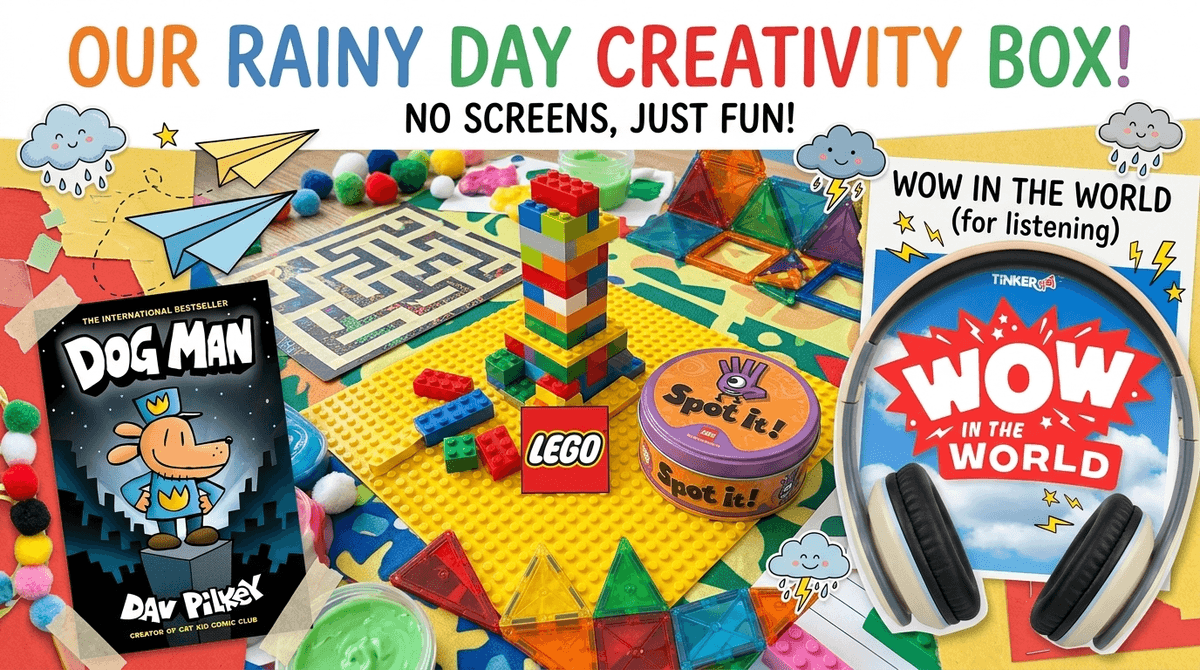
Rainy-day recess
When the playground is a puddle.
Indoor recess defaults to 'movie day' or chaos. It doesn't have to. Channel the trapped energy into a Spot It! tournament, a Paper Airplane Olympics, or a building challenge with real stakes — screen-free and genuinely fun.
Indoor recess that works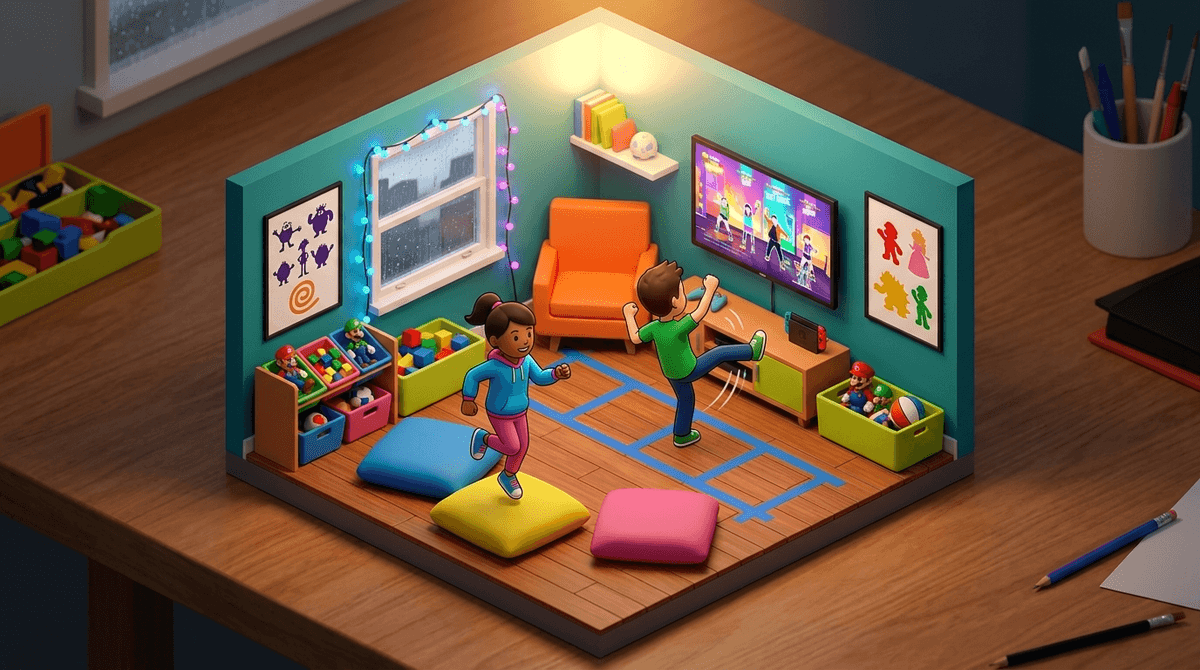
Too cold to go out
Burn the energy in a 10x10 space.
When the wind chill hits 'nope,' you don't need a gym — you need a patch of floor, a bag of balloons, and a roll of painter's tape. Silent Ball, Balloon Tennis, and dance freeze drain a tank of energy without a screen or a broken lamp.
Active games for small spaces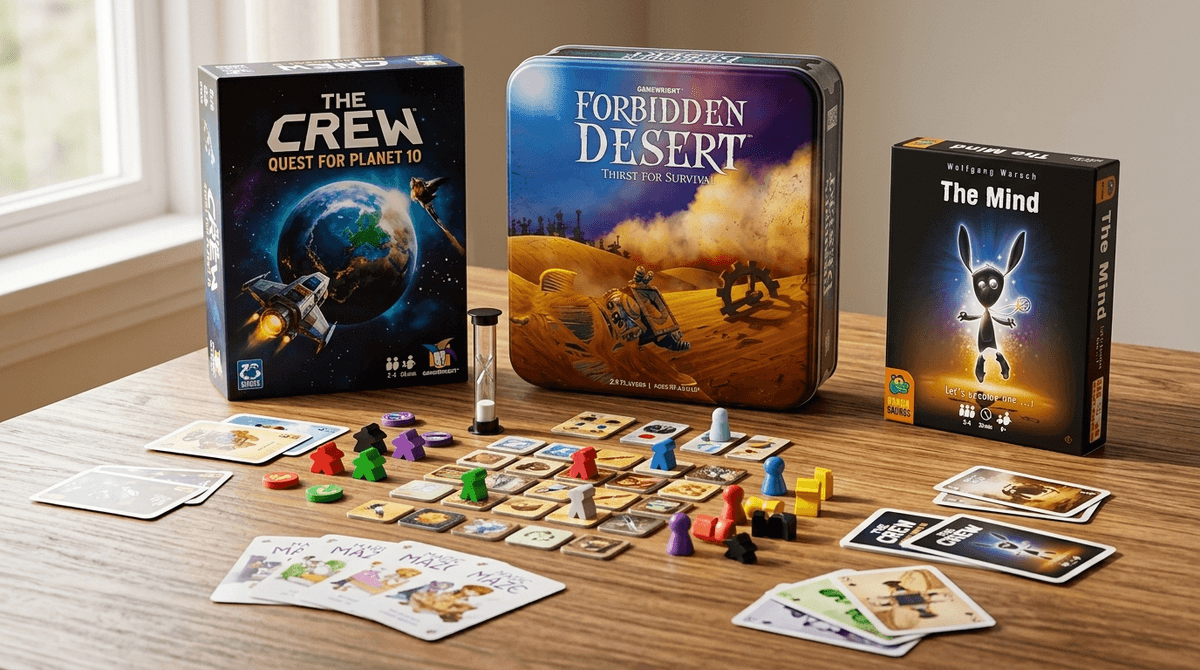
Co-op board games
"Us vs. the board" beats "me vs. you."
Collaborative games swap social friction for teamwork. The Crew, Forbidden Desert, and The Mind force kids to communicate, manage frustration, and lose together — a low-stakes simulator for middle-school social skills.
Co-op games for SEL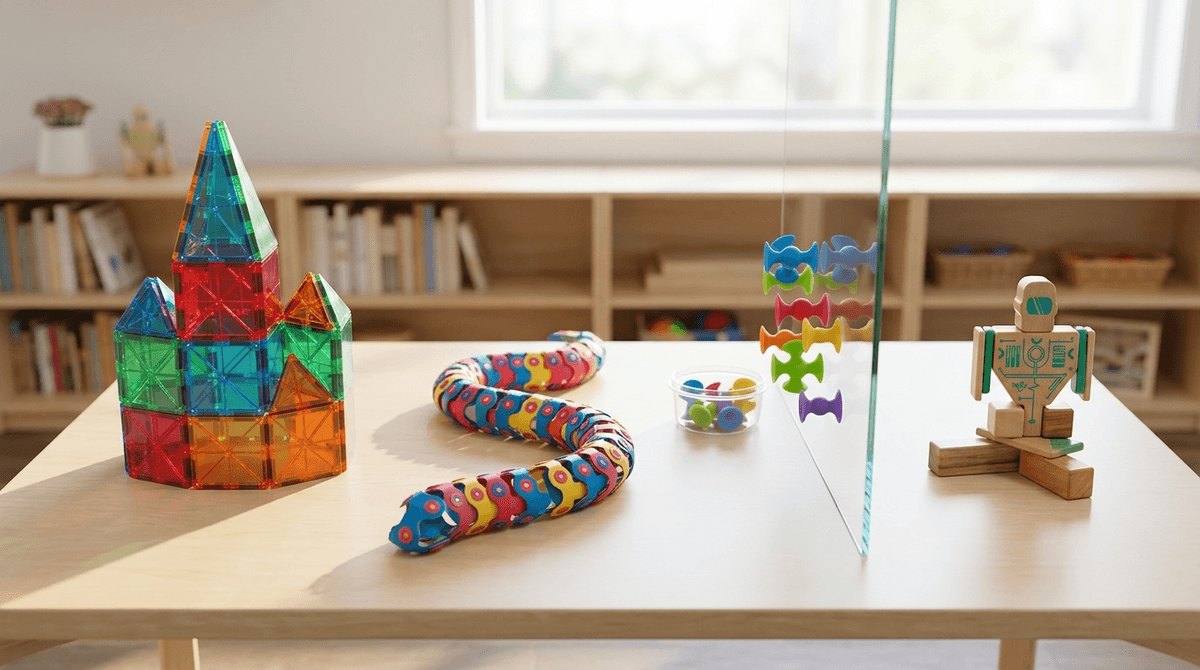
Building & STEM
The bricks that won’t end up in the vacuum.
You can have the spatial reasoning and the "aha" of engineering without the microscopic debris field. Magnetic and suction builders — Clixo, Magna-Tiles, Squigz — hit the same STEM notes as LEGO with a 30-second cleanup.
Low-mess building kits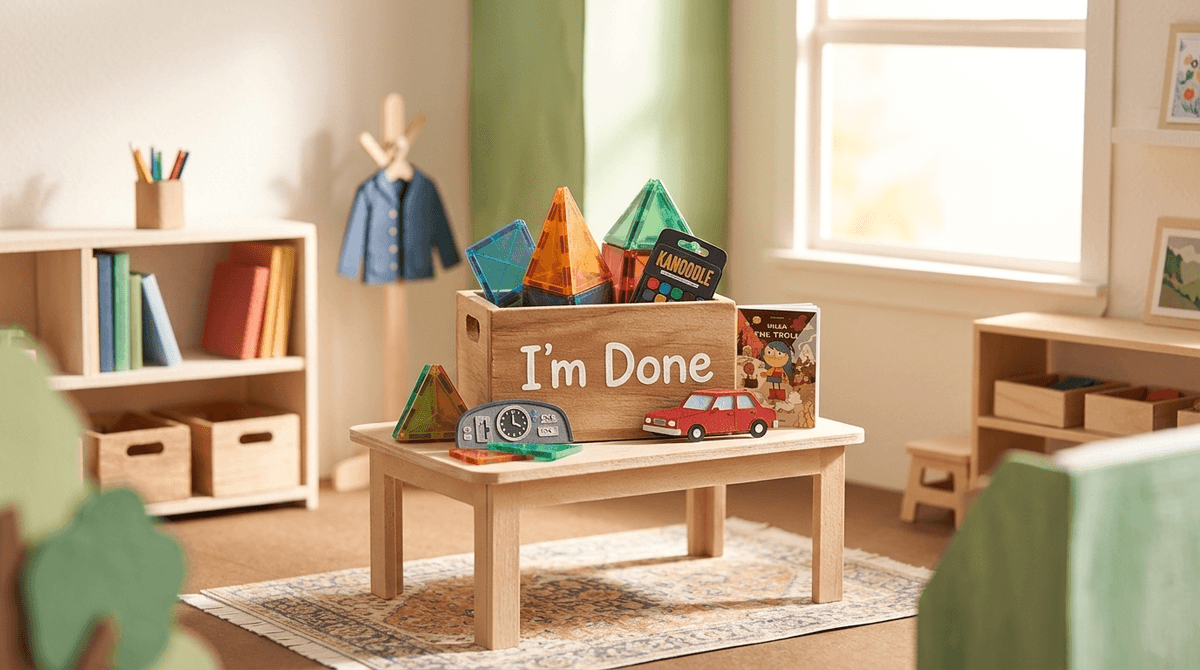
Early finishers
A better answer than "extra worksheets."
The "I'm Done" bin bridges the gap between finishing fast and the rest of the class catching up. Self-correcting logic puzzles like Kanoodle and Rush Hour keep the brain in gear — quiet, low-mess, no charging cable required.
Quiet-time bin ideasWhy these work
What makes screen-free time stick.
The same three ideas run under every activity above. Get these right and almost anything works; miss them and even the best toy gathers dust.
Give it a target
Stakes beat "go play."
Open-ended free time lands flat; a game with a finish line, a points system, or a constraint ("build a bridge that holds a stapler") does not. Structure is what turns a riled-up room into a game instead of a wrestling match.
Keep it in reach
Starting should take zero setup.
Getting started is the hardest part. When the option lives on a shelf or in a bin — a deck of cards, a tub of magnetic tiles, a roll of tape — kids reach for it on their own. When it needs digging out of a closet or an adult to run it, it stays in the closet.
Match the kid
Move first, then focus.
A wound-up kid needs to burn energy (balloon tennis, dance freeze) before they can sit. A kid who needs to settle needs a self-correcting solo puzzle that tells them if they won — without an adult hovering to check.
The quiet corner
Listening is screen-free, too.
Not every kid wants balloon volleyball. Audiobooks and kids’ podcasts build the language-comprehension strands of reading, and a “listening station” gives the kid who’s overwhelmed by a noisy room a high-value way to opt out — a legitimate option, not a loophole.
Personalized for your family
Make this about your kid.
Answer a few quick questions — their age, the space you’re working with, the energy you’re managing, what they’re into — and we’ll write the version of this that fits your kid. If you’ve taken the Screenwise survey, we use their age as context too.
The context
Where kids’ hours go, grade by grade.
Real data from Screenwise families. A sense of how a typical week shakes out — useful background when you’re planning the parts of it you’re hands-on with.
Sign in to personalize this guide with data from families in your school, city, and community
Average Screen Time by Grade (Hours/Day)
Gaming Console Ownership by Grade
FAQ
The questions parents and teachers ask.
Straight answers, no filler — for the rainy day, the small space, and the kid who finished first.
Real questions from real parents
Make it personal.
Take the five-minute Screenwise family survey and every guide, recommendation, and page on the site gets tuned to your kid’s age, what they’re into, and where your family stands.
Take the Family Survey