

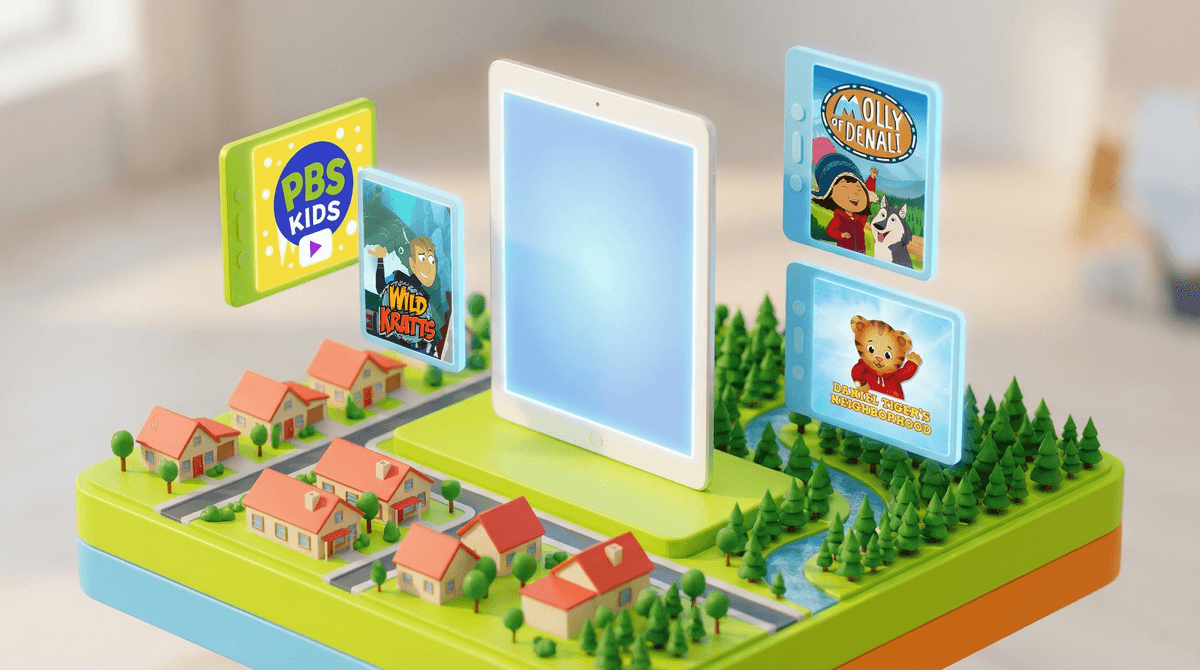
In a digital landscape filled with apps that are basically slot machines for toddlers, PBS Kids apps are the rare unicorns that actually deliver on the promise of "educational screen time." These are free (yes, really free—no in-app purchases, no ads) apps based on beloved PBS shows like Daniel Tiger's Neighborhood, Wild Kratts, Molly of Denali, and more.
Unlike most "educational" apps that slap some letters on a screen and call it learning, PBS Kids apps are designed by actual educators and child development experts. They're built on curriculum frameworks that focus on everything from early literacy and math to social-emotional learning and scientific thinking. And here's the kicker: they're genuinely fun enough that kids don't realize they're learning.
No monetization garbage. Let's start with the most refreshing part: there are zero in-app purchases, no ads, and no manipulative "watch this video to unlock the next level" nonsense. Your kid can play without you hovering over their shoulder worried they're about to rack up a $47 charge for digital gems.
Actually educational. These apps aren't just digitized worksheets. PBS Kids Games includes hundreds of mini-games that teach pattern recognition, problem-solving, and early math concepts through play. PBS Kids Video offers full episodes and clips from PBS shows, which means your kid can watch Odd Squad solve math mysteries or follow Elinor Wonders Why as she explores scientific inquiry.
Age-appropriate progression. The apps are designed for preschool through early elementary (roughly ages 2-8), with content that scales in complexity. A 3-year-old can tap along with Daniel Tiger learning about feelings, while a 7-year-old can tackle more complex problem-solving in Cyberchase games.
Diverse representation. PBS Kids shows—and by extension, the apps—feature characters from different backgrounds, cultures, and family structures. Alma's Way centers a Puerto Rican family in the Bronx, Xavier Riddle introduces kids to historical figures from around the world, and Work It Out Wombats! models collaborative problem-solving.
PBS Kids Games
This is the flagship app and probably the one you want to start with. It's a collection of 200+ games spanning multiple shows and learning domains. Kids can play games that teach:
- Early literacy (letter recognition, phonics, vocabulary)
- Math concepts (counting, patterns, shapes, basic addition/subtraction)
- Science and nature (animal habitats, weather, simple physics)
- Social-emotional skills (identifying feelings, problem-solving, cooperation)
The interface is intuitive enough for preschoolers to navigate independently, and the games are short enough (5-10 minutes) that they work well for limited screen time sessions.
PBS Kids Video
Full episodes and clips from PBS shows, organized by show and topic. This is basically PBS on-demand. The content is the same high-quality programming you'd get from broadcast PBS, which means it's been vetted for educational value and age-appropriateness. No algorithm pushing your kid toward increasingly bizarre content—just a curated selection of shows designed for young learners.
Show-Specific Apps
PBS also offers standalone apps for popular shows:
- Daniel Tiger for Parents – Not for kids, but for parents looking for strategies to handle common childhood challenges (potty training, bedtime, new sibling) using Daniel Tiger songs and episodes
- Wild Kratts World Adventure – Explore animal habitats and activate "Creature Powers"
- Odd Squad Academy – Math-focused games with the quirky Odd Squad agents
These are worth downloading if your kid is particularly obsessed with a specific show, but the main PBS Kids Games app covers most of the content.
Ages 2-4: PBS Kids apps are genuinely appropriate for this age group, which is rare. The games are simple enough for toddlers to understand (tap the matching shape, help Daniel Tiger find his stuffed animal), and the shows model prosocial behavior. That said, even "good" screen time should be limited at this age—the AAP recommends no more than 1 hour per day of high-quality programming for kids 2-5.
Ages 5-8: This is the sweet spot for PBS Kids content. The games offer enough challenge to keep early elementary kids engaged, and the shows tackle more complex topics (friendship conflicts, scientific method, cultural traditions) that resonate with this age group. Many kids start aging out of PBS content around 7-8, gravitating toward Minecraft or Roblox, but PBS Kids apps remain a solid option for educational screen time.
Ages 9+: Most kids will have moved on by this point, though PBS has some content for older elementary kids through shows like Molly of Denali (which tackles Alaskan Native culture and informational text literacy) and Let's Go Luna! (world cultures and geography).
Screen time limits still apply. Yes, PBS Kids apps are educational. No, that doesn't mean unlimited access is fine. Even high-quality content should be balanced with physical play, outdoor time, and non-screen activities. The apps work best as a tool in your parenting toolkit, not a digital babysitter.
Co-viewing amplifies learning. Research consistently shows that kids learn more from educational media when an adult watches with them and talks about what's happening. Ask questions ("Why do you think Daniel Tiger is feeling sad?"), make connections to real life ("Remember when we saw a habitat like that at the zoo?"), and extend the learning beyond the screen.
They're not a substitute for play-based learning. PBS Kids apps are great for what they are, but they shouldn't replace hands-on exploration, creative play, or social interaction. Think of them as a supplement to—not a replacement for—traditional early childhood activities.
Privacy is solid. PBS Kids doesn't collect personal information from children, doesn't serve ads, and doesn't sell data. In terms of privacy and safety, these apps are about as good as it gets. You can read more about their privacy policy if you want the details.
If you're going to let your young kid use apps, PBS Kids apps should be at the top of your list. They're free, ad-free, genuinely educational, and designed with child development principles in mind. They're not going to turn your kid into a genius, but they're also not going to rot their brain or drain your bank account.
The real magic of PBS Kids apps is that they offer screen time you can actually feel good about—which, in the current digital landscape, is no small thing. Download PBS Kids Games and PBS Kids Video, set some reasonable time limits, and consider it a win.
- Download PBS Kids Games and PBS Kids Video (both free on iOS and Android)
- Set up screen time limits on your device so the apps automatically lock after the allotted time
- Explore other educational apps for young kids if you want to expand your options
- Check out screen time guidelines by age to figure out what makes sense for your family