

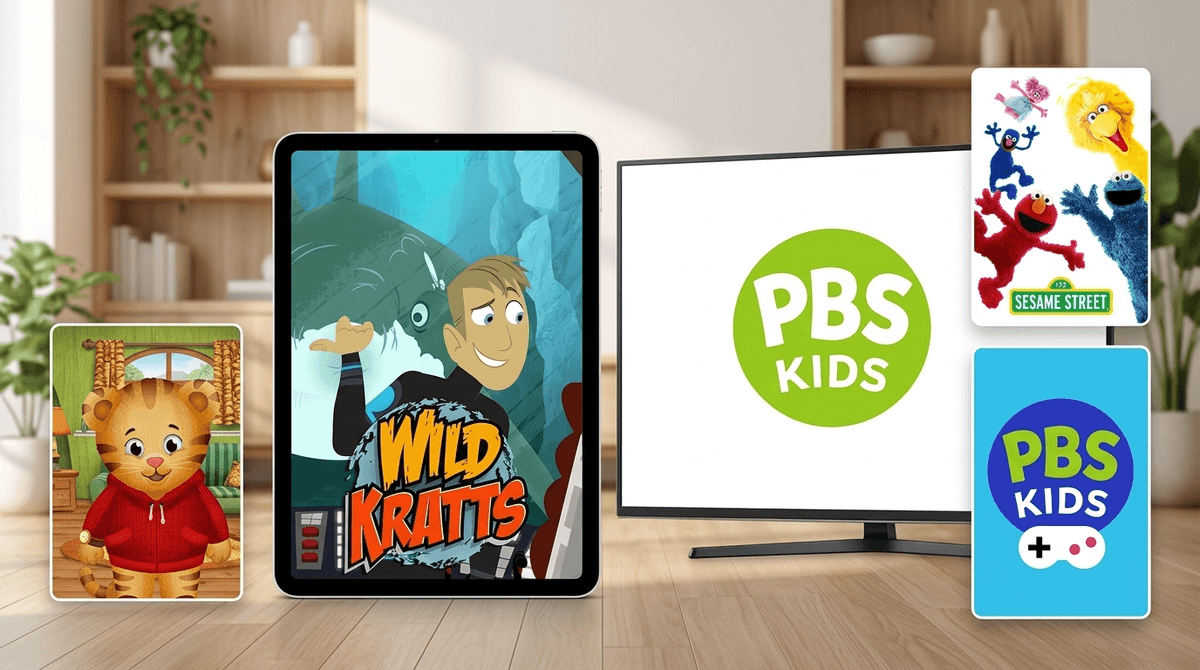
TL;DR: Yes, PBS Kids is still the undisputed heavyweight champion of safe, educational, and—most importantly—free content for the preschool and early elementary set. In a world of "Skibidi Toilet" memes and the dopamine-shredding chaos of the YouTube Kids algorithm, PBS Kids remains a "walled garden" that won't sell your kid's data or rot their attention span.
Quick Links to the Best of PBS Kids:
- The Gold Standard for Feelings: Daniel Tiger’s Neighborhood
- Best for STEM/Nature: Wild Kratts
- Best for Problem Solving: Lyla in the Loop
- The Classic: Sesame Street
- Best Interactive App: PBS Kids Games
If you grew up with Mr. Rogers or Arthur, you know the vibe. But today, PBS Kids isn't just a channel on your TV that you have to catch at 8:00 AM. It’s a massive digital ecosystem that includes a 24/7 live stream, a robust video app, a dedicated games app, and a website packed with interactive content.
The "No-BS" definition? It’s the only place on the internet where you can hand your four-year-old an iPad and walk away to start a load of laundry without worrying they’ll end up watching a "dark" Elsa-and-Spiderman parody or a 10-minute unboxing video designed to make them beg for plastic junk.
Everything on PBS Kids is curriculum-based. This isn't just "edutainment" where they slap a letter "A" on a screen and call it a day. They actually employ developmental psychologists to make sure the pacing, language, and lessons are age-appropriate.
Let’s be real: kids love YouTube because it’s loud, fast, and weird. PBS Kids is a different kind of "love." It’s built on characters they trust.
When a kid watches Daniel Tiger’s Neighborhood, they aren't just watching a show; they’re learning a vocabulary for their own "big feelings." Kids love feeling capable, and PBS Kids shows are designed to invite them into the story. Whether it’s helping Molly of Denali solve a mystery using an informational map or helping the Wild Kratts save an endangered animal, the engagement is active, not passive.
Plus, the PBS Kids Games App is legitimately fun. It’s not "Ohio" (that’s kid-speak for "cringe" or "weird" for those of us over 30). The games are high-quality, glitch-free, and feature the same characters they see in the shows, which creates a cohesive world they enjoy inhabiting.
Learn more about the best educational apps for preschoolers
If you’re wondering where to start or which shows are actually worth the "screen time budget," here is our curated list.
This is the spiritual successor to Mister Rogers' Neighborhood. If your child is struggling with transitions, sharing, or "mad" feelings, this show is a literal godsend. It uses "strategy songs" that are essentially mnemonic devices for emotional regulation. You will find yourself singing "When you feel so mad that you want to roar, take a deep breath and count to four" in the middle of a Target checkout line. It works.
For the kids who are obsessed with animals. The Kratt brothers (who are real-life zoologists) combine live-action animal facts with animated adventures. It’s heavy on biology and ecology but delivered through "Creature Power Suits" that give it a bit of a superhero vibe. It’s one of the few PBS shows that has serious staying power into the early elementary years (Ages 4-8).
This show is fantastic because it teaches "informational text" skills. Molly is an Alaska Native girl who uses maps, books, and the internet to solve problems. It’s culturally rich, respectful, and teaches kids how to find answers for themselves. It’s a great precursor to Google Search without actually letting them on Google.
One of the newer additions, Lyla focuses on "computational thinking." No, it’s not teaching them to code in Python, but it is teaching the logic behind it—breaking big problems into small steps, recognizing patterns, and debugging mistakes. It’s smart, modern, and very relatable for families living in urban environments.
Created by Sonia Manzano (Maria from Sesame Street), this show focuses on the "Think Through." When Alma faces a dilemma, she pauses and talks through her options. It’s a brilliant way to model critical thinking and social awareness for kids ages 4-6.
Perfect for the younger end of the spectrum (Ages 3-5). It’s bright, bouncy, and focuses on "computational thinking" in a very simplified way. It’s great for building basic logic skills while keeping things light and funny.
Check out our full guide on social-emotional learning shows
While PBS Kids is "safe," not every show is a fit for every age.
- Ages 2-3: Stick to Daniel Tiger’s Neighborhood, Donkey Hodie, and Sesame Street. These shows have slower pacing and focus on foundational social skills.
- Ages 4-6: This is the sweet spot. Alma’s Way, Rosie’s Rules, and Curious George are perfect here.
- Ages 7-8: Kids might start to feel "too old" for PBS, but Wild Kratts, Odd Squad, and Cyberchase (which teaches math) are still very engaging and intellectually stimulating.
When we talk about "Digital Wellness," we often talk about the "attention economy"—the way apps like TikTok or Instagram are designed to keep you scrolling.
PBS Kids is the antithesis of this.
- No Ads: There are no "pre-roll" ads for sugary cereals or the latest plastic toy that will end up in a landfill. This means your child isn't being marketed to while they learn their ABCs.
- No Data Harvesting: Because it’s publicly funded and strictly regulated, PBS Kids doesn't track your child’s behavior to build a "user profile" for advertisers.
- The "Exit" Factor: Unlike Netflix, which immediately starts the next episode before the credits even roll, the PBS Kids Video App is much more chill. It’s easier to say "one more and we’re done" when the app isn't actively fighting you for your child's attention.
- Free Access: You don't need a subscription. In a world where every streaming service is hitting $15.99/month, the fact that this level of quality is free is honestly a miracle of public media.
See how PBS Kids compares to Disney+
If there is a "downside" to PBS Kids, it’s that it can sometimes feel too educational or "slow" for kids who have already been exposed to the high-octane world of MrBeast or Roblox.
If you’re trying to transition a kid away from "brain rot" content and back to PBS Kids, you might get some pushback. They might say it’s "for babies."
Pro-tip: Don't frame it as "educational." Frame it as a choice. "Do you want to watch the one with the animals (Wild Kratts) or the one with the cool gadgets (Odd Squad)?"
Also, keep an eye on the PBS Kids Games App. While the games are great, "screen time" is still "screen time." Interactive games often have a higher "dopamine cost" than passive watching, meaning your kid might be more irritable when it’s time to turn the tablet off after playing a game than they would be after watching an episode of Arthur.
Is PBS Kids still the gold standard? Absolutely.
It is the safest, most research-backed, and most intentional platform available for young children. While other platforms are busy trying to figure out how to keep your kid’s eyes glued to the screen for as long as possible, PBS Kids is busy trying to teach them how to be a good neighbor, how to solve a math problem, and how to handle it when they don't get their way.
If you’re an intentional parent looking to build a healthy digital diet from the ground up, the PBS Kids Video App and the PBS Kids Games App should be the first things you download.
- Download the Apps: Get the PBS Kids Video App and the PBS Kids Games App on your child's device.
- Set the Live Stream: If you have a smart TV, find the PBS Kids 24/7 live stream. It’s great for "background" TV that you don't have to monitor.
- Explore Together: Watch an episode of Daniel Tiger’s Neighborhood with your toddler so you can learn the "strategy songs" together. It’ll make your parenting life way easier.
- Compare: Check out our guide on YouTube Kids vs PBS Kids to see why we prefer the "walled garden" approach.