

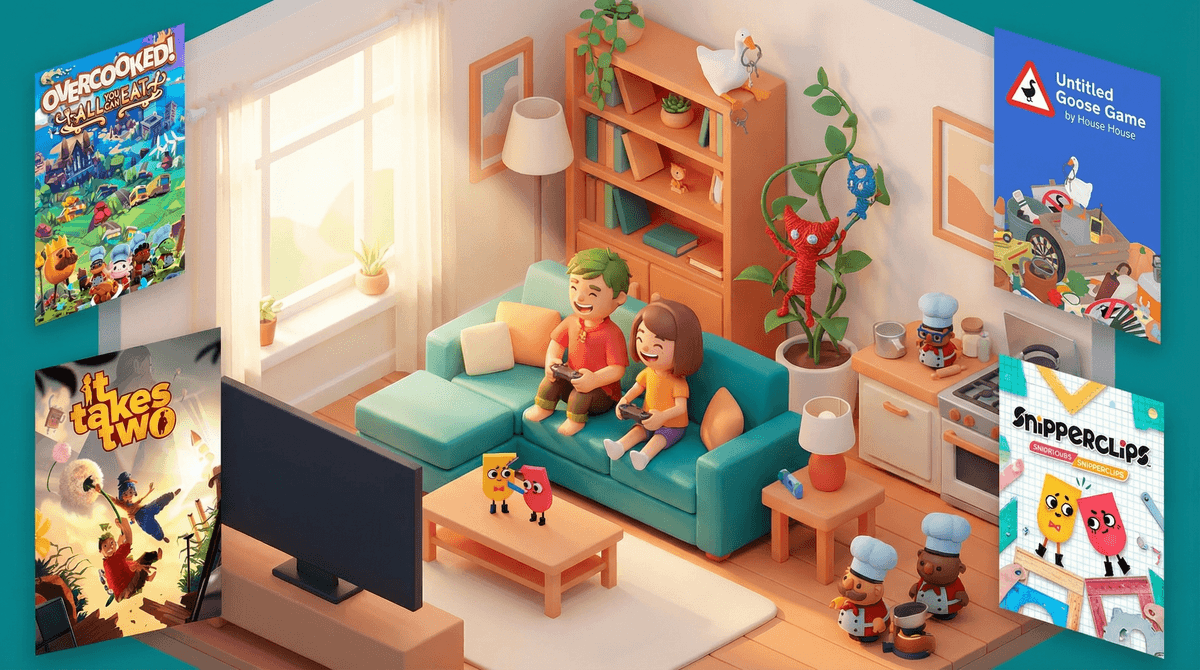
Beyond Mario Kart: The Couch Co-Op Games That Actually Build Sibling Bonds
Discover how shared-screen gaming can turn a rainy afternoon into a masterclass in teamwork, communication, and (mostly) tantrum-free fun.
TL;DR: The Top Picks for Family Connection
- Best for Teamwork Under Pressure: Overcooked! All You Can Eat
- Best for Creative Problem Solving: Snipperclips
- Best for Narrative & Emotional Growth: It Takes Two (Ages 10+)
- Best for Pure, Silly Fun: Untitled Goose Game
- Best for Building Together: Minecraft
- Best "Starter" Co-op: Sackboy: A Big Adventure
We’ve all been there. You suggest a "fun family game night," and within twenty minutes, someone is crying because a Blue Shell ruined their life in Mario Kart, or a sibling "accidentally" knocked someone off the stage in Super Smash Bros. Ultimate. Competition is natural, but in the digital world, it often turns a bonding moment into a battleground.
When we talk about "couch co-op," we’re talking about a specific genre of gaming where players have to work together on the same screen to achieve a common goal. It’s the digital equivalent of building a LEGO set together or navigating a double-seater kayak. It requires communication, patience, and the ability to not scream when your partner drops the virtual onion in the floor.
In a world where kids are increasingly isolated in their own "digital silos"—one on an iPad watching Skibidi Toilet and the other in a Roblox lobby with strangers—couch co-op is the antidote. It brings the play back into the physical room.
Is gaming actually good for social skills?
Most of the "brain rot" concerns we have as parents stem from passive consumption or the high-stress, dopamine-loop environments of competitive shooters. Couch co-op is different. It’s active. It’s social. And importantly, it’s "Ohio" in the best way—weird, unexpected, and totally unique to the people in the room.
When kids play Minecraft in split-screen mode, they aren't just playing a game; they are negotiating territory, sharing resources, and managing a joint project. These are executive function skills disguised as "killing creepers."
Learn more about how gaming can help with executive function
If you want to see how your kids handle a crisis, put them in a kitchen that is currently splitting in half on top of a hot air balloon. Overcooked is the gold standard of co-op. You have to chop, cook, plate, and wash dishes while the environment actively tries to kill you.
- Why it works: You literally cannot win without talking. "I need a tomato!" "The soup is burning!" It forces siblings to delegate roles based on their strengths.
- Parent Tip: The "All You Can Eat" version includes an Assist Mode that slows down timers. Use it. It turns the game from "stressful nightmare" to "challenging puzzle."
This is a Nintendo Switch gem. Two players control paper characters who can "snip" pieces out of each other to change their shapes. You might need to become a bucket to carry a ball or a point to pop a balloon.
- Why it works: It’s all logic. There’s no ticking clock in many levels, so it rewards slow, thoughtful collaboration rather than twitchy reflexes.
- Ages: 6+ (as long as they can handle a controller).
Think Overcooked, but instead of soup, you’re moving furniture. You have to pivot a sofa through a door (yes, it’s a total Friends "Pivot!" moment) and throw boxes into a moving truck.
- Why it works: It’s slapstick comedy. When a sibling accidentally throws a toaster through a window, it usually results in giggles rather than a meltdown because the physics are intentionally "janky" and hilarious.
I’m going to be honest: this game is a masterpiece, but it’s also heavy. The plot follows two parents going through a divorce who are shrunk down into dolls and must work together to get back to their daughter.
- The "No-BS" Review: There is a scene involving a stuffed elephant that is—and I’m not exaggerating—genuinely traumatic. It’s meant to be dark humor, but for younger kids, it’s just sad.
- Ages: 10+ and ideally played with a parent or an older sibling.
- Why it matters: Every single level introduces a new mechanic that requires two people. It is the most inventive co-op game ever made.
What is the "elephant scene" in It Takes Two and is it okay for my kid?
If you want something gorgeous, polished, and purely joyful, this is it. It’s a 3D platformer where up to four people can play at once.
- Why it works: It’s "drop-in, drop-out." If the 5-year-old gets bored, they can put the controller down and the 8-year-old can keep going. It’s much more forgiving than Super Mario Bros. Wonder, which can sometimes feel a bit chaotic with four players.
You play as two "Yarnys" (creatures made of yarn) who are literally tied together by a thread. To get across a gap, one player might have to anchor themselves while the other swings across.
- Why it matters: It’s a beautiful metaphor for support and connection. The music is calming, and the puzzles are genuinely clever.
The goal is simple: you are a goose, and you want to be a jerk to a gardener. In the two-player mode, you are two geese.
- Why kids love it: It taps into that childhood desire to cause a little bit of (harmless) trouble. Stealing a man’s glasses and hiding them in a pond is a great bonding activity for brothers.
- Ages: 4 to 94. It’s universally funny.
While often thought of as a solo game, the split-screen co-op is fantastic. You share a farm, but you can divide the labor. One kid loves the "grind" of watering crops? Great. The other wants to go into the mines and fight slimes? Perfect.
- Why it works: It teaches long-term planning and financial literacy (well, "farm literacy"). You have to decide together: "Do we buy the strawberry seeds now, or save up for the stable?"
Read our guide on why Stardew Valley is the ultimate cozy game
Even the best cooperative game can't fix a sibling rivalry overnight. Here’s how to set them up for success:
- The "Pause and Breathe" Rule: Cooperative games can get high-intensity (especially Overcooked!). If you hear voices rising, it’s time for a 5-minute snack break. Remind them: You are on the same team. The game is the enemy, not your brother.
- Rotation of Roles: In games like Minecraft, one kid often becomes the "boss." Encourage them to swap roles. The builder becomes the explorer; the cook becomes the server.
- Watch for "Alpha Gaming": This is when one player (usually the older or more experienced one) tells the other exactly what to do, effectively playing the game for them. This kills the fun and the learning. Encourage the "Alpha" to be a coach, not a commander.
How to handle gaming-related tantrums
- Ages 5-7: Stick to LEGO Star Wars: The Skywalker Saga or Untitled Goose Game. These games don't punish failure heavily. If you "die," you just pop right back in.
- Ages 8-10: This is the sweet spot for Overcooked! All You Can Eat and Minecraft. They have the motor skills and the logic to handle complex tasks.
- Ages 11+: Try It Takes Two or even Cuphead (if they have a high tolerance for frustration—it's notoriously difficult).
We spend a lot of time worrying about what digital media is doing to our kids. Couch co-op allows us to see what they can do with it. It turns screen time from a passive, isolating experience into a shared family memory.
Next time it’s raining and the "I’m bored" chorus starts, skip the YouTube rabbit hole and the Roblox simulators. Hand them two controllers, put on Moving Out, and watch them learn how to navigate the messy, hilarious, and vital art of working together.