The mechanical whiplash
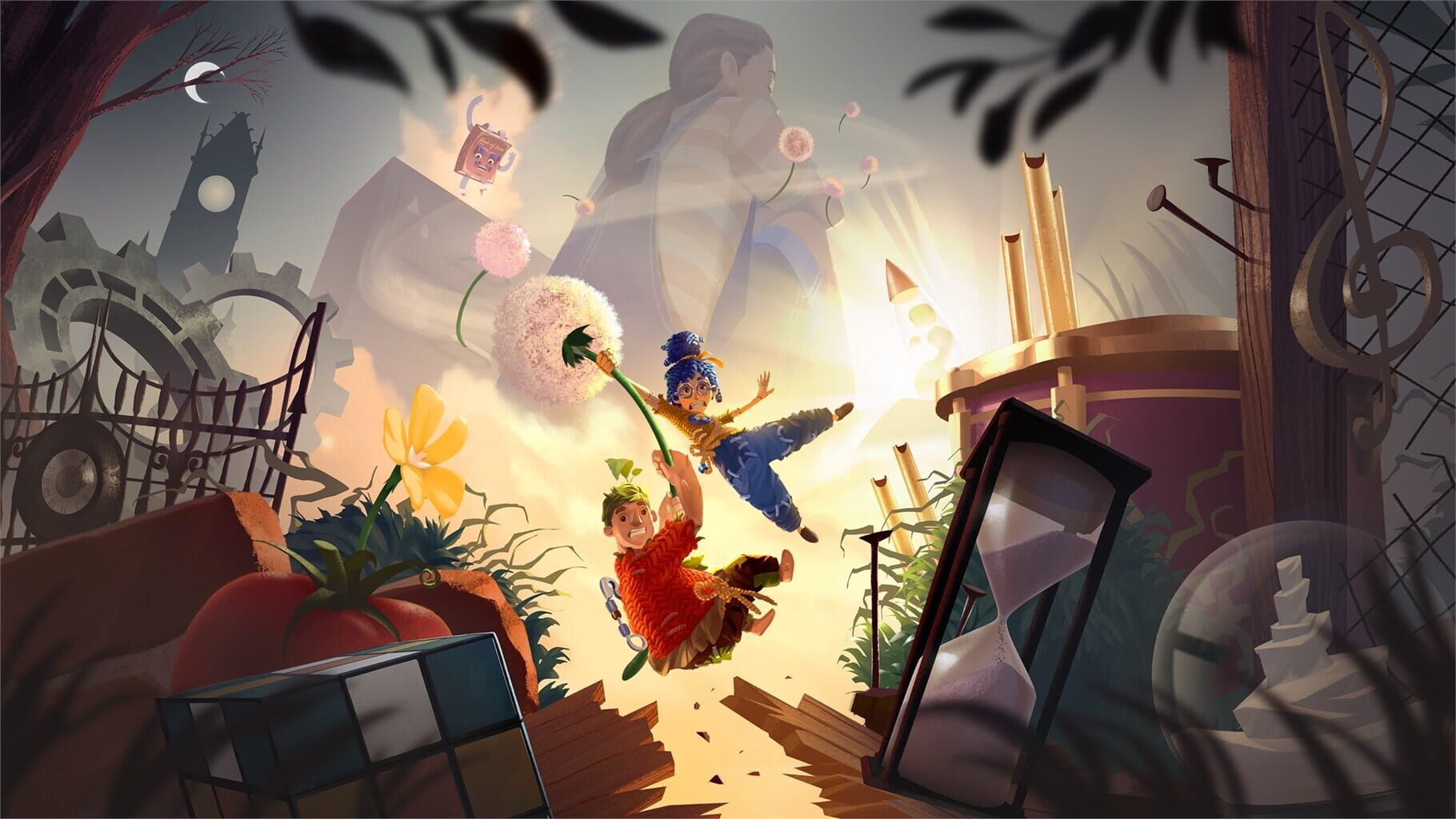
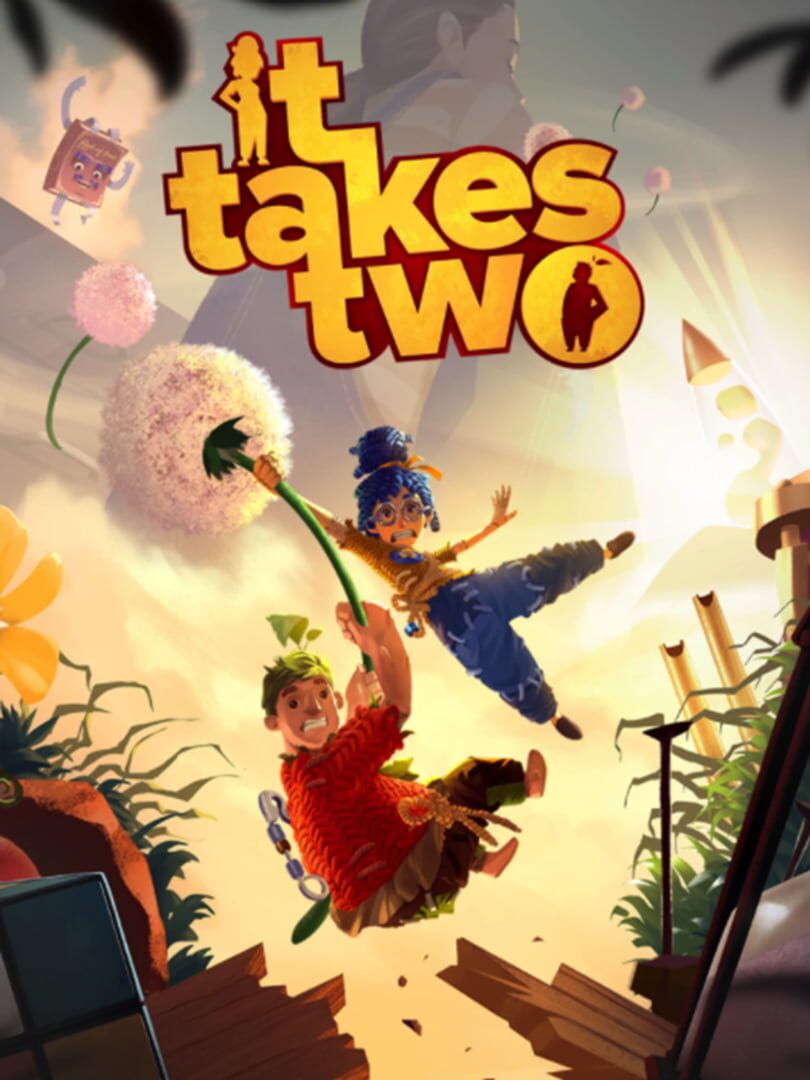
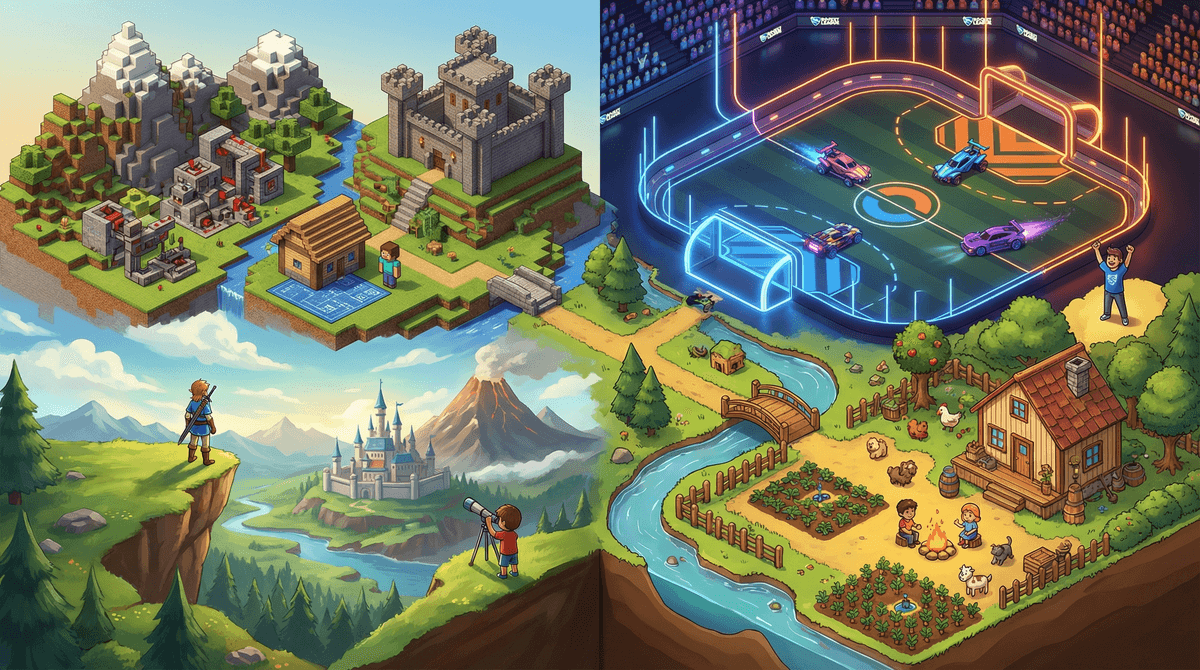
Most games give you a mechanic—jumping, shooting, or racing—and make you do it for ten hours. It Takes Two has a different idea: it gives you a power, lets you master it for twenty minutes, then trashes it for something entirely new. One level you’re playing a third-person shooter with sap-guns against giant wasps; the next, you’re in a top-down dungeon crawler or a flight simulator on the back of a bird.
This variety is the game's secret weapon for cooperative gaming building teamwork and communication. Because the rules change constantly, neither the parent nor the child can go on autopilot. You are both perpetually "new" to the current challenge, which levels the playing field. It’s a relentless pace that makes it one of the best co-op games for parents and kids because neither of you ever has the chance to get bored.
Messy themes for messy lives
We see a lot of media that treats family conflict with kid gloves, but this game is surprisingly cynical about Cody and May’s relationship. They aren't just "disagreeing"—they are often petty, selfish, and genuinely mean to each other. This is where the game shifts from a fun platformer into a social-emotional learning game by accident.
You aren't watching a perfect family; you’re watching a broken one try to navigate a disaster. For kids in the 10-14 range, this realism usually resonates more than a sanitized "everyone get along" story. It acknowledges that parents are flawed people. If you’re looking for best couch co-op games that actually have something to say, this is the peak of the genre, but be prepared for the characters to be unlikeable for a good chunk of the runtime.
The "Elephant" in the room
You’ve likely heard about the stuffed elephant scene. It is the single most divisive moment in modern family gaming. Without spoiling the specifics, the parents make a choice to destroy something their daughter loves, thinking it will break the spell they are under.
The game frames this with dark, slapstick humor, but for many children, it feels like a genuine betrayal. It’s a moment of narrative "edge" that might require a quick conversation. It isn't a dealbreaker, but it is a sharp departure from the otherwise whimsical tone. If your kid is particularly sensitive to "mean" humor or distress involving childhood comforts, you’ll want to be the one holding the second controller when that level hits.
Why it’s the gold standard
Despite the heavy themes, the production value here is staggering. Hazelight Studios built a world that feels like a high-budget animated film you can actually inhabit. The "Friend’s Pass" system is also a massive win for parents—if you want your kid to play with a cousin or friend across the country, only one of you needs to own the game.
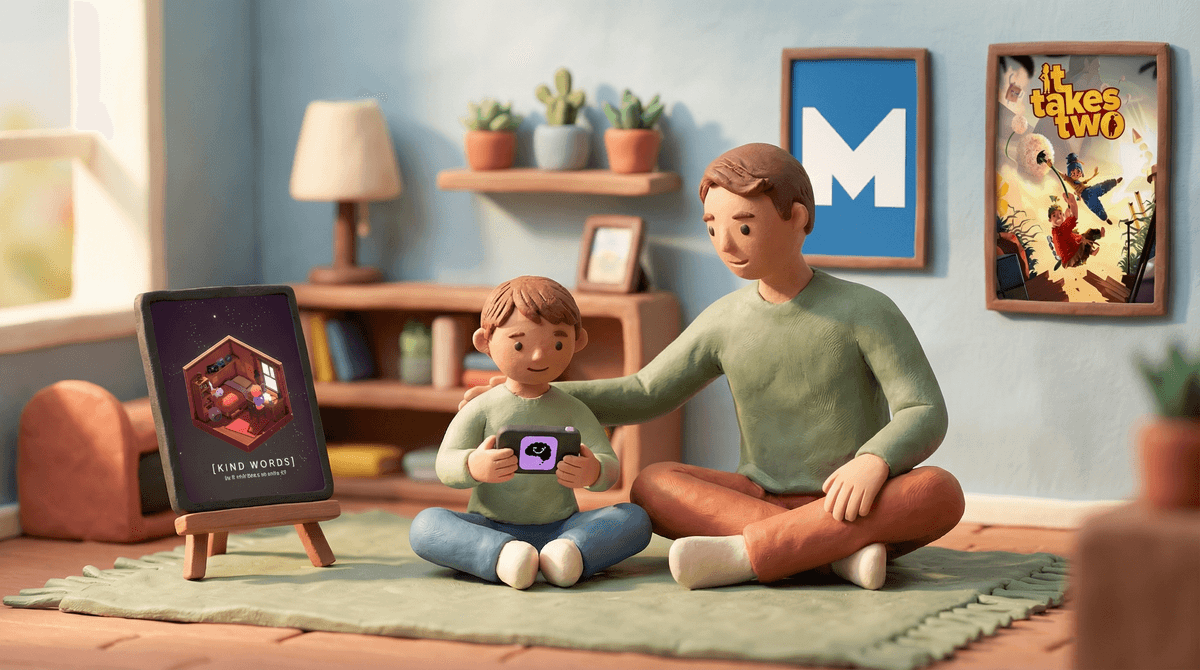
It’s rare to find a title that demands this much synchronization. You can't just follow behind your kid while they do the hard work; you literally cannot progress unless you both perform your specific roles. It’s the ultimate "we’re in this together" experience, making it a mandatory play for anyone trying to move from solo screen time to genuine family connection.