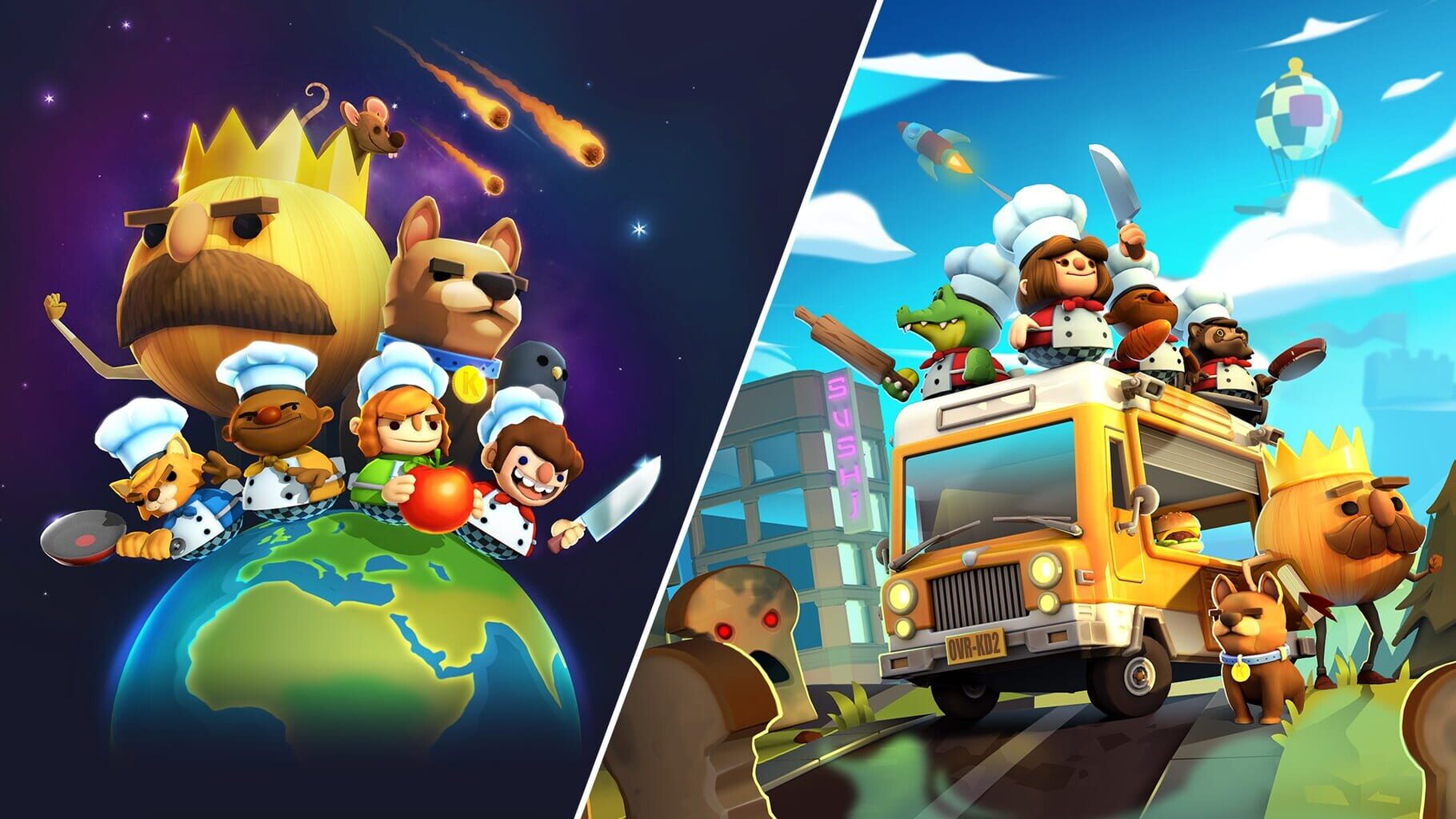
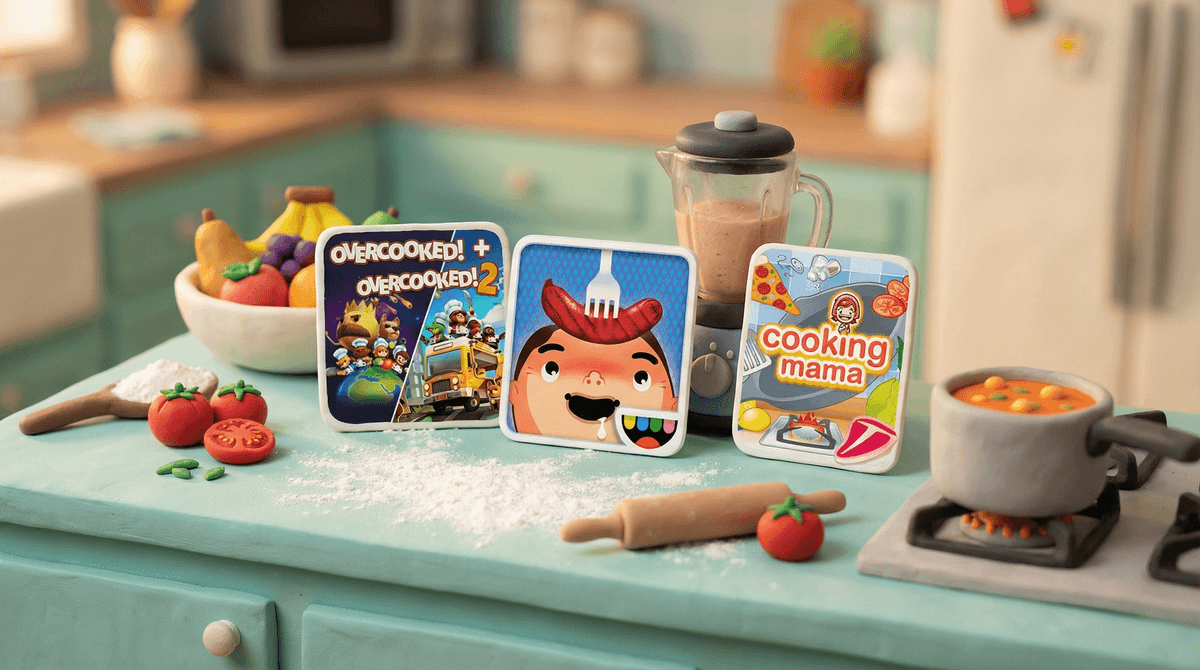
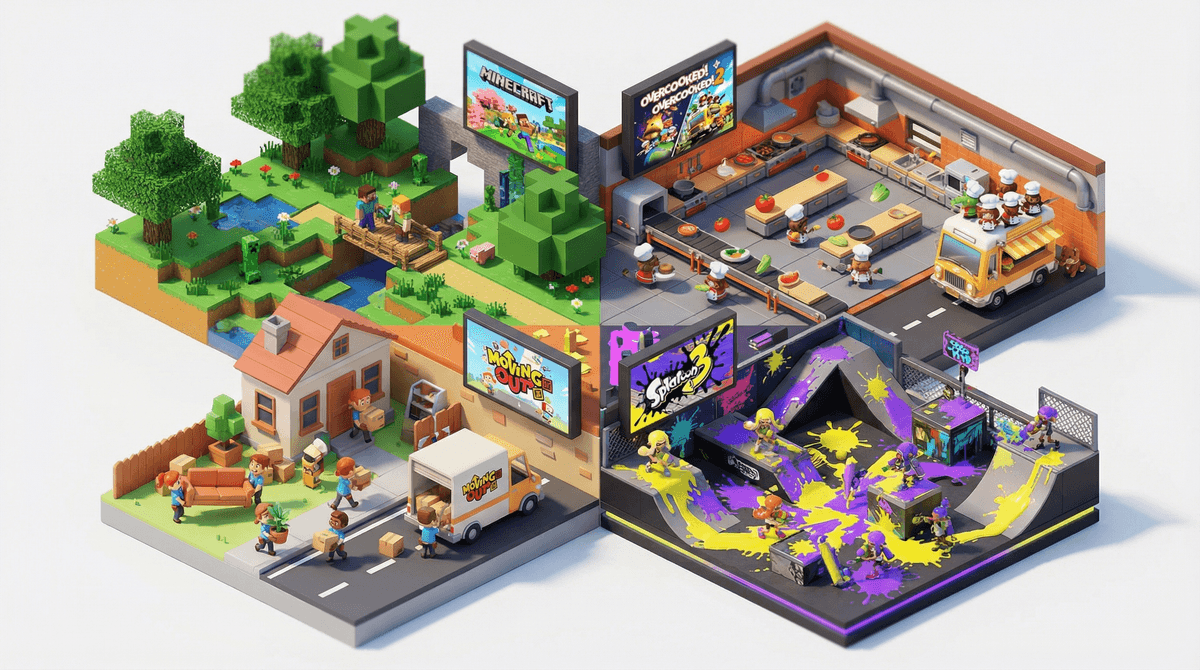
Most games let you play as a hero, a soldier, or a wizard. Overcooked turns you and three of your favorite people into overstressed line cooks in a kitchen that is actively trying to kill you. It is a masterpiece of friction.
While many titles claim to be "cooperative," they usually just mean you’re standing next to each other while doing your own thing. In Overcooked, you are a single, multi-headed organism. If the person on "dishes" forgets to scrub a plate, the person on "plating" can’t finish the burger, the timer runs out, and the whole kitchen starts screaming. It’s a literal simulation of the mental load.
The personality test you didn't ask for
You will learn more about your family’s internal dynamics in twenty minutes of this game than in a week of board games. Because the game is so simple—pick up, chop, cook, deliver—the difficulty comes entirely from the communication (or lack thereof).
You’ll quickly see who in the family is the natural "expeditor" (the person yelling out orders), who is the "worker bee" (the person quietly chopping onions in the corner), and who is the "agent of chaos" (the person who accidentally throws a tomato into the abyss). It’s a fascinating look at what your kid's gaming habits reveal about their personality. Some kids who struggle with focus in school suddenly become tactical geniuses when the kitchen is on a moving truck and the soup is about to burn.
Why the bundle matters
Since this version includes both the original and the sequel, you get to see the exact moment the series found its groove. The first game is a tight, grounded experience. The second game introduced the ability to throw raw ingredients. It sounds like a small tweak, but it changes the entire physics of the game. Instead of walking a steak over to the frying pan, you’re hucking it across a river or over a moving walkway.
It turns a game about walking into a game about flow. If your kids find the first game a bit too slow or frustrating because of the movement, jump straight into the sequel. The Overcooked 2 experience is faster, louder, and generally more forgiving of mistakes because you can recover so much more quickly.
Transitioning to the real world
If you’re looking for apps that actually reduce sibling fighting, this is a counterintuitive but effective pick. It doesn't reduce fighting by being calm; it reduces fighting by forcing kids to realize that if they don't work together, they both lose. There is no "winner" in Overcooked other than the team.
The most satisfying moment isn't just getting three stars on a level; it's the "post-game debrief" where you talk about how to fix the workflow for next time. It’s a rare instance where video games have genuine benefits for executive function. You’re practicing task prioritization and crisis management, all while trying to serve a digital salad to a hungry walrus. It’s stressful, it’s loud, and it’s the most fun you’ll have being yelled at by a seven-year-old.