

TL;DR
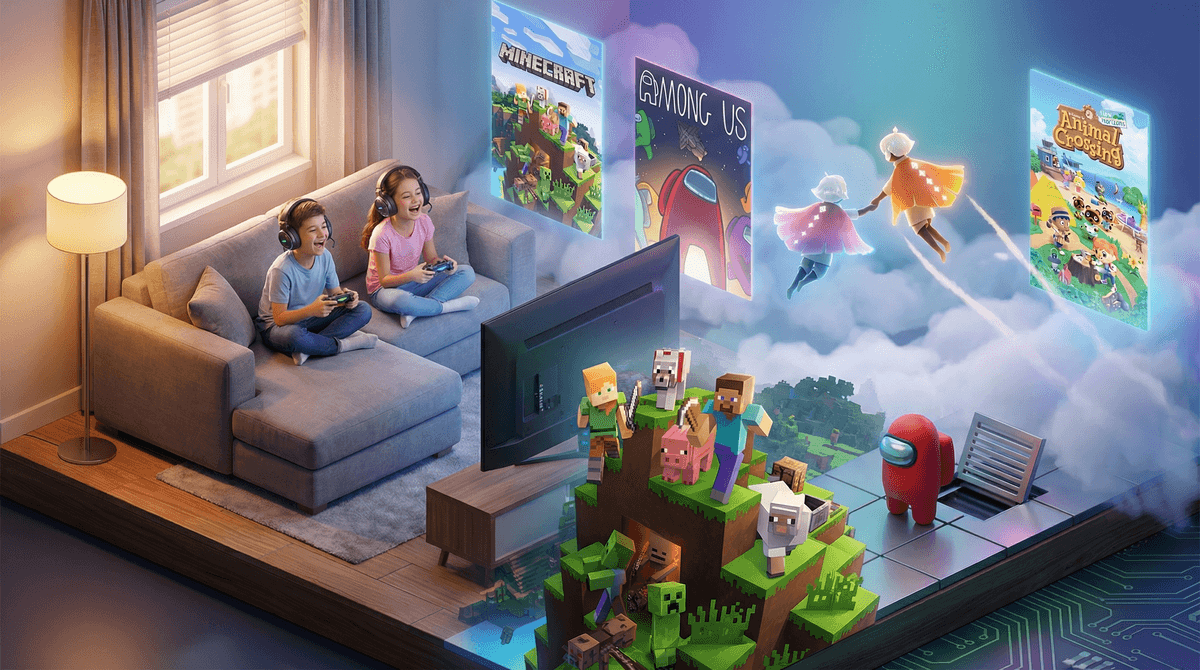
Gaming isn't just "brain rot"—it’s the modern-day version of the mall or the park. When kids are playing Minecraft or Fortnite, they aren't just clicking buttons; they are learning to negotiate, lead, and recover from failure.
- Best for Collaboration: Minecraft and Roblox
- Best for Team Strategy: Fortnite and Overwatch 2
- Best for Empathy & Kindness: Sky: Children of the Light
- Best for Conflict Resolution: Among Us
Learn more about the benefits of social gaming
Remember when we used to just "hang out" at the mall or the local pizza place? For today’s kids, that "third place"—the space between home and school—is digital. Whether they are building a "Skibidi Toilet" meme-inspired obstacle course in Roblox or calling something "totally Ohio" in a Discord chat, they are engaging in a shared culture.
According to recent data, over 80% of kids play video games with their friends online. It’s not a solitary activity anymore. It’s a squad-based, voice-chat-heavy social ecosystem. If your kid is begging for "just ten more minutes," they usually aren't trying to beat a level; they’re in the middle of a conversation.
It’s easy to see a kid yelling at a headset and think they’re wasting time. But if you listen closely, you’ll hear them practicing some of the hardest "soft skills" to teach:
- Teamwork and Delegation: In Fortnite, someone has to lead, someone has to scout, and everyone has to share resources. If they don't cooperate, they lose.
- Conflict Resolution: When a friend accidentally "griefs" (destroys) a building in Minecraft, your kid has to decide: do I scream, or do I explain why that hurt and ask for help fixing it?
- Digital Citizenship: Learning how to handle a "toxic" player or a "troll" is a vital life skill. Gaming provides a low-stakes environment to practice setting boundaries.
- Entrepreneurship: Roblox is essentially a baby’s first economy. Between trading skins and understanding the value of Robux, they are learning about supply, demand, and (unfortunately) how quickly a bank account can drain if they aren't careful.
Ages 7+ The gold standard for collaboration. Whether they are in Creative Mode building a city or Survival Mode fighting off Creepers, Minecraft requires constant communication. It’s the digital version of a massive LEGO set that everyone is working on at once. Read our full guide to Minecraft safety
Ages 9+ If you’re worried about the aggression in shooters, this is your antidote. It’s a "social adventure" game where the primary mechanic is helping others. You literally hold hands with other players to fly through the world. It’s beautiful, peaceful, and specifically designed to foster empathy.
Ages 10+ This is basically a digital version of the "Mafia" or "Werewolf" parlor games. It’s all about social deduction. Kids have to figure out who the "imposter" is through debate and logic. It’s a masterclass in reading people and defending your position—just be prepared for some lighthearted "betrayal" among friends.
Ages 12+ This is a strictly two-player cooperative game. It cannot be played alone. It follows a story about a couple (who are dolls) working through their relationship. It’s a fantastic way for siblings or even a parent and child to practice literal cooperation to solve puzzles.
Ages 6+ This is the "cozy" social experience. Kids can visit each other's islands, trade fruit, and show off their home decor. It’s low-pressure and focuses on the "sharing" aspect of friendship rather than the "winning" aspect. Learn more about cozy games for kids
We can't talk about social gaming without talking about the risks.
Toxicity and Strangers
Most social skills are built when kids play with people they know in real life. When they jump into "Public" lobbies in games like Fortnite or Call of Duty, the social benefits drop and the risks of toxic language and "creepy" behavior rise.
- Action Step: Keep voice chat limited to "Friends Only" in settings.
The Roblox Economy
Is Roblox teaching entrepreneurship? Sometimes. But mostly, it’s designed to keep kids clicking and spending. The "entrepreneurship" happens when kids start using Scratch or Roblox Studio to actually create games, rather than just consuming them.
See how to set up Roblox parental controls
Instead of asking "Are you winning?", try asking questions that focus on the social dynamics:
- "Who are you playing with today?"
- "Did anyone do anything cool or funny in the game?"
- "Was anyone being a jerk? How did the group handle it?"
- "What’s the goal your squad is working on right now?"
If they start using slang you don't understand, don't roll your eyes. Ask them what it means! If they say a game is "mid" or "peak," they are inviting you into their world. Use it as a bridge.
- Grades K-2: Stick to local co-op (playing on the same couch) or highly curated sites like PBS Kids.
- Grades 3-5: Minecraft and Roblox are the main hubs. This is the "training wheels" phase for online social interaction. Monitor chats closely.
- Grades 6-8: This is the Fortnite and Discord era. They will want more privacy. Focus on "Digital Wellness" and time management rather than just blocking everything.
- High School: They are likely using gaming as their primary social outlet. At this stage, it’s about balance—ensuring the "squad goals" online aren't replacing the real-life ones.
Gaming is the new playground. It has its bullies, its cliques, and its moments of pure, creative magic. By framing it as a place where your kid is building social capital, you move from being the "screen time police" to being a coach.
The goal isn't to stop them from playing; it's to help them be the kind of person people want to have on their team.
- Audit the Friends List: Sit down with your kid and go through who they are actually "friends" with online. If they don't know them in real life, it might be time for a conversation.
- Set a "Mute" Rule: Teach your kid that the second someone starts being toxic, they use the "Mute" button. It’s the ultimate power move.
- Try a "Co-op" Night: Pick up a game like Heads Up! or Codenames to show them that gaming can be a family social event, too.