

TL;DR
- Ratings are a floor, not a ceiling. A TV-Y7 rating tells you there’s "fantasy violence," but it doesn’t tell you if the show is high-quality or just overstimulating "brain rot."
- Streaming is merging. Disney+ now houses Hulu content, and Max mixes Sesame Street with Game of Thrones.
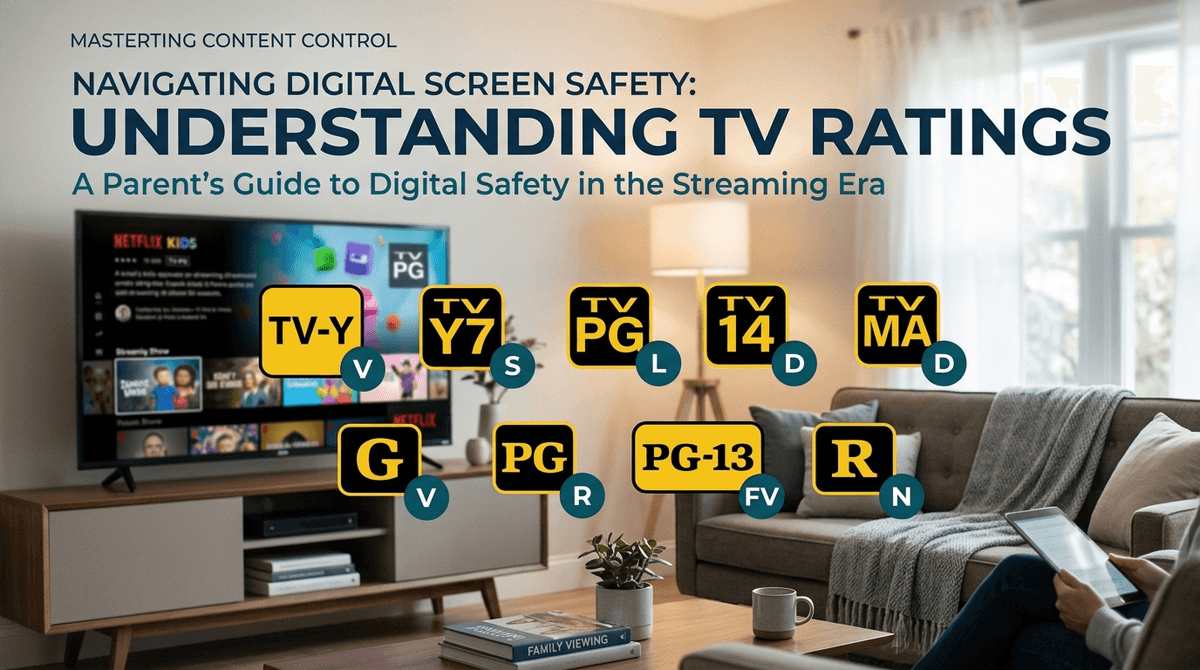
- The "Alphabet Soup" matters. Look past the age rating to the sub-descriptors: V (Violence), S (Sex), L (Language), and D (Dialogue).
- Top Recommendations: For quality over filler, check out Bluey (Ages 3+), Avatar: The Last Airbender (Ages 8+), and The Dragon Prince (Ages 9+).
The TV Parental Guidelines were established back in 1997. To put that in perspective, that was the year Titanic came out and everyone was obsessed with Tamagotchis. The system was designed for broadcast TV, long before Netflix allowed a seven-year-old to accidentally stumble onto Squid Game because the thumbnail looked like a colorful playground.
The ratings are self-assigned by the networks and streamers. There is no government board watching every episode of Skibidi Toilet to decide if it’s appropriate. It’s the wild west, and the icons in the corner of the screen are your only map.
The Ratings Breakdown
- TV-Y (All Children): Designed for the youngest viewers. Think Bluey or Daniel Tiger's Neighborhood.
- TV-Y7 (Directed to Older Children): For kids who can distinguish between make-believe and reality. This often includes "fantasy violence." SpongeBob SquarePants is the classic example here.
- TV-G (General Audience): Not necessarily "for kids," but there’s nothing offensive. Think The Great British Baking Show.
- TV-PG (Parental Guidance Suggested): This is the catch-all. It might have some mild "potty humor," minor swearing, or suggestive themes. The Simpsons usually sits here.
- TV-14 (Parents Strongly Cautioned): This is the "teen" rating. Expect intense violence, strong language, and sexual themes. Stranger Things and Wednesday fall into this bucket.
- TV-MA (Mature Audience Only): This is for adults. Graphic violence, explicit sex, or pervasive profanity. The Bear or Succession.
See a comparison of ratings across streaming platforms
In the old days, you knew that the "Disney Channel" was safe and "HBO" was for after the kids went to bed. Today, those lines are gone.
The Disney+ app now includes the "Hulu on Disney+" tile. If you haven't touched your settings, your kid could finish an episode of Mickey Mouse Clubhouse and potentially see a recommendation for American Horror Story.
Similarly, Max houses everything from Sesame Street to The Last of Us. The proximity of mature content to children’s content has never been closer. This is why understanding—and actually using—parental controls is no longer optional.
Learn how to set up parental controls on Disney Plus
The letter under the rating is often more important than the rating itself. If you see TV-PG-V, that "V" stands for violence. Here is the key:
- V (Violence): From cartoon bonks on the head to Marvel battles.
- S (Sexual Situations): Anything from heavy making out to implied scenes.
- L (Language): Swearing. In TV-14, this can get pretty salty.
- D (Suggestive Dialogue): This usually means "adult jokes" that (hopefully) go over kids' heads, or talk about "the birds and the bees."
- FV (Fantasy Violence): Specifically for the TV-Y7 category. Think Pokemon battles.
Just because a show is rated TV-Y doesn't mean it's good for your kid's brain. There is a massive difference between educational, slow-paced content and high-dopamine "junk food" TV.
For the Littles (Ages 2-6)
- Bluey: The gold standard. It’s funny, emotional, and models great parenting (and sibling) dynamics.
- Puffin Rock: Calm, educational, and beautifully narrated. It’s the antithesis of overstimulation.
- Avoid: CoComelon. I know, it’s a lifesaver when you need to cook dinner, but the fast cuts and constant noise are the definition of "digital candy."
For Big Kids (Ages 7-12)
- Avatar: The Last Airbender: One of the best stories ever told on television. It deals with deep themes like war, loss, and redemption while staying age-appropriate.
- The Dragon Prince: Great world-building and inclusive characters.
- The Wild Robot: If you're looking for a movie night, this is a stunning adaptation of the The Wild Robot book.
For Teens (Ages 13+)
- The Good Place: A rare TV-PG/TV-14 show that actually tackles moral philosophy in a way that is hilarious and engaging.
- Abbott Elementary: Smart, funny, and safe for a co-watching experience with your middle or high schooler.
Check out our guide on the best educational shows for elementary kids
Every kid is different. Some 10-year-olds can handle the spooky vibes of Stranger Things, while others will be sleeping in your bed for a month after one episode.
Community Norms: In many communities, the jump to TV-14 happens around 6th or 7th grade. However, the "Alphabet Soup" matters here. A TV-14-L (Language) show might be fine for your family, while a TV-14-S (Sexual Situations) show might be a hard "not yet."
The Sibling Slide: This is the hardest part of digital parenting. The 7-year-old wants to watch what the 12-year-old is watching. Generally, the rule should be: Content moves down, it doesn't move up. If the 12-year-old wants to watch a family movie, they can watch The Mitchells vs. the Machines. The 7-year-old should not be watching Deadpool & Wolverine just because their older brother is.
- Profiles are your best friend: Set up a specific "Kids" profile on Netflix, Amazon Prime Video, and Disney+.
- Lock your adult profile: Most parents forget this. Your kid knows how to click your name to see the "unrestricted" stuff. Put a 4-digit PIN on your adult profile.
- The "First Episode" Rule: For anything rated TV-PG or TV-14, watch the first episode with them. This gives you a baseline for the "vibe" of the show.
Get step-by-step instructions for locking Netflix profiles
When your kid asks why they can't watch a certain show, "because the rating says so" is a weak answer that invites an argument. Try these instead:
- "That show uses jump scares and intense imagery that your brain isn't quite ready to process yet. I want you to enjoy scary stories, but not at the cost of your sleep."
- "The humor in that show is pretty mean-spirited. We're looking for stuff that's actually funny, not just making fun of people."
- "That show is written for adults who have more life experience. A lot of the themes won't make sense yet, and I want you to see it when you can actually appreciate it."
Ratings are a tool, not a rule. They are a starting point for your own investigation. In a world where YouTube creators are making "kids content" that is actually borderline disturbing, and streaming apps are merging adult and child libraries, being an intentional parent means being a bit of a detective.
Use the icons in the corner, but trust your gut. If a show feels like "brain rot," it probably is—regardless of whether it's rated TV-Y or TV-G.
Next Steps
Check out our full guide on managing screen time and quality content