

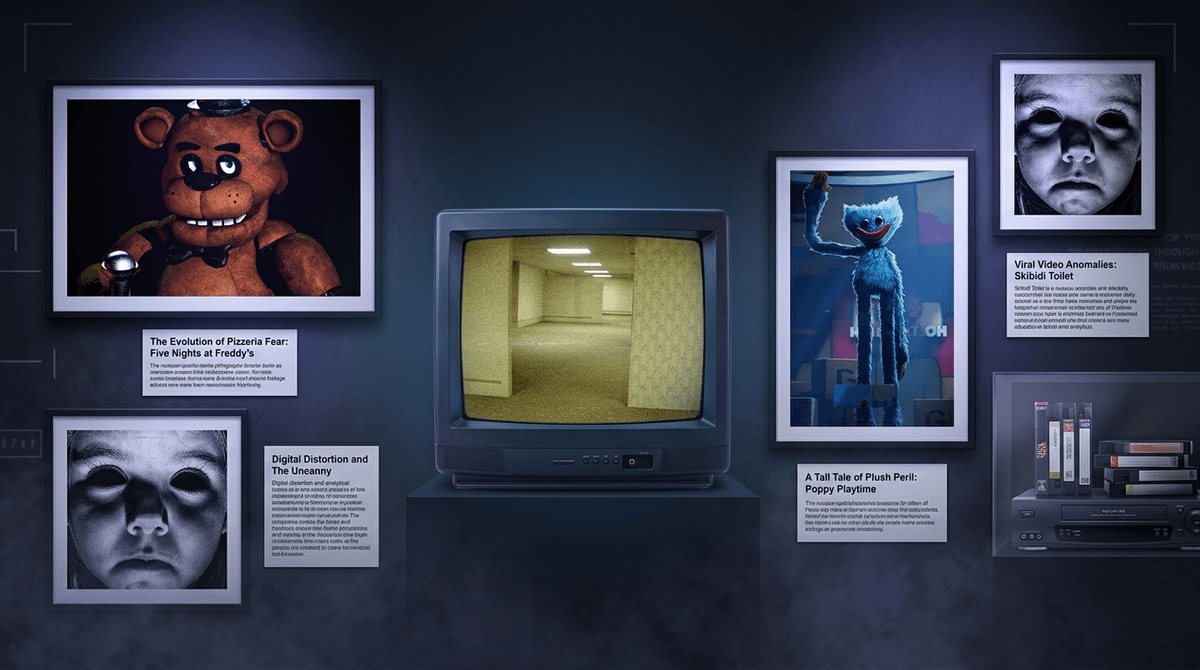
TL;DR: The Quick Cheat Sheet
If your kid is waking up at 2 AM because a "Skibidi Toilet" is coming for them, you aren't alone. Digital fear today isn't just about "scary movies"—it’s about Analog Horror, Jump Scares, and the Uncanny Valley.
Immediate Fixes:
- The 60-Minute Buffer: No screens an hour before bed. Period.
- Pivot to "Cozy" Media: Swap the high-adrenaline YouTube shorts for low-stress content like Puffin Rock or The Wild Robot by Peter Brown.
- Demystify the Tech: Watch a "making of" video to show how the "monsters" are just pixels and sound design.
Top "Safe" Recommendations for Wind-Down:
- Bluey (Ages 3-7)
- Hilda (Ages 7-12)
- Stardew Valley (Ages 10+)
- Brains On! (All ages)
You might have heard your kids talking about "The Backrooms" or "The Mandela Catalogue." This is Analog Horror. It’s a subgenre of internet horror that uses lo-fi, grainy, VHS-style aesthetics to create a sense of deep unease.
Unlike traditional horror that relies on a guy in a mask with a chainsaw, analog horror thrives on the Uncanny Valley—things that look almost human but are just "off" enough to trigger a primal fear response. Think distorted faces, emergency broadcast alerts that aren't real, and liminal spaces (like empty malls or endless office hallways).
For a kid, these feel more "real" than a CGI dragon because they look like found footage. They feel like a secret they weren't supposed to find on YouTube.
It feels counterintuitive. Why would a child click on a video of Huggy Wuggy if it gives them nightmares?
- The Adrenaline Rush: Fear releases dopamine and adrenaline. For kids, it’s a "safe" way to experience a physiological high.
- Social Currency: If everyone at school is talking about how "Ohio" (weird/cringe) a certain jump scare was, your kid wants to be in on the joke. Being "brave" enough to watch Five Nights at Freddy's content is a status symbol in the 4th grade.
- The Algorithm: YouTube and TikTok are designed to keep eyes on screens. If a child watches one "mildly creepy" video, the algorithm will serve them something 10% scarier next, and 10% scarier after that. Before you know it, they’ve gone from Minecraft tutorials to deep-sea psychological horror.
If your child is struggling with sleep, check if they’ve been interacting with these specific titles:
The gateway drug of horror. It’s a game about animatronic animals that come to life and jump-scare the player. While the lore is complex and kids love the "detective" aspect of it, the jump scares are specifically engineered to startle.
To an adult, a head coming out of a toilet is just bizarre. But as the series progresses, it turns into a dark, dystopian war saga with body horror and giant, mechanical monsters. It’s "brain rot" for sure, but the later episodes can be genuinely unsettling for younger kids.
Roblox isn't just for building "Tycoons." Games like Doors or Piggy are massive. They use loud audio cues and sudden visual shifts to create "organic" fear. Because it's "just Roblox," parents often assume it's safe, but the user-generated nature means there's no ESRB rating to protect them from a well-timed scream.
1. The "Digital Decompression" Zone
The blue light from screens is bad enough for sleep, but the emotional residue of a scary video is worse. Establish a "No-Screen Hour" before bed. This isn't a punishment; it's physiological prep. Switch to a physical boardgame or a book.
2. The "Behind the Curtain" Conversation
When your child is terrified of a monster, don't just say "it's not real." That doesn't help a brain that is currently flooded with cortisol. Instead, talk about how it was made.
- "Do you see how the lighting is dark so they can hide the bad graphics?"
- "That sound was probably just a person screaming into a distorted microphone."
- Watch a "making-of" or a "speed-paint" of the character. Turning the monster into a "project" takes away its power.
3. Replace the "Brain Rot" with "Cozy" Content
If they need a screen to wind down, steer them toward "Cozy Media." These are shows and games designed to lower the heart rate, not spike it.
- Bluey: Yes, even for older kids. It’s the ultimate "safe space" show.
- Stardew Valley: Instead of running from monsters in Roblox, they can plant parsnips and talk to villagers. It’s meditative.
- The Toys That Made Us: A great Netflix documentary series that’s fascinating but low-stress.
Ages 5-8
At this age, kids struggle to distinguish between fantasy and reality. Even "cartoonish" horror like Poppy Playtime can cause long-term sleep disruption. The Rule: Stick to curated platforms like YouTube Kids or PBS Kids. Avoid the "Shorts" or "Reels" feed entirely.
Ages 9-12
This is the peak "dare" age. They will watch scary things to prove they can. The Rule: Co-viewing is your best friend. If they want to watch a FNAF theory video, watch it with them during the day. Talk about the "jump scare" warnings that many creators put in their videos.
Ages 13+
Teenagers are more resilient but can still be affected by "disturbing" content (think psychological horror or gore). The Rule: Focus on "media literacy." Help them recognize when a video is trying to manipulate their emotions. If they can't sleep, encourage them to "reset" their algorithm by searching for something wholesome like woodworking or baking videos.
If your child comes to you admitted they watched something "bad" or "scary," thank them for telling you. If you freak out and take the iPad away for a week, they won't tell you next time they see something disturbing.
Try saying: "I'm glad you told me. Some people make those videos just to get a reaction out of you, and it sounds like it worked! Let's watch something funny to 'wash' your brain, and maybe we stay off that channel for a few days."
Get a script on how to talk to your child about scary internet trends
Digital fears are the modern version of the monster under the bed, but they come with a high-definition screen and a 120-decibel jump scare. You don't have to ban technology to fix the nightmares, but you do have to be the "filter" while their own internal filters are still developing.
The goal isn't to shield them from every shadow, but to give them the flashlight (and the media literacy) to see that the shadow is just a pile of laundry—or in this case, a pile of pixels.
Next Steps
- Check the History: Take a quick peek at their YouTube or Roblox history. Look for titles like "The Backrooms," "Analog Horror," or "SCARY [Game Name]."
- Set a "Hard Stop": Implement a house rule that all devices charge in the kitchen starting at 8 PM.
- Listen: If they start using words like "Uncanny," "Cursed," or "Analog," ask them what those mean to them. You’ll learn a lot about what’s currently living in their head.
Explore our guide on the best podcasts for bedtime to replace screen time