

Look, we all know the difference between our kid zoning out to endless YouTube autoplay versus them actually engaged with something that's teaching them... anything. But "educational" doesn't have to mean boring PBS documentaries (though honestly, some of those are incredible).
Developmentally positive media is content that actually supports where your child is right now in their growth—emotionally, cognitively, socially. It's the stuff that builds skills, sparks curiosity, models healthy relationships, or helps them process big feelings. And here's the thing: it can absolutely still be fun. In fact, the best developmentally positive content doesn't feel like learning at all.
The key shift here is moving from "how many minutes did they watch?" to "what did they get from it?" Not every screen minute is created equal, and I think deep down we all know that 30 minutes of Bluey hits different than 30 minutes of unboxing videos.
The average kid is consuming 4-6 hours of screen media daily (and yes, that number goes up significantly for teens). That's a massive chunk of their waking hours. If even half of that could be content that's genuinely supporting their development instead of just... existing... that's a huge win.
But here's what makes this hard: the algorithms don't care about development. YouTube, Netflix, Roblox—they're all optimized for engagement (translation: keeping eyeballs glued), not for teaching emotional regulation or critical thinking. So we have to be more intentional about what we're serving up.
Plus, our kids are smart. They can smell "educational content" from a mile away if it's preachy or boring. The magic happens when something is genuinely entertaining AND developmentally valuable.
Here's what to look for, depending on your kid's age and stage:
For Younger Kids (Ages 3-7)
- Emotional literacy: Shows that name feelings and model healthy ways to handle them (Daniel Tiger's Neighborhood, Bluey)
- Problem-solving: Games or shows where characters work through challenges (Paw Patrol, Toca Boca games)
- Social skills: Content showing cooperation, sharing, friendship (Sesame Street)
- Limited stimulation: Not hyper-edited with constant scene changes and loud noises
For Elementary Age (Ages 6-10)
- Growth mindset: Characters who fail, try again, and learn (The Magic School Bus Rides Again)
- Curiosity and creativity: Games that let them build, create, experiment (Minecraft, Kerbal Space Program)
- Diverse perspectives: Stories featuring different cultures, family structures, abilities
- Real-world connections: Content that connects to their interests and helps them understand how things work
For Tweens/Teens (Ages 11+)
- Complex narratives: Stories with moral ambiguity, character development (Avatar: The Last Airbender, The Hunger Games movies)
- Identity exploration: Content that helps them think about who they are and want to be
- Critical thinking: Media that raises questions rather than just providing answers
- Strategy and planning: Games requiring forethought and consequence consideration (Stardew Valley, Civilization VI)
Shows That Actually Deliver
Preschool/Early Elementary:
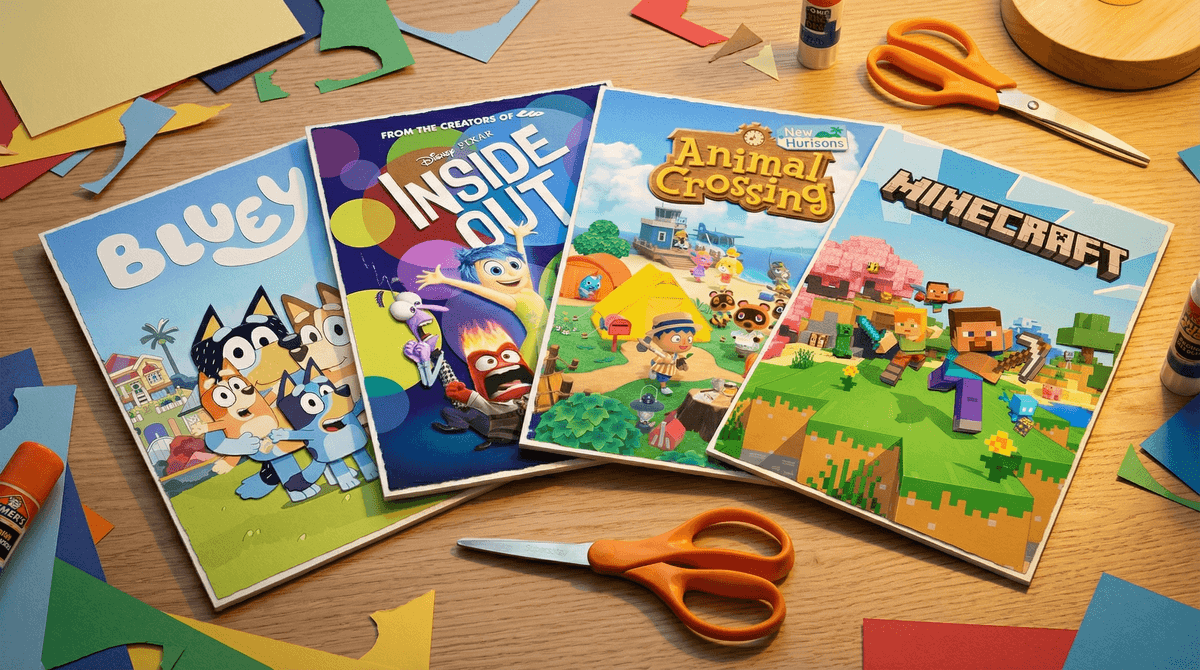
- Bluey - Hands down the best show about emotional regulation and imaginative play
- Tumble Leaf - Gorgeous, slow-paced science exploration
- Elinor Wonders Why - Scientific method for little kids
Elementary:
- Hilda - Adventure, bravery, friendship without being saccharine
- The Wild Kratts - Animal science that's genuinely engaging
- Gravity Falls - Mystery-solving, sibling relationships (ages 8+)
Tweens/Teens:
- Avatar: The Last Airbender - Complex themes about war, identity, responsibility
- The Great British Baking Show - Competition without cruelty
- Our Planet - Environmental awareness with stunning cinematography
Games That Build Skills
Problem-Solving:
- Portal 2 - Spatial reasoning and physics (ages 10+)
- Monument Valley - Visual puzzles, beautiful design (all ages)
- The Witness - Pattern recognition (ages 12+)
Creativity:
- Minecraft - Building, planning, resource management
- Dreams - Game creation and design (ages 10+)
- Animal Crossing: New Horizons - Design, social interaction, patience
Strategy:
- Stardew Valley - Planning, consequences, relationships
- Cities: Skylines - Systems thinking (ages 10+)
- Chess apps - Classic strategy (all ages)
Movies Worth Watching Together
- Inside Out - Emotional processing masterclass
- Coco - Family, memory, cultural traditions
- WALL-E - Environmental themes, minimal dialogue
- Hidden Figures - History, perseverance, representation (ages 8+)
- Spider-Man: Into the Spider-Verse - Identity, mentorship, stunning artistry
Start with co-viewing. Especially for younger kids, watching together and talking about what you're seeing multiplies the developmental value. Ask questions: "Why do you think she did that?" "How would you feel in that situation?"
Create a "approved" list together. Let kids have input on what makes the cut. They're more likely to actually choose from it if they helped build it. Get age-appropriate recommendations for your child based on your child's specific interests.
Balance is real. Look, sometimes they're going to watch something mindless, and that's okay. We're aiming for more positive content, not perfection. Even I let my kid watch Ryan's World sometimes when I just need 20 minutes to make dinner.
Use parental controls strategically. On YouTube Kids, you can approve specific channels. On Netflix, you can set up kids' profiles with age-appropriate content. On gaming platforms, you can disable in-app purchases and chat features.
Make it social when possible. Games like Minecraft or Mario Kart are way more developmentally valuable when played with siblings or friends (with supervision for online play).
Not all screen time is created equal, and you don't have to feel guilty about every minute your kid spends with media. The goal isn't to eliminate screens—it's to be intentional about what's filling that time.
Developmentally positive content exists across every medium and for every age. The trick is knowing what to look for and being willing to curate a bit more than just letting the algorithm decide.
Your kid can absolutely learn emotional regulation from Bluey, practice problem-solving in Minecraft, and explore complex moral questions through Avatar: The Last Airbender. It just takes a little more thought on the front end.
-
Take inventory: What are your kids actually watching and playing right now? See if their current favorites have developmental value
. -
Pick one upgrade: Don't overhaul everything at once. Replace one low-value show or game with something from the lists above.
-
Watch or play together: Even just once a week, engage with their media alongside them. It makes everything more valuable.
-
Keep the conversation going: Talk about what they're watching and playing. What do they like about it? What did they learn? How did it make them feel?
Remember: you're not trying to turn every screen moment into a lesson. You're just trying to make sure that when your kid is spending time with media (which they will), at least some of it is actually supporting who they're becoming.