

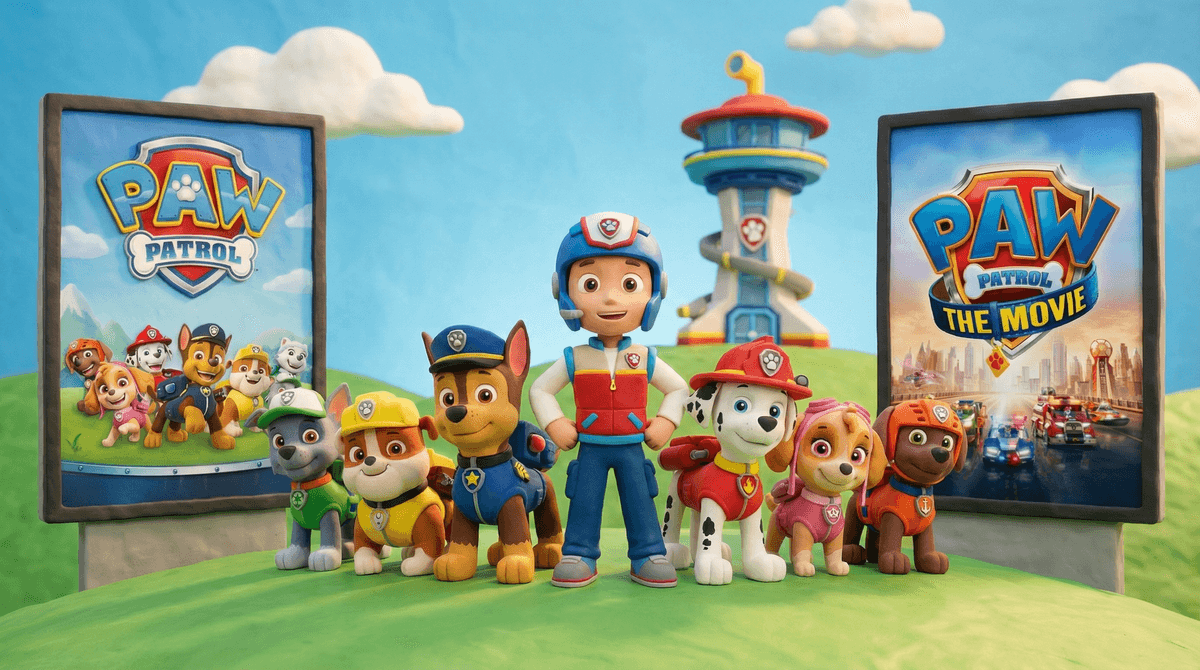
Paw Patrol: What Parents Should Know About This Preschool Phenomenon
TL;DR: Paw Patrol is the preschool juggernaut that's probably already invaded your home. It's formulaic, repetitive, and not exactly winning awards for narrative complexity—but it's also generally harmless, teaches basic problem-solving, and gives you 22 minutes of peace. The real question isn't whether your kid should watch it, but how to manage the merchandise avalanche and whether you're okay with the show's pretty traditional gender roles and consumerism engine.
If you've somehow avoided it, Paw Patrol is a Canadian animated series about a tech-savvy 10-year-old boy named Ryder who leads a team of rescue dogs. Each pup has a specific skill set and vehicle: Chase is a police dog, Marshall is a firefighter, Skye flies a helicopter, Rubble operates construction equipment, and so on. Every episode follows the exact same structure: someone in Adventure Bay has a problem, Ryder summons the pups, they deploy with their specialized gear, and they save the day. Roll credits, sell toys.
The show premiered in 2013 and has since become a cultural force among the preschool set. We're talking multiple movies (Paw Patrol: The Movie and Paw Patrol: The Mighty Movie), countless seasons, and enough merchandise to fill a small warehouse. Your kid has probably already asked for a Paw Patrol backpack, lunchbox, toothbrush, and bedding set.
The appeal is pretty straightforward: predictability. Preschoolers thrive on routine and knowing what comes next, and Paw Patrol delivers that in spades. Every episode follows the same beat-by-beat structure, which is actually developmentally appropriate for 2-5 year olds. They know Ryder will say "No job is too big, no pup is too small," they know exactly when the pups will deploy, and they know everything will work out in the end.
The characters are also distinct and easy to identify. Each pup has a clear personality, color scheme, and catchphrase. This makes it easy for young kids to pick favorites and feel like they're part of the team. The problems are simple and solvable, which gives preschoolers a sense of mastery and control—something they don't have much of in their actual lives.
Plus, dogs. Kids love dogs.
Let's be real: Paw Patrol isn't Bluey. It's not going to make you cry with its emotional depth or teach your kid about processing grief. But it does offer some basic educational elements:
- Problem-solving: Each episode presents a problem that needs to be solved, and the pups work through it step by step
- Teamwork: The pups collaborate and use their different skills to accomplish goals
- Community helpers: Kids learn about different jobs and roles (firefighters, police, construction workers, etc.)
- Basic vocabulary: Especially around vehicles, tools, and rescue operations
That said, the show doesn't really encourage critical thinking or open-ended play. Everything is very prescribed and formulaic. Compare that to something like Daniel Tiger's Neighborhood, which actively teaches emotional regulation and social skills, and Paw Patrol feels pretty thin on substance.
Here's where things get spicy. Paw Patrol has its critics, and they raise some legitimate points:
Gender roles: Skye is basically the only female pup on the main team for most of the series (Everest shows up later), and she's pink, flies, and is often portrayed as the "cute" one. The boys get to be police officers, firefighters, and construction workers. It's not egregiously sexist, but it's not exactly progressive either. Later seasons have added more female characters, but the core team remains pretty male-dominated.
Consumerism: This show is a merchandise machine. Every new season introduces new vehicles, new outfits, and new pups—all designed to sell more toys. The toys and games tied to Paw Patrol are everywhere, and your kid will want all of them. It's not subtle.
Authority worship: Some parents are uncomfortable with how the show portrays police and authority figures as unquestionably good and heroic. Chase, the police pup, is often the leader after Ryder, and there's never any nuance about when authority might be wrong or need to be questioned. For some families, especially in 2026, this feels tone-deaf.
Low educational value: Compared to shows like Sesame Street or Wild Kratts, Paw Patrol doesn't really teach much beyond basic problem-solving. It's more about keeping kids entertained than educating them.
Repetitiveness: If you have to watch one more episode where Mayor Humdinger causes chaos in Foggy Bottom, you might lose your mind. The formula never changes, and it can feel numbing for adults.
According to Screenwise data, about 92% of families with young kids are using TV/streaming, with an average of 4.2 hours of screen time per day across all ages (4 hours on weekdays, 5 on weekends). For preschoolers specifically, Paw Patrol is often part of that daily rotation.
The American Academy of Pediatrics recommends no more than one hour of high-quality programming per day for kids ages 2-5. If your kid is watching multiple Paw Patrol episodes back-to-back, you're probably exceeding that. But here's the thing: most families are. The question is whether you're being intentional about it or just using it as a babysitter.
Ages 2-3: The show is technically rated TV-Y (appropriate for all children), but kids under 3 might not fully follow the plots. They'll enjoy the colors, music, and dogs, but they're not getting much educational value. The AAP recommends avoiding screen time for kids under 18 months and limiting it significantly for 2-3 year olds.
Ages 3-5: This is the sweet spot. Preschoolers can follow the simple