

TL;DR
If you’re looking for a show that has the "cozy vibes" of Bluey but the adventurous spirit of Gravity Falls, you’ve found it. Hilda is a rare gem on Netflix that treats kids like capable, empathetic humans rather than passive consumers of bright colors and loud noises. It’s perfect for ages 6–12, focusing on curiosity, environmental stewardship, and the complicated reality of moving to a new place.
Quick Links:
- Watch the show: Hilda (Netflix)
- Read the source material: Hilda Graphic Novels by Luke Pearson
- For the movie night: Hilda and the Mountain King
- Similar vibes: Over the Garden Wall
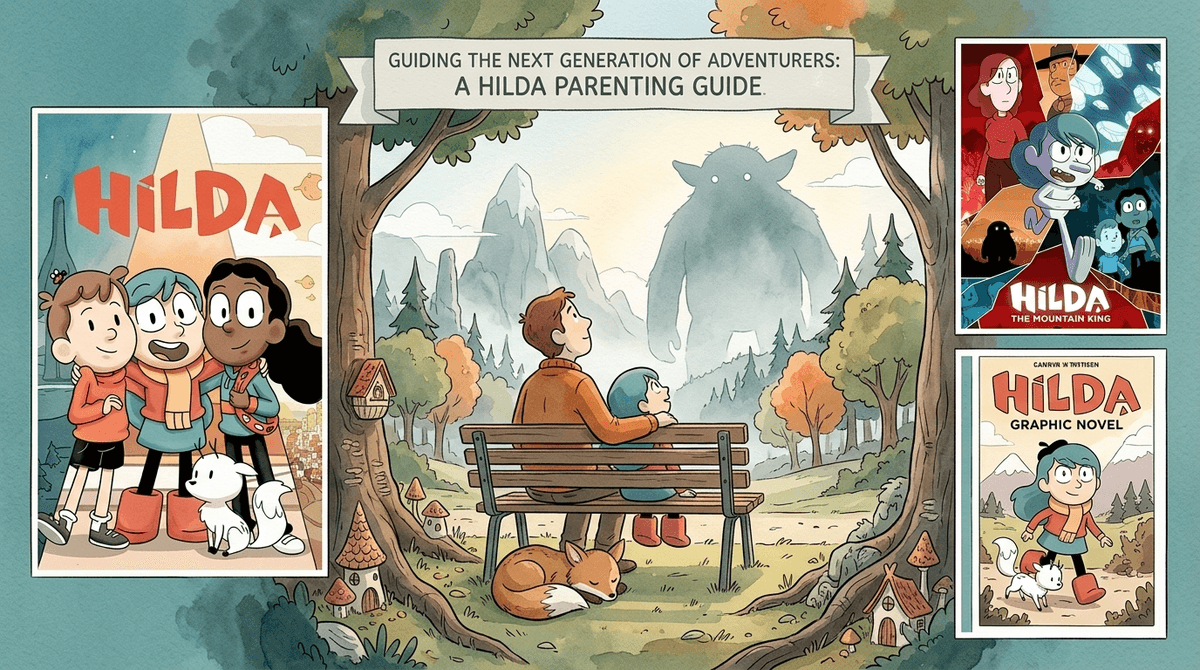
Based on the stunning graphic novels by Luke Pearson, Hilda follows a blue-haired girl who grows up in a vast, magical wilderness filled with giants, "elf" bureaucracy, and tiny invisible people. In the first few episodes, she and her mom (Johanna) move from their isolated cabin to the walled city of Trolberg.
While Hilda initially hates the idea of being "caged" in a city, the show quickly evolves into an exploration of how magic exists even in urban spaces—if you’re brave enough to look for it. She joins the Sparrow Scouts (think Girl Scouts but with more supernatural encounters), makes friends with the cautious David and the high-achieving Frida, and continues her adventures with her faithful deer-fox, Twig.
We talk a lot about "brain rot" content—those hyper-stimulating, 3-second-cut YouTube videos that leave kids vibrating with overstimulation. Hilda is the antidote.
It has a distinct, muted color palette (lots of autumnal oranges, teals, and greys) that is visually soothing. The storytelling is sophisticated. It doesn’t talk down to kids. It understands that children deal with real anxiety—like David’s fear of everything or Frida’s struggle with perfectionism—and it addresses those themes through the lens of fantasy.
Kids love it because it feels like a "big kid" show without being cynical. It’s adventurous, occasionally a little spooky, and features a protagonist who is fiercely independent but still loves and respects her mom.

The core "superpower" in Hilda isn't magic; it’s empathy. In most kids' media, a "troll" or a "monster" is something to be defeated or run away from. In Hilda’s world, a monster is usually just someone whose territory has been encroached upon, or who is having a really bad day.
Hilda’s first instinct is almost always to ask: "Why are they doing this?"
This leads to some incredible lessons on:
- Conflict Resolution: Finding middle ground between the humans of Trolberg and the trolls outside the walls.
- Environmentalism: Understanding how our expansion affects the creatures (real or imaginary) that lived there first.
- Diversity of Thought: Realizing that just because someone looks scary or speaks a different "language," it doesn't mean they are a threat.
If you're going to dive in, here is how I recommend navigating the content:
Start here if you have a reluctant reader. The art is world-class, and the pacing is excellent. They are quick reads but high quality.
Season 1 is mostly about the move to Trolberg and world-building. Season 2 gets a bit deeper into the lore and features some of the best episodes of animated television in the last decade (specifically "The Deerfox"—have tissues ready).
This is a feature-length film that bridges Season 2 and Season 3. It is essential viewing. You cannot skip this and go straight to Season 3, or your kids will be very confused about why certain characters look different. It deals with a "body swap" trope but handles it with incredible emotional depth.
The final season. It’s a bit more serialized and focuses on Hilda’s family history. It wraps up the story beautifully.
Check out our guide on graphic novels for middle grade readers
While Hilda is rated TV-Y7, there are a few things for parents to keep in mind:
- The "Spook" Factor: There are ghosts, "Nightmare Spirits" (Marra), and giant trolls. For a sensitive 5-year-old, the Marra episodes might be a bit much. However, for most 7+ kids, it’s the "fun" kind of scary—think The Nightmare Before Christmas level.
- Parent-Child Conflict: Hilda is a bit of a rule-breaker. She sneaks out. She goes into the "Wilderness" when she’s told not to. But unlike many shows where the parents are bumbling idiots, Hilda’s mom, Johanna, is a central, competent character. Their arguments feel real, and their reconciliations are actually touching.
- Pacing: This isn't SpongeBob SquarePants. It’s slower. If your kid is used to high-octane YouTube content, they might find the first episode "boring." Encourage them to stick with it until they meet the elves in episode 2.
We live in a pretty cynical world, and a lot of media for the 8–12 age bracket reflects that with "edgy" humor or mean-spirited sarcasm. Hilda rejects that. It’s a show where being kind is cool, and being curious is the ultimate adventure.
It’s also worth noting the community data: about 40% of parents in the Screenwise community who have kids in the 2nd through 5th grade report that Hilda is a "family favorite" that parents actually enjoy watching with their kids. It’s one of those rare shows that doesn’t feel like a chore to have on in the living room.
If you’re watching along, here are a few "intentional parent" conversation starters:
- On Change: "Hilda really missed her old house in the woods. What are some things you’d miss if we had to move? What are some things you’d be excited to find in a new city?"
- On Empathy: "Why do you think the trolls are so angry at the people of Trolberg? Do you think the humans are being fair to them?"
- On Fear: "David is scared of almost everything, but he still goes on the adventures. Does that make him more or less brave than Hilda?"
- On Nature: "Even though they live in a city, they find magic in the parks and the cracks in the sidewalk. Where do we see 'nature' in our neighborhood?"
Hilda is a 10/10 recommendation. It’s visually stunning, emotionally resonant, and promotes the exact kind of digital wellness we want for our kids: content that inspires them to put the screen down and go explore the "wilderness" of their own backyard.
If your kid has already finished Hilda and is looking for more, check out The Wild Robot by Peter Brown or the Wings of Fire series for more epic, empathy-driven world-building.
- Add it to the queue: Put Hilda on your Netflix watchlist for the next rainy Saturday.
- Grab the books: See if your local library has the Hilda graphic novels.
- Discuss the "Troll" problem: Use the show to talk about how we treat people who are "different" or "scary" in real life.