

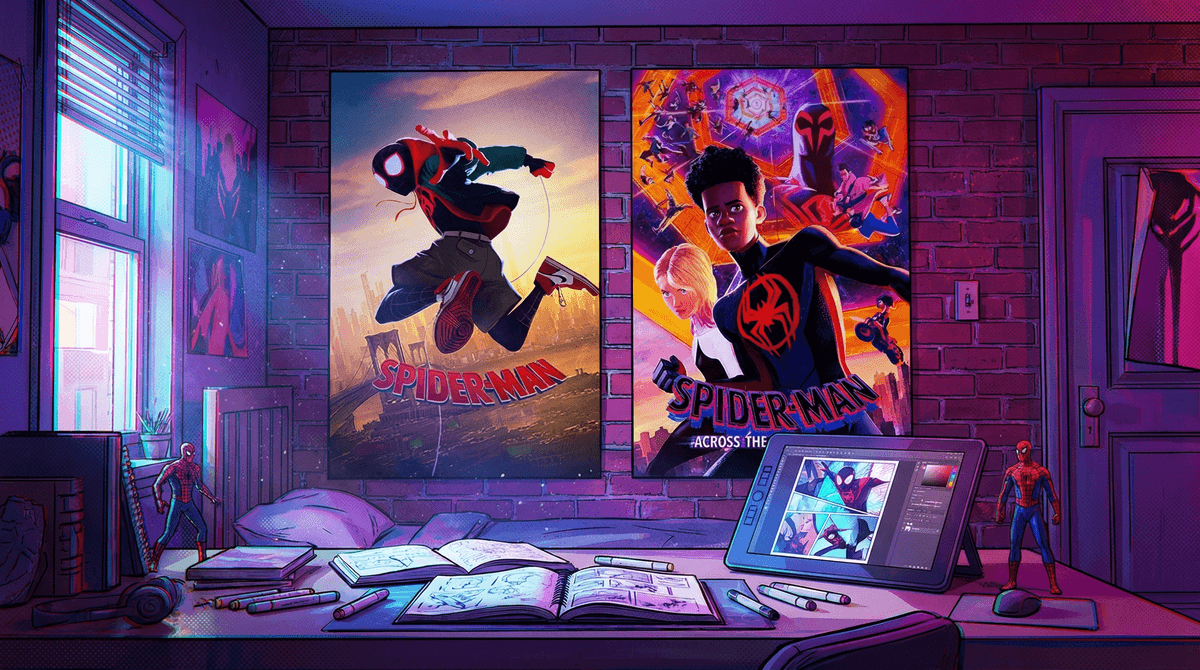
Spider-Man: Into the Spider-Verse is a 2018 animated superhero film that basically changed the game for what animated movies could be. It follows Miles Morales, a Brooklyn teen who becomes Spider-Man and discovers there are multiple Spider-people from different dimensions. The animation style is genuinely groundbreaking—it looks like a comic book come to life, with Ben-Day dots, speech bubbles, and a frame rate that makes it feel like you're flipping through panels.
The movie won the Oscar for Best Animated Feature, and for good reason. It's not just another superhero origin story—it's a film about identity, pressure, and figuring out who you're supposed to be when everyone has expectations of you. Which, let's be honest, is pretty much the entire experience of being a kid.
Here's the thing: this movie works on multiple levels, which is why you'll see it playing in households across the country. According to our community data, about 40% of families with kids use Netflix regularly, and this film has been a consistent favorite since it hit streaming platforms.
For younger kids (ages 7-10): The visual style is mesmerizing. It's fast, colorful, and unlike anything they've seen before. Spider-Ham (yes, a cartoon pig Spider-Man) provides comic relief, and the action sequences are genuinely exciting without being too intense.
For tweens and teens (ages 11+): Miles Morales is a relatable protagonist who's dealing with real stuff—new school anxiety, disappointing his parents, feeling like he doesn't measure up. The movie doesn't talk down to kids. It acknowledges that growing up is hard and that sometimes the people who are supposed to help you (looking at you, Peter B. Parker) are also kind of a mess.
For parents: The animation alone is worth watching. Plus, there are enough subtle jokes and cultural references that you won't feel like you're just sitting through "kids' content." The soundtrack featuring artists like Post Malone, Swae Lee, and Juice WRLD is actually good.
If your family is already deep in the Marvel universe or has watched every DC movie, you might be wondering what makes this one special.
Representation matters: Miles Morales is Afro-Latino, and the film doesn't shy away from his cultural identity. His family speaks Spanish, his neighborhood feels authentically Brooklyn, and his experience as a kid navigating different worlds (his new prep school vs. his home community) is central to the story.
It's about failure: Unlike a lot of superhero content where the hero just needs to "believe in themselves," this movie shows Miles actually failing. A lot. He can't control his powers, he gets people hurt, he freezes up. The message isn't toxic positivity—it's that you have to keep trying even when you mess up.
The multiverse concept is handled well: Yes, there are multiple Spider-people from different dimensions, but the movie uses this as a way to explore different versions of heroism rather than just creating chaos. Spider-Gwen, Spider-Noir, Peni Parker—each one shows a different way to be a hero.
Ages 6-8: Probably fine, but know your kid. There are some intense action sequences, and the villain (Kingpin) is genuinely scary-looking. The pacing is also very fast, which can be overwhelming for younger viewers. If they struggled with the intensity of The Incredibles, wait a year or two.
If it lands and they want more, the sequel is the obvious next pick and usually the wrong one for this age — here’s what to watch instead.
Ages 9-12: Sweet spot. Old enough to follow the plot (which does involve some multiverse complexity) and appreciate the character development, but young enough that the humor and visual style will fully captivate them.
Ages 13+: They'll probably love it and catch references you miss. The film has become somewhat of a cultural touchstone for this age group, particularly the "anyone can wear the mask" theme.
Content notes: The movie is rated PG. There's no inappropriate language, no sexual content, and while there is violence, it's superhero violence—punching, web-slinging, explosions. One character death (Miles' uncle) is emotionally impactful but handled sensitively.
The sequel exists: Spider-Man: Across the Spider-Verse came out in 2023, and if your kids love the first one, they'll be asking to watch the second. Fair warning: it's longer (2 hours 20 minutes vs. 1 hour 57 minutes) and ends on a cliffhanger.
It might spark broader Marvel interest: This could be a gateway into the wider Spider-Man universe or Marvel Cinematic Universe. Be prepared for requests to watch other Spider-Man movies, though note that the live-action ones are generally more intense and rated PG-13.
The themes are surprisingly deep: You might find yourself having conversations about identity, code-switching, living up to expectations, and what it means to be a hero. These are good conversations to have.
Screen time context: With average screen time in our community sitting at about 4.2 hours per day, a two-hour movie is a significant chunk. But here's the thing—this is the kind of content that's worth the time. It's not mindless; it's actually thought-provoking and beautifully crafted. About 50% of families in our community watch Disney+ content together, and this falls into that "family movie night" category where co-viewing adds value.
- "Miles had to figure out his own way to be Spider-Man. When have you felt pressure to do something a certain way, but needed to find your own approach?"
- "The movie shows lots of different Spider-people. What makes someone a hero?"
- "Miles kept his Spider-Man identity secret from his parents. When is it okay to keep secrets? When is it not?"
Spider-Man: Into the Spider-Verse is one of those rare films that deserves the hype. It's visually stunning, emotionally resonant, and actually has something to say beyond "bad guy does bad thing, good guy stops him."
Is it going to teach your kids financial literacy or get them outside touching grass? No. But it might give them a protagonist who looks like them or deals with similar struggles. It might spark conversations about identity and belonging. And honestly, sometimes a really well-made piece of art is worth the screen time.
If you're looking for quality content that the whole family can enjoy together—and that won't make you want to hide in the kitchen while it's on—this is it.
- Check it out yourself first if you're unsure about the intensity level for your particular kid
- Plan a family movie night rather than having kids watch alone—the themes are richer with discussion
- Consider it a bridge to conversations about representation in media and what it means to see yourself in stories
- Explore other animated films that go beyond typical kids' content
