

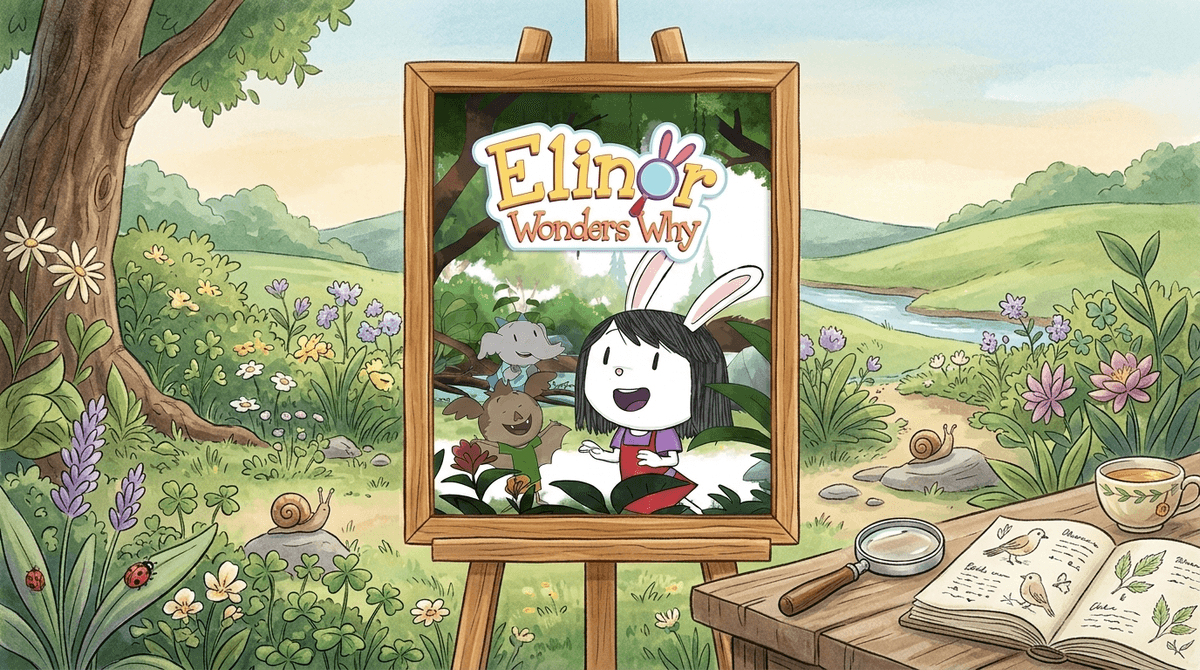
TL;DR: If you’re looking for the "anti-brain rot" for your preschooler, Elinor Wonders Why is it. It’s a gentle, science-focused PBS series that teaches kids how to observe the world rather than just consume content. No frantic pacing, no high-pitched screaming—just a curious rabbit and her friends asking "why?" and actually finding the answers through nature.
Quick Links for the Science-Curious Kid:
If you haven't stumbled upon it while scrolling through the PBS Kids Video app, Elinor Wonders Why follows a very observant little rabbit named Elinor and her two best friends, Ari (a funny, slightly clumsy bat) and Olive (an elephant who is the "prepared" one of the group).
They live in Animal Town, a place where the architecture is suspiciously eco-friendly and everyone seems to have a PhD in being a good neighbor. Each episode starts with a question—usually sparked by something Elinor sees in her backyard—and follows the trio as they use the "Scientific Inquiry" method to solve it.
We’re talking about things like: Why do owls sleep during the day? Why do ants march in a line? How do birds stay dry in the rain?
It was created by Jorge Cham (the guy behind PHD Comics) and Daniel Whiteson (a physics professor), so the science is actually legit. It’s not "magic" science; it’s "let’s look at this leaf under a magnifying glass" science.
We talk a lot about "brain rot" in the digital wellness world—those high-frenetic, brightly colored, loud shows that turn kids into zombies and lead to massive meltdowns when the screen goes off.
Elinor Wonders Why is the exact opposite. It’s "slow TV" for the 4-year-old set. The color palette is earthy and soft, the music is acoustic and catchy without being ear-wormy (though you will find yourself humming the theme song), and the pacing allows kids to actually process what they’re seeing.
But the real reason this show is a heavy hitter for intentional parents is that it teaches biomimicry. That’s a fancy word for "nature did it first, and humans copied it." The show constantly connects nature to human inventions—like how we designed Velcro by looking at burrs that stick to fur, or how we designed fans by looking at how ears cool down elephants.
It turns the "Why?" phase—which, let's be honest, can be exhausting for parents—into a shared project. Instead of you needing to be the walking encyclopedia, Elinor teaches your kid that they can find the answer themselves by observing.
Learn more about the best educational shows for preschoolers
If your child is already an Elinor superfan, you can lean into that curiosity with these other high-quality, science-adjacent recommendations:
If Elinor is the intro to biology, Wild Kratts is the advanced course. It’s a bit more "action-adventure" with villains and "creature power suits," but the animal facts are top-tier. It’s a great step up for kids aged 5-8.
Based on the popular Ada Twist, Scientist book, this Netflix series focuses more on the physical sciences and chemistry. It’s great for showing the trial-and-error side of science—specifically that it’s okay to fail and try again.
If you want to cut out the screen entirely but keep the "Why?" vibes going, Brains On! is the gold standard for kids' science podcasts. It’s co-hosted by a kid every week and tackles everything from black holes to why farts smell.
For a digital experience that mirrors Elinor’s love for the outdoors, Toca Nature is a beautiful, open-ended app where kids can grow forests, feed animals, and observe the ecosystem they’ve created. No high scores, no timers, just exploration.
Target Age: 3 to 6 years old.
While older kids might find it a bit "babyish" because the characters are so earnest and kind, the actual science concepts are solid enough that a 7-year-old could still learn something.
Safety Considerations: This is about as safe as it gets. There are no "bad guys," no scary moments, and no consumerist tie-ins that will have your kid begging for a plastic playset every five minutes. It’s pure, wholesome PBS.
Community Data Note: In our Screenwise community, we see that families who prioritize "low-stim" content often use Elinor Wonders Why as a bridge between the toddler years and more complex educational content. About 40% of our parents with kids in Pre-K list this as a "top 3" show for screen time they actually feel good about.
One of the best things about Elinor is that she doesn't just "know" things. She has to work for it. In a world of instant gratification and Google, showing a character who spends an entire afternoon watching a snail move is a powerful counter-cultural message.
How to Talk About It: After an episode, you don't need to quiz them. Just bring the show into the real world:
- "Elinor noticed how the birds used twigs for their nests. What do you think that bird in our tree used?"
- "Remember how Ari wondered why his ears are so big? Why do you think our dog has floppy ears?"
- "Let's be like Elinor and go on a 'wonder walk' today."
Elinor Wonders Why is the rare show that actually makes your job as a parent easier by encouraging kids to be more engaged with the physical world around them. It’s a high-quality, low-stress addition to your family’s digital diet.
If you’re trying to move away from the "zombie stare" of mindless YouTube kids' channels, making the switch to Elinor is a great first step. It proves that "educational" doesn't have to mean "boring," and "quiet" doesn't have to mean "uninteresting."
- Watch an episode together: Check it out on the PBS Kids website or app.
- Get a magnifying glass: A $5 physical magnifying glass is the best "merch" you can buy for an Elinor fan.
- Check your Screenwise dashboard: See how Elinor Wonders Why fits into your family's overall "Wise Score" for media quality.