

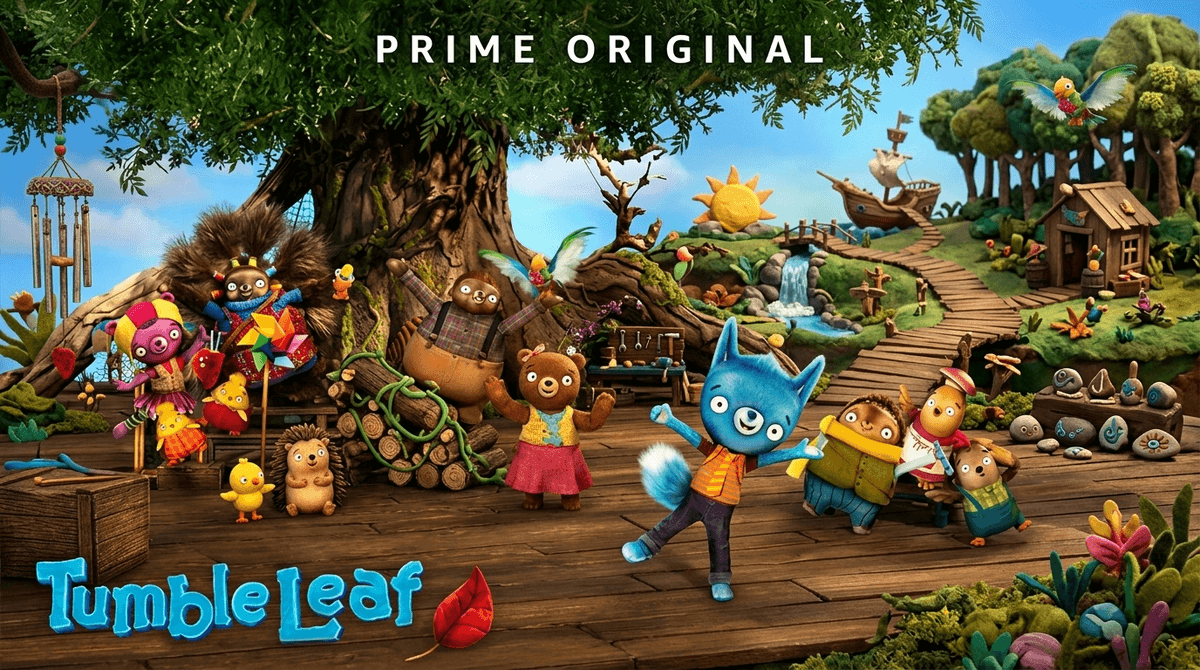
TL;DR: If you’re worried about "brain rot" or your kid turning into a screen-zombie, Tumble Leaf is the cure. It’s a gorgeous, slow-paced, stop-motion masterpiece on Amazon Prime that teaches physics and problem-solving without the frantic editing of modern kids' YouTube. It’s the "slow food" of children’s programming.
Quick Links for the Gentle Media Starter Pack:
- Tumble Leaf (The gold standard for preschool STEM)
- Puffin Rock (Nature-focused and incredibly soothing)
- Trash Truck (Gentle, imaginative, and sweet)
- Stillwater (For mindfulness and emotional regulation)
If you haven’t stumbled upon it yet, Tumble Leaf is an Amazon Original series that follows a small blue fox named Fig and his best friend, a caterpillar named Stick. They live in a shipwreck on a whimsical island where every day starts with a trip to "The Finding Place"—a magical chest that washed up on shore containing a random object (a flashlight, a mirror, a spring, a sponge).
The show is produced using stop-motion animation. In an era where everything is slick, high-contrast CGI, the tactile nature of Tumble Leaf feels like a breath of fresh air. You can see the texture of the fur, the wood grain of the toys, and the physical weight of the objects. It looks like a world your child could actually build in their playroom, which is exactly the point.
We need to talk about the "neon sludge" problem. If you’ve ever watched CoComelon or certain high-energy YouTube Kids channels, you’ve probably noticed the "zombie stare." These shows often use rapid-fire scene cuts (sometimes every 1-2 seconds) and saturated colors to keep a child’s dopamine loop firing. It’s effective at keeping them quiet, but the "come down" when the screen turns off is usually a total meltdown because their brains have been overstimulated.
Tumble Leaf is the literal antidote. The pacing is intentional. The camera lingers. The music is acoustic and whimsical rather than synthesized and repetitive. According to our Screenwise community data, parents who prioritize "low-stimulation" media report 30% fewer transitions-related tantrums compared to those using high-speed content.
The "Finding Place" Hook
Every episode starts with a mystery. What is the object in the box? How does it work? This sets up a narrative of curiosity rather than passive consumption. Fig doesn’t just "know" things; he plays with the object until he figures out its properties.
STEM Without the Lecture
Most "educational" shows hit kids over the head with facts. Tumble Leaf teaches physics through play. If Fig finds a mirror, the episode is about reflection and light. If he finds a pump, it’s about air pressure. It’s intuitive science. Kids learn the concept of a simple machine or a shadow before they ever hear the vocabulary word for it.
No "Bad Guys"
There are no villains in Tumble Leaf. No one is trying to stop Fig or ruin his day. The "conflict" is always a puzzle: "How do I get this heavy thing up the hill?" or "How do I find my friend in the dark?" For preschoolers who are still developing emotional regulation, this lack of peril is huge. It makes it a "safe" show for kids who are prone to nightmares or anxiety.
If your family loves the vibe of Fig and Stick, you should check out these other titles that respect a child’s developing brain:
Narrated by Chris O'Dowd, this show is basically a nature documentary for toddlers. It follows Oona and her little brother Baba on an island off the coast of Ireland. It’s quiet, educational, and visually stunning.
Don't let the title fool you—this isn't a loud, clanging show. It’s a gentle, imaginative series about a boy and his best friend (who happens to be a garbage truck). It captures the magic of childhood play perfectly.
Based on the Zen Shorts book series, this show features a giant panda who tells stories to the neighborhood kids to help them navigate big emotions. It’s the ultimate "calm down" show.
You probably already know Bluey, but it deserves a spot here because it focuses on the same "learning through play" philosophy as Tumble Leaf. It’s slightly higher energy, but the emotional intelligence is off the charts.
Check out our full guide on the best gentle shows for preschoolers
Ages 2-3: This is the perfect "first show." The segments are short enough for their attention spans, and the visuals are clear and easy to follow.
Ages 4-6: This is the sweet spot. Kids at this age will actually start trying to replicate Fig’s experiments. Don’t be surprised if they start asking for "junk" like old springs, pulleys, and magnifying glasses to build their own "Finding Place."
Ages 7+: While they might start gravitating toward more complex narratives like Wild Kratts or Minecraft, Tumble Leaf remains a great "wind down" show for older siblings to watch with younger ones.
The biggest "pro" of Tumble Leaf is its ability to jumpstart off-screen play. While a show like Paw Patrol often leads to kids wanting to buy the plastic toys they saw on screen, Tumble Leaf leads to kids wanting to go outside and play with sticks, shadows, and water.
A note on accessibility: It is an Amazon Original. If you don't have Prime, it's hard to find elsewhere. However, there are several "Tumble Leaf" books and even a few apps, though we generally recommend sticking to the show and the real-world play it inspires.
Learn more about the benefits of stop-motion animation for kids
Tumble Leaf is one of the few shows that actually fulfills the promise of "educational television." It treats children like capable, curious scientists rather than passive consumers of bright colors and loud noises.
If you’re trying to build a digital diet that nourishes your child’s brain rather than just distracting it, this belongs at the top of your watchlist. It’s respectful, beautiful, and—most importantly—it won’t make you want to throw your TV out the window after the third episode.
- Trial an episode: Watch "Mirror" or "Shadows" with your preschooler.
- Create a "Finding Place": Find an old shoebox, put a random household object in it (a clothespin, a flashlight, a funnel), and see what your kid "invents" with it.
- Audit your watchlist: Use the Screenwise survey to see how your child's current shows compare to the community's "WISE" scores for stimulation and educational value.