

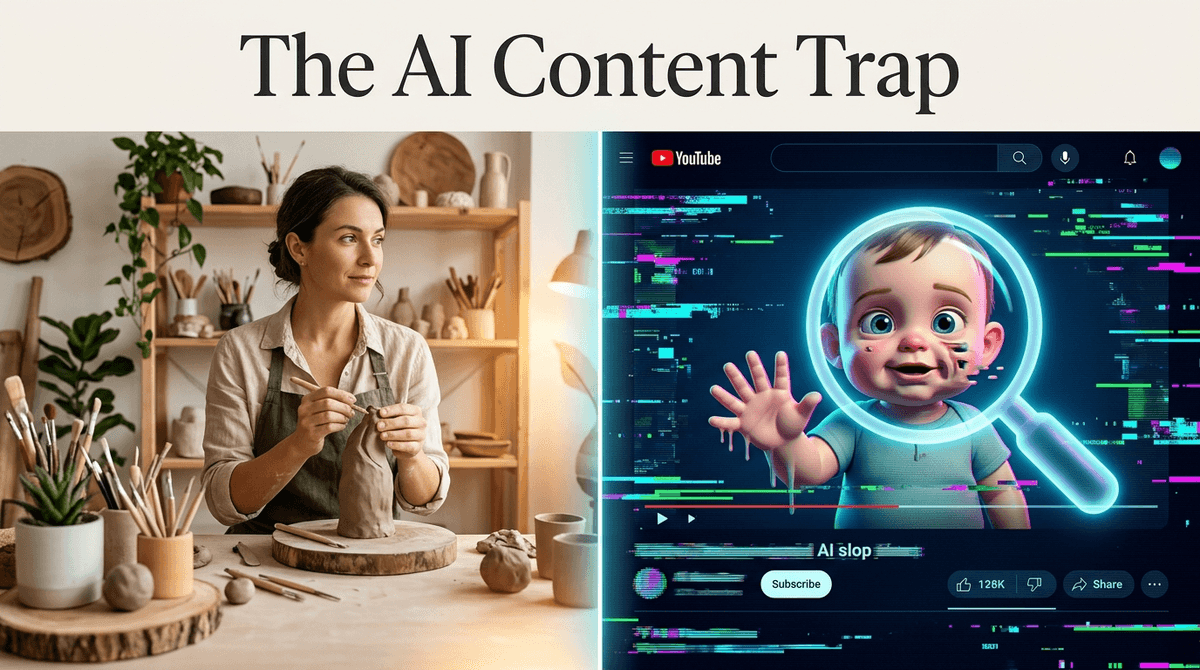
TL;DR: YouTube is currently being flooded with "AI slop"—low-effort, AI-generated videos that range from slightly "off" versions of CoComelon to straight-up fake science and history hoaxes. These videos are designed to hijack the algorithm and your child’s attention. To fight back, steer them toward vetted creators like Mark Rober, Kurzgesagt, and SciShow Kids.
Find vetted, non-AI science channels for your child's age
If you’ve walked past your kid’s tablet lately and thought, “Wait, is that JJ from CoComelon? Why does he have seven fingers and why is he dancing in a graveyard?”—you’ve likely encountered AI slop.
AI slop refers to the massive wave of content being churned out by generative AI tools and dumped onto YouTube and YouTube Kids. These aren't just "bad" videos; they are often hallucinated by algorithms. We’re talking about AI-generated voices narrating "facts" that are completely false, or "educational" videos showing animals that don't exist in nature.
In the past, we worried about "Elsagate"—disturbing, manually animated videos using popular characters. Today’s threat is more subtle and high-volume. It’s misinformation disguised as entertainment or "cool facts." Because these videos are cheap to make, creators pump out hundreds of them a day, hoping one goes viral.
Kids are naturally drawn to high-contrast colors, familiar faces, and "shocker" content. AI creators know this. They use AI to scrape whatever is trending—whether it’s Skibidi Toilet, Roblox lore, or "Only in Ohio" memes—and mash them into a 10-minute video with a clickbait thumbnail.
The YouTube algorithm doesn't care if a video is true; it only cares if people watch it. If a video of a "Giant 50-foot Snake Found in the Amazon" (which is actually a poorly rendered AI image) gets 2 million views from curious 7-year-olds, the algorithm will serve it to 2 million more.
1. The "Fake History" and "Cryptid" Hoax
This is huge with the elementary crowd. You’ll see videos claiming archaeologists found giant skeletons, or "secret footage" of a Megalodon in someone’s swimming pool. These use AI-generated images that look just real enough to a child’s eye. They often use AI-generated voices that sound like professional narrators, giving the lies a "National Geographic" feel.
2. The "Hallucinated" Science Video
These are the most dangerous because they look educational. A video might explain how the solar system works but get the order of the planets wrong, or claim that certain fruits can cure diseases. Because the production value looks "slick" (thanks to AI templates), kids don't realize they are learning complete nonsense.
3. Deepfake Character Content
Creators use AI voice cloning to make characters like Peppa Pig or Bluey say things they’d never say. Sometimes it’s just weird or nonsensical; other times, it’s used to bypass parental filters by tucking inappropriate language or scary themes inside a "safe" looking video.
The best way to combat AI slop is to "train" your child’s algorithm to favor high-quality, human-created content. When you subscribe to and watch these channels, YouTube is less likely to serve up the junk.
Ages 6+ Mark Rober is the gold standard for a reason. He’s a former NASA engineer who builds giant glitter bombs and squirrel obstacle courses. It’s real science, real engineering, and zero slop. It teaches kids that reality is actually cooler than AI-generated fakes.
Ages 8+ While the animation is stylized, the research is incredibly rigorous. They tackle big questions about the universe, biology, and the future. They provide sources for every video—a great concept to introduce to kids.
Ages 4-8 For the younger set who might be tempted by weird AI "animal facts" videos, SciShow Kids is a safe haven. It’s hosted by real humans who actually know what they’re talking about.
Ages 5-12 If your kid wants to see "weird but true" stuff, send them here. Their YouTube channel and website provide the spectacle kids crave without the misinformation.
Ages 2-7 When in doubt, go back to the classics. The PBS Kids ecosystem is one of the few places where you can be 100% sure the content has been vetted by actual child development experts, not an AI bot in a content farm.
Toddlers & Preschoolers (Ages 2-5)
At this age, kids can't distinguish between a real video and an AI-generated one. They shouldn't be on "Main" YouTube at all. Even on YouTube Kids, use the "Approved Content Only" setting. This allows you to hand-select channels like Sesame Street or Storyline Online and blocks the algorithm from suggesting "related" AI junk.
Elementary Kids (Ages 6-11)
This is the prime age for "media literacy" training. When you see a video that looks suspicious, don't just turn it off. Ask: "Does that tiger look real to you? Look at its paws—why does it have six toes?" Point out the "glitches" in AI images. Teach them that if a thumbnail looks too crazy to be true (like a giant skeleton), it probably is.
Middle Schoolers (Ages 12-14)
Middle schoolers are often the ones making the "Ohio" jokes, which is actually their way of identifying "weird/fake" internet culture. Talk to them about deepfakes and how AI voices can be used to spread rumors or fake news. This is a great time to introduce them to Snopes or other fact-checking tools.
Teach your kids a simple way to spot AI slop. If they see a video that claims to be "real" or "educational," tell them to look for these five things:
- The Fingers/Limbs: AI still struggles with hands. Do the people or animals have the right number of fingers?
- The Voice: Does the narrator sound like a real person breathing and changing their tone, or a "perfect" but flat robot?
- The Source: Is this from a channel we know (like NASA or PBS), or a random channel with a name like "CoolFacts9928"?
- The Background: Look at the trees or buildings in the back. Are they blurry or melting into each other?
- The "Too Much" Factor: Is the video trying too hard to shock you? Real science is cool, but it usually doesn't involve "Secret Alien Bases found in Minecraft."
YouTube is no longer a "set it and forget it" platform for parents. The sheer volume of AI-generated content means that even "safe" searches can lead to misinformation.
You don't have to be a tech genius to protect your kids; you just have to be a little more deliberate about who you "invite" into your living room. By favoring human creators and teaching your kids to be "detectives" of their own feeds, you’re giving them a superpower that will last long after the next viral trend dies out.
- Audit the Subscriptions: Go through your child's YouTube account and unsubscribe from any "content farm" channels that look like AI slop.
- Turn off Autoplay: This is the #1 way kids fall down the AI rabbit hole.
- Try a Vetted App: If you're tired of the YouTube fight, consider switching to Epic! or Khan Academy Kids for educational video content that is 100% human-verified.
Check out our guide on YouTube vs. YouTube Kids to see which is right for your family