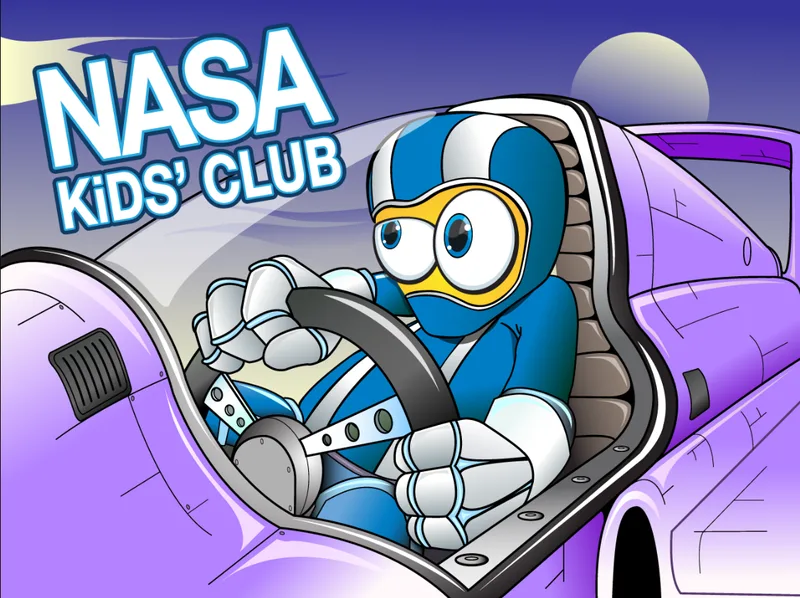
NASA’s web presence is the antidote to the 'brain rot' era of the internet. It’s a massive, free, and incredibly safe playground for any kid who has ever looked up at the moon and wondered how we got there.
While it lacks the addictive loops of a video game, the sheer variety of content—from interactive solar system maps to live streams from the ISS—makes it a high-value destination. It’s one of the few tabs you can leave open on a kid’s browser without a single worry about what they’ll click next.
Age Fit
NASA's web ecosystem covers everyone from 4 to 99. The Kids' Club is perfect for the Pre-K to 2nd grade set, while the main site is the definitive resource for adults and space nerds of all stripes.
WISE Breakdown
Wholesome
95
It is the gold standard for aspirational, curiosity-driven content. The tone is consistently encouraging, focusing on human achievement and the wonders of the natural world without any of the snark or 'edginess' found in modern media.
Imaginative
90
While it deals in hard facts, nothing fuels a kid's imagination like black holes, Mars rovers, and the scale of the universe. The DIY experiments and 'what if' scenarios in the StarChild and Space Place sections are top-tier curiosity drivers.
Safe
98
As a government-run educational resource, it is free of commercial ads, manipulative 'infinite scroll' algorithms, and unmoderated social layers. It’s one of the few places on the web where you can truly leave a kid to wander without a chaperone.
Enriching
98
It is literally rocket science. The content is expertly tiered from Pre-K games to high-school level data analysis, making complex STEM concepts accessible and actually interesting.
Parent Info
✓
Why It Might Be Great
Ad-free and commercial-free, which is a miracle on the modern internet.
Tiered for all ages, from simple matching games for toddlers to real satellite data for teens.
Multilingual options are robust, particularly the Spanish language versions of Space Place and Climate Kids.
DIY-heavy, providing dozens of printable activities and science experiments that actually work in a kitchen.
⚠
What to Watch For
The UI can feel a bit 'government clunky' and dated compared to high-budget gaming sites, which might lose kids used to flashier interfaces.
Some of the 'NASA at Home' links lead to the main NASA.gov site, which is written for adults and can be text-heavy and jargon-dense.
Conversation Starters
"If you could be the first person to step on Mars, what's the first thing you'd say to the people back on Earth?"
"Which would be cooler: living in a base on the Moon or a floating station on a different planet?"
"Why do you think it's important for us to spend so much time looking at the stars when we have so many problems to solve here?"
"If you could design a robot to explore a planet we've never seen, what special tools would it need?"