

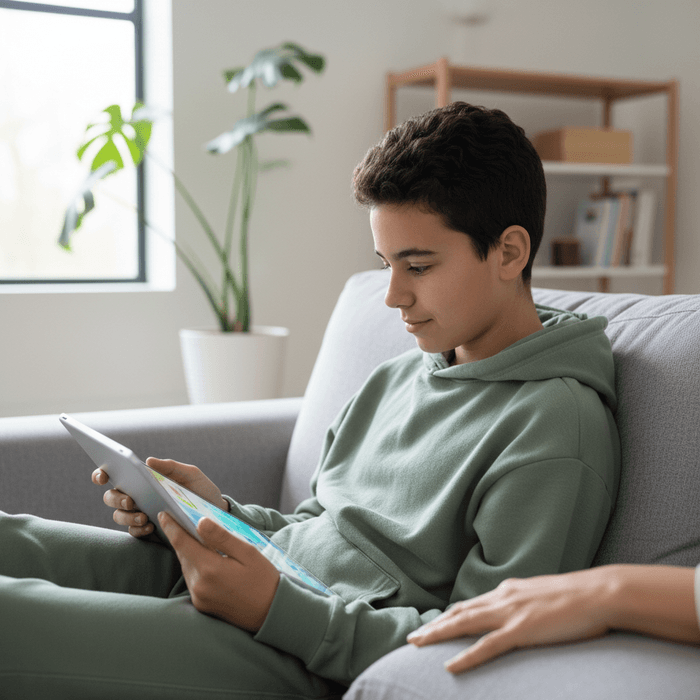
TL;DR: Digital independence isn't a "day they turn 13" thing; it’s a gradual transition from you being the Gatekeeper to being a Coach. Start with high-supervision apps like PBS Kids and Toca Boca World, move to "sandbox" games like Minecraft in elementary, and aim for mentored social media use by mid-teens. The goal is a kid who can spot a scam or a "brain rot" rabbit hole before you have to point it out.
Check out our guide on setting up a first phone
Find age-appropriate alternatives to TikTok
Most of us grew up in a world where tech was "off" until it was suddenly "on." You got a Nokia at 16, and the worst thing you could do was rack up a texting bill. Today, handing an 11-year-old a smartphone with no restrictions is like handing them the keys to a Ferrari and a bottle of tequila. It’s too much, too fast.
The Dimmer Switch is the philosophy that digital autonomy should be granted in small, measurable increments. You don't just flip the light on; you slowly turn the dial as your child proves they can handle the "brightness" of the open internet.
If we keep the "light" off until they’re 18, they’ll head to college and spend their entire freshman year blinded by the glow of unrestricted Discord servers and Twitch marathons. They need to fail while the stakes are low—like accidentally spending $20 on Roblox or seeing a weird "Ohio" meme that they need to talk through with you—rather than failing when they're living on their own.
Early Elementary (Ages 5-8): The Walled Garden
At this stage, you are the Chief Content Officer. Your kid doesn't need "the internet"; they need specific, high-quality experiences.
- The Goal: Developing "Internal Stop Signs" (learning to turn it off when the timer goes off).
- Recommended Media:
- Bluey: Still the gold standard for co-viewing.
- Endless Alphabet: Great for early literacy without the ad-heavy "free" game junk.
- ScratchJr: Teaching them that they can create with tech, not just consume it.
- The Reality Check: YouTube Kids is better than "Big YouTube," but it’s not a babysitter. Weird AI-generated content still slips through. If you see them watching "unboxing" videos for three hours, that’s not digital independence; that’s a dopamine loop.
Upper Elementary (Ages 9-11): The Sandbox
This is where things get interesting. They want to play with friends. They’ve heard of MrBeast and they know exactly what a "Skibidi Toilet" is (even if it’s just a singing head in a toilet, it’s their version of Beavis and Butt-Head).
- The Goal: Navigating "Digital Citizenship" (being a person people actually want to play with online).
- Recommended Media:
- Minecraft: Specifically in "Creative Mode" or on a private family server.
- Prodigy Finance: A math game that feels like a fantasy RPG.
- Messenger Kids: A "training wheels" social app where you approve every contact.
- The Reality Check: Roblox is the biggest hurdle here. It’s not just a game; it’s a social club. Is it teaching entrepreneurship? Maybe a little. But mostly, it’s designed to make them want "Robux."
Learn more about how Robux is in fact real money
Middle School (Ages 12-14): The Wild West
This is the hardest phase. The social pressure to be on Snapchat or TikTok is immense. This is where the dimmer switch moves from "low" to "medium-high."
- The Goal: Critical thinking and "The Pause" (thinking before posting/sending).
- Recommended Media:
- The Reality Check: Discord is where the "Ohio" memes and gaming chat live. It can be a great community, but it can also be a toxic sludge pit. If they’re on it, you need to be "friends" with them or have an open-door policy about what’s happening in those chats.
High School (Ages 15-18): The Consultant Phase
By now, the dimmer switch should be nearly all the way up. You aren't checking their texts every night; you’re the person they come to when someone gets "canceled" or they see something that makes them feel like garbage.
- The Goal: Self-regulation and health.
- Recommended Media:
- BeReal: A slightly less polished version of social media.
- Letterboxd: For the movie buffs to track what they watch.
- ChatGPT: Learning how to use AI as a tool, not a cheating machine.
- The Reality Check: If they’re spending 6 hours a day on Instagram, they don’t need a ban; they need a conversation about how the algorithm is designed to keep them scrolling.
How do you know when to give them more freedom? Look for these signs:
- Transparency: Do they hide the screen when you walk by? If they're open about what they're watching (even if it's "brain rot"), they're building trust.
- Regulation: Can they stop when the timer goes off without a "Level 10" meltdown?
- Balance: Are they still doing "analog" things—sports, reading, hanging out in person?
Parental control apps like Bark or Qustodio are great, but they are tools, not solutions. If you use them as "spyware," your kids will just learn how to hide things better (and trust me, they are better at tech than you are). If you use them as "training wheels"—letting the kid know the software is there to help them stay safe until they can do it themselves—you're building a partnership.
You’re going to hear words like "Rizz," "Gyatt," and "Skibidi." You’re going to see them watching YouTube shorts that seem to have no plot and move at 100mph. Don't panic. Every generation has its version of this. The key isn't to ban the weirdness; it's to ensure the weirdness isn't the only thing they're consuming. Balance the "junk food" content with "nutritious" content like The Wild Robot by Peter Brown or playing a round of Catan.
Instead of saying "Get off that brain rot," try:
Digital independence is a marathon, not a sprint. There will be trips and falls. They will see something they shouldn't. They will stay up too late on a school night scrolling.
The goal isn't a "perfect" digital record; it's a kid who knows how to navigate the world's most powerful tool without losing their mind—or your bank account balance—in the process.
- Audit the "Now": Take the Screenwise survey to see where your family actually stands compared to your community.
- Pick One Dial: Identify one area where your kid is ready for a little more freedom (e.g., "You can choose your own YouTube videos for 30 minutes, but we’ll review the history together on Sunday").
- Talk it out: Use one of our conversation starters for digital wellness.