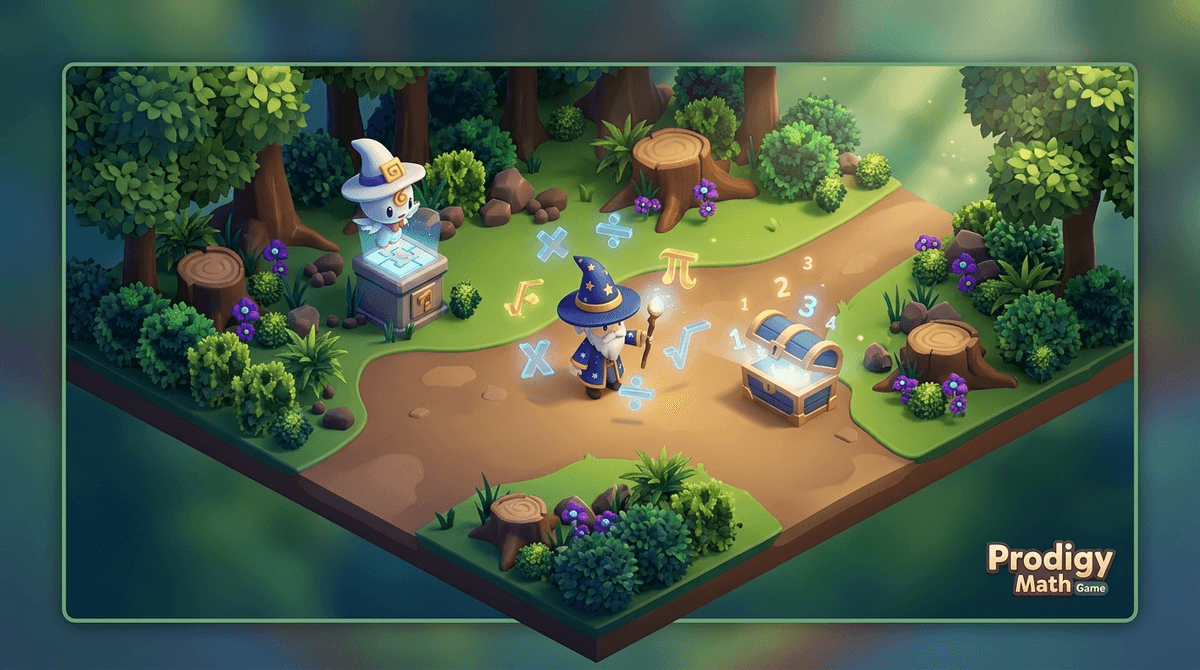
Prodigy Math is a free, curriculum-aligned math game for grades 1–8. Kids build a wizard, explore a world, and battle monsters — and every spell they cast is gated behind a math question pitched to their grade. The hook is real: kids who groan at a worksheet will happily grind through fifty problems to win a pet. That's the whole pitch, and for a lot of families it works.
We score it Wholesome 82, Imaginative 75, Safe 88, Enriching 85 — high marks, and earned ones. The questions are real, standards-aligned practice, not busywork dressed up as learning. Safe lands at 88 because it's ad-light, the social features are limited, and there's nothing your third-grader shouldn't see. This is a legitimately good tool, not shovelware with a math sticker on it.
The catch isn't the content — it's the business model. Prodigy is free to play and always will be for the math itself, but it runs on a Premium membership, and the free version is built to make your kid feel the locked door. Members get exclusive pets, gear, and zones, and the prompts to upgrade are designed to travel from the screen to you at dinner. Everything that teaches is free; everything that nags is the pet collection.
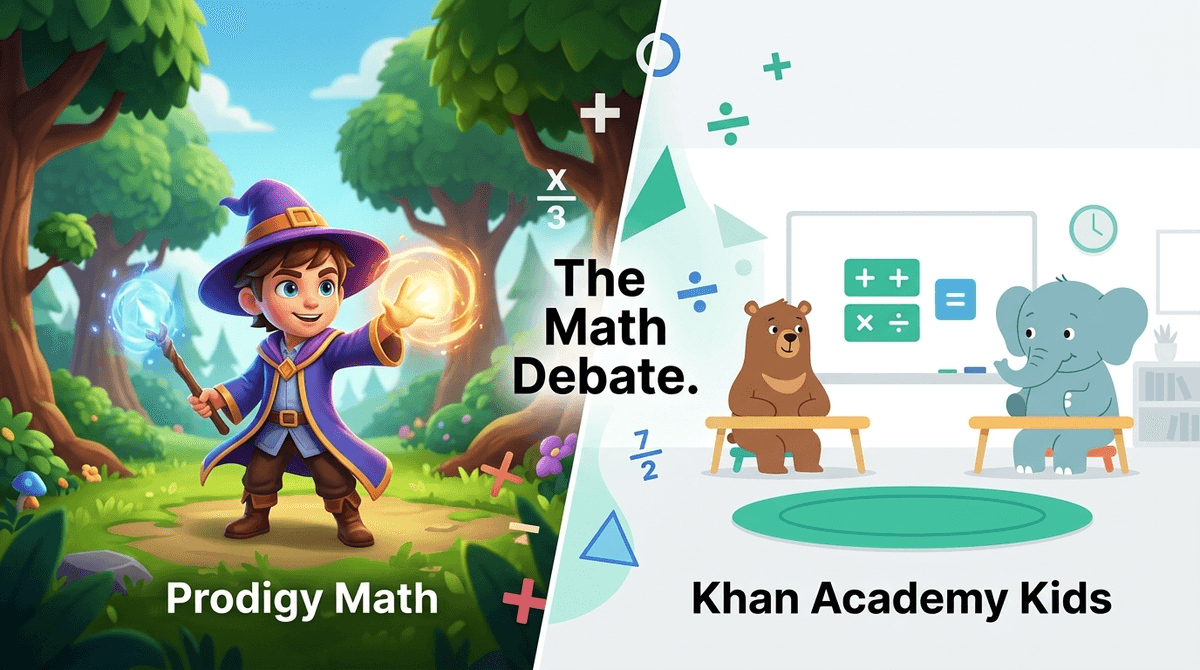
The question every parent eventually asks: is the math the point, or just a toll booth on the way to the fun? The fair answer is that Prodigy is practice, not instruction. It reinforces what a kid has already been taught — it won't introduce long division from scratch the way Khan Academy will. Treat it as the reps, not the lesson.
So the move that makes Prodigy worth it: pin the grade level so the questions aren't trivially easy, decide where you stand on Premium before your kid asks, and pair it with something that teaches — Khan Academy Kids or Zearn for the instruction, Prodigy for the practice a kid will choose on their own.