

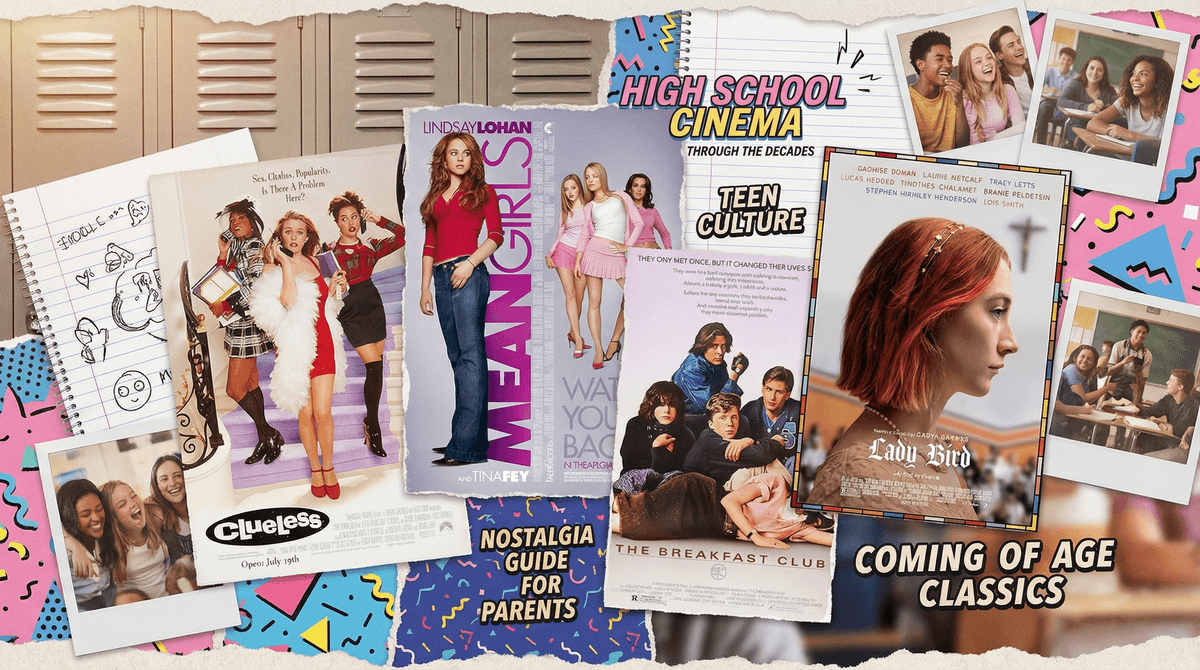
The Definitive List of High School Movies Every Parent Should Know
TL;DR: Your teen just said "That's so fetch" or referenced detention on a Saturday, and you're wondering where that came from. High school movies are the cultural wallpaper of adolescence—they shape how kids think about friendship, identity, popularity, and growing up. Here are the essential ones worth watching (and discussing) together.
The Classics (1980s-90s):
- The Breakfast Club (Ages 13+)
- Ferris Bueller's Day Off (Ages 11+)
- Clueless (Ages 13+)
- 10 Things I Hate About You (Ages 13+)
The 2000s Canon:
- Mean Girls (Ages 13+)
- Superbad (Ages 16+)
- Easy A (Ages 14+)
Modern Era (2010s-Now):
- The Edge of Seventeen (Ages 14+)
- Booksmart (Ages 15+)
- Lady Bird (Ages 14+)
Your kid's understanding of high school is being shaped right now—not just by their own experiences, but by decades of teen cinema. When they reference "the popular table" or worry about being labeled, they're drawing from a shared cultural vocabulary that started with The Breakfast Club and continues through Euphoria (which, by the way, is a completely different conversation we need to have).
These movies are reference points for how teens think about social hierarchies, romance, identity, and rebellion. The good news? Many of them are actually excellent starting points for conversations about peer pressure, authenticity, and navigating social dynamics.
The Breakfast Club (1985)
Ages 13+ | The OG
Five stereotypes walk into Saturday detention: the brain, the athlete, the basket case, the princess, and the criminal. What sounds like the setup to a joke became the blueprint for every high school movie that followed.
Why it holds up: The core message—that people are more complex than their labels—is timeless. The conversations about parental pressure, identity, and loneliness are surprisingly mature and still relevant.
What's dated: Some language and attitudes toward women that were questionable even in 1985. The scene where Bender hides under Claire's desk is uncomfortable to watch now, and should be.
Watch it because: Your teen needs to understand where every "unlikely friends" story comes from, and this is patient, dialogue-driven filmmaking that asks them to actually think.
Ferris Bueller's Day Off (1986)
Ages 11+ | The Fantasy
Ferris Bueller is every teen's aspirational alter ego: charismatic, confident, loved by everyone, and able to orchestrate an elaborate day of hooky without consequence.
Why kids love it: It's wish fulfillment. Ferris gets away with everything and has the best day ever while doing it.
What parents should know: This is actually a movie about Cameron, Ferris's anxious best friend who learns to stand up to his emotionally abusive father. The subplot is way more interesting than the main plot.
Watch it because: It's genuinely fun, relatively innocent, and a good entry point for younger teens. Plus, understanding "Bueller? Bueller?" references is basically cultural literacy.
Clueless (1995)
Ages 13+ | The Makeover
Jane Austen's Emma gets transported to Beverly Hills, and somehow it works perfectly. Cher Horowitz is shallow, privileged, and genuinely good-hearted—a combination that makes her weirdly lovable.
Why it endures: The fashion, the slang ("As if!"), and the surprising sweetness underneath the superficiality. Also, Alicia Silverstone's performance is iconic.
Conversation starters: Class privilege (Cher is very wealthy and completely unaware of it), the pressure to be perfect, and how the movie actually celebrates female friendship despite the makeover trope.
Watch it because: It's required viewing for understanding 90s teen culture, and it's significantly smarter than it appears at first glance.
10 Things I Hate About You (1999)
Ages 13+ | The Rom-Com
The Taming of the Shrew meets late-90s Seattle, with Heath Ledger singing "Can't Take My Eyes Off You" on the bleachers. This is peak teen rom-com.
Why it works: Kat Stratford (Julia Stiles) is angry, feminist, and unapologetically herself. The movie doesn't punish her for it—she just softens enough to let someone in.
What's complicated: The whole premise involves Patrick being paid to date Kat so her sister can date. It's... not great when you think about it. But the movie handles it better than you'd expect.
Watch it because: Heath Ledger's charm is undeniable, the soundtrack is excellent, and it's a good example of how to adapt Shakespeare for teens without being cringey about it.
Mean Girls (2004)
Ages 13+ | The Cultural Phenomenon
Tina Fey wrote a surprisingly sharp satire about girl-on-girl bullying, and it became the most quoted teen movie of its generation. "On Wednesdays we wear pink" is permanently embedded in the cultural consciousness.
Why it's actually good: It's funny, quotable, and genuinely insightful about how social hierarchies work and how quickly power can corrupt. The Plastics are villains, but they're also victims of the same system they perpetuate.
What parents miss: This isn't just a silly comedy—it's a pretty accurate depiction of relational aggression and how girls police each other's behavior. The "Burn Book" predates social media, but the dynamics are identical.
Watch it because: Your kid has already seen it or will see it. Better to watch together and talk about why Regina George is the way she is, and what Cady learns about authenticity versus fitting in.
Superbad (2007)
Ages 16+ | The Raunchy One
Two best friends try to buy alcohol for a party before they leave for different colleges. It's crude, profane, and surprisingly emotional.
Real talk: This is rated R for a reason. Lots of sexual content, drug/alcohol use, and language. If you're watching with your teen, you're essentially saying "I know you've heard all of this before, let's acknowledge that reality."
Why it resonates: Underneath the raunch is a genuinely moving story about male friendship and the fear of growing apart. The final scene is about two guys who love each other (platonically) and don't know how to say it.
Watch it (maybe) because: If your older teen has already seen it (they probably have), it's worth discussing how the movie both mocks and perpetuates toxic masculinity, and how the friendship is the real love story.
Easy A (2010)
Ages 14+ | The Smart One
Olive Penderghast accidentally starts a rumor that she's promiscuous, then leans into it by pretending to sleep with social outcasts to boost their reputations. It's The Scarlet Letter for the social media age (sort of—it came out before Instagram).
Why it's worth your time: Emma Stone is phenomenal, and the movie is genuinely clever about double standards, reputation, and how quickly gossip spreads. Also, the parents (Stanley Tucci and Patricia Clarkson) are actually supportive and funny, which is rare in teen movies.
Conversation gold: Slut-shaming, how rumors spread (now amplified by social media), and the way religious hypocrisy can fuel bullying.
Watch it because: It's whip-smart, funny, and treats its protagonist with respect. Plus, it's a good bridge to talking about The Scarlet Letter if that's on the reading list.
The Edge of Seventeen (2016)
Ages 14+ | The Honest One
Nadine is awkward, anxious, and kind of mean—which makes her the most realistic teen protagonist in years. When her best friend starts dating her older brother, she spirals.
Why it's different: This doesn't sugarcoat adolescence. Nadine is difficult, makes bad choices, and doesn't magically transform by the end. She just... gets slightly better at handling her life.
What makes it great: Woody Harrelson as the deadpan teacher who becomes her unlikely mentor, and Hailee Steinfeld's fearless performance. This is what teen angst actually looks like.
Watch it because: If your teen is struggling socially or feeling like they don't fit in, this movie says "you're not alone, and you're not broken." That's powerful.
Booksmart (2019)
Ages 15+ | The Overachiever's Panic
Two academic overachievers realize on the eve of graduation that they could have studied less and partied more—so they try to cram four years of fun into one night.
Why it's a game-changer: It's Superbad but with girls, and it's not interested in male approval. The friendship between Amy and Molly is the heart of the movie, and it's refreshingly sex-positive without being exploitative.
What's notable: This has LGBTQ+ representation that feels natural rather than performative, and it doesn't punish characters for being ambitious or studious.
Watch it because: It's hilarious, heartfelt, and a great antidote to the "study hard OR have fun" false dichotomy. Also, the stop-motion sequence is chef's kiss.
Lady Bird (2017)
Ages 14+ | The Mother-Daughter One
Christine "Lady Bird" McPherson wants to escape Sacramento for the East Coast, but first she has to navigate her senior year, her complicated relationship with her mother, and figuring out who she actually is versus who she wants to be.
Why parents love it: The mother-daughter relationship is painfully, beautifully real. Marion loves Lady Bird fiercely but can't stop criticizing her. Lady Bird loves her mom but can't wait to leave. It's complicated and true.
Why teens love it: Lady Bird is pretentious, insecure, and trying so hard to be interesting. That's... extremely relatable.
Watch it because: Greta Gerwig made something special here—a coming-of-age story that's about becoming yourself and understanding where you came from. The final scene will wreck you.
Sixteen Candles (1984)
Ages 14+ | The Problematic Classic
Everyone forgets Samantha's 16th birthday, and she pines for the popular senior while a nerdy freshman pursues her.
Why it's on this list: It's a John Hughes classic and culturally significant.
Why you should be cautious: The Asian exchange student character is a racist caricature, and there's a scene involving an unconscious girl that's essentially sexual assault played for laughs. These aren't "products of their time"—they were wrong then and they're wrong now.
If you watch it: Use it as a teaching moment about how media reflects and reinforces harmful attitudes, and how our standards have (thankfully) evolved.
American Pie (1999)
Ages 17+ | The Gross-Out Comedy
Four friends make a pact to lose their virginity before graduation. Hijinks ensue.
Real talk: This movie was hugely influential and also... pretty bad? The humor is mostly at the expense of women, there's a scene involving a webcam that would be a crime today, and the desperation around sex is played for laughs but is actually kind of sad.
Why teens watch it: It's a cultural touchstone, and they're curious about the franchise that defined late-90s teen comedy.
If they watch it: Talk about consent, respect, and how the pressure to have sex by a certain age is arbitrary and harmful. Also, the apple pie scene is just... why.
High school movies are one thing, but Euphoria, Riverdale, Sex Education, and Never Have I Ever are where teens are actually spending their screen time. These shows are more explicit, more serialized, and more influential than a 90-minute movie could ever be.
If you want to understand what's shaping your teen's view of high school right now, check out this guide to teen shows that breaks down what's actually worth watching versus what's just trauma porn with a soundtrack.
Middle School (Ages 11-13): Start with Ferris Bueller and lighter fare. They're not ready for Superbad or Booksmart, and that's okay. If they're curious about high school, The Breakfast Club is a good bridge—just be ready to pause and discuss.
Early High School (Ages 13-15): Mean Girls, Clueless, 10 Things I Hate About You, Easy A, and The Edge of Seventeen are all fair game. They're dealing with social dynamics, identity, and peer pressure—these movies can help them process those experiences.
Late High School (Ages 16+): Pretty much everything on this list is accessible now, including Superbad and Booksmart. They've heard worse in the hallways. The question isn't whether they can handle the content, but whether you can create space for honest conversations about it.
Don't make it weird. If you announce "We're going to watch a movie together so we can TALK about IMPORTANT THEMES," your teen will flee. Just suggest it casually: "I heard Booksmart is supposed to be really funny, want to watch?"
Let them react naturally. If they're cringing at a scene, don't immediately pause to discuss. Let the movie breathe. Save conversations for after, or bring it up casually the next day.
Ask questions, don't lecture. "What did you think of how they handled [X]?" is better than "Here's what you should learn from this movie."
Acknowledge what's changed. "This movie is from 1985—what feels different about high school now?" is a great way to get them talking about their actual experiences versus the movie version.
Be honest about the problematic stuff. "That joke about [X] wouldn't fly today, and for good reason" opens the door to discussing how cultural standards evolve.
High school movies are time capsules, cultural touchstones, and—at their best—genuinely insightful looks at adolescence. Your teen is going to encounter these references whether you watch together or not. The question is whether you want to be part of the conversation.
The good news? Many of these movies are actually excellent, and watching them together can give you insight into how your teen thinks about friendship, identity, and social dynamics. The less good news? Some of them have aged like milk, and you'll need to be ready to discuss why certain attitudes and behaviors aren't okay.
But here's the thing: these conversations are worth having. When your teen references "the Plastics" or quotes Ferris Bueller, they're not just being clever—they're drawing from a shared cultural vocabulary about what high school means. Understanding that vocabulary helps you understand them.
Start with one: Pick a movie from the list that matches your teen's age and interests. Lady Bird if they're introspective, Booksmart if they're academic, Mean Girls if they're navigating social drama.
Make it a series: "Bad movie night" where you watch something problematic and discuss it can actually be really fun and educational. Sixteen Candles is a great candidate.
Ask what they've already seen: Chances are they've watched half this list at sleepovers or with friends. Ask them what they thought—you might be surprised by their insights.
Branch out: If they love these movies, check out this guide to coming-of-age films that goes beyond the high school setting, or explore teen shows that are shaping their worldview right now.
And if you want to understand what your teen is actually watching versus what you think they're watching, take the Screenwise survey to see how your family's media habits compare to others in your community. Sometimes the data tells a different story than the assumptions.