

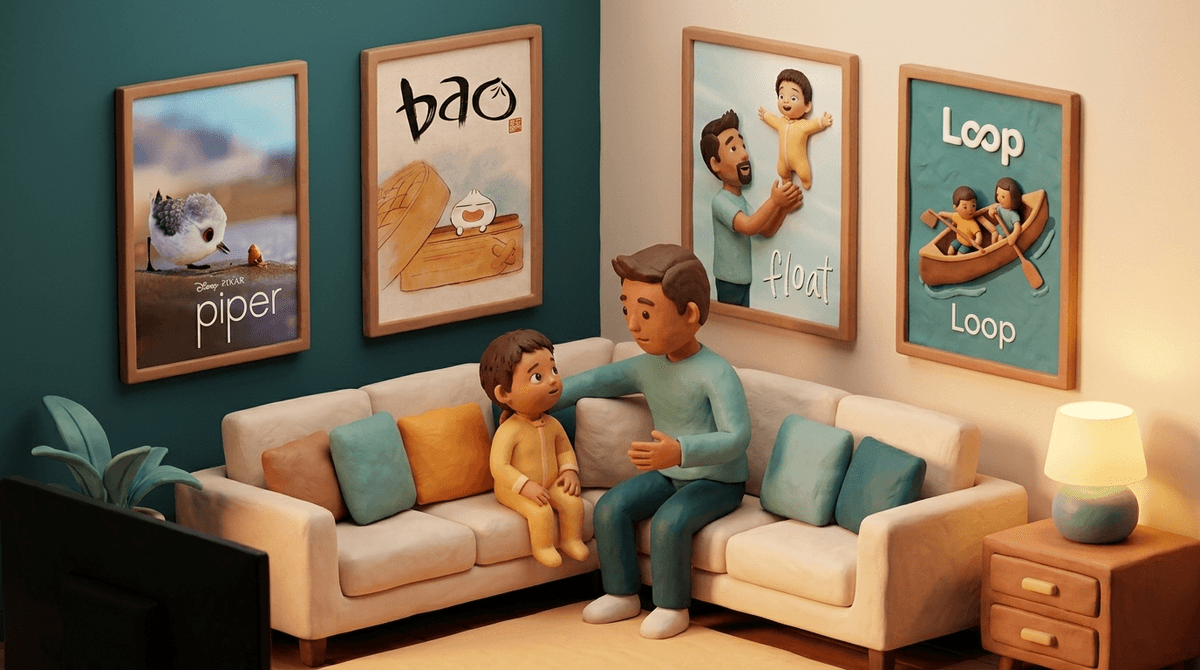
TL;DR: Pixar shorts aren't just filler to keep the kids quiet while you finish the popcorn. They are high-density emotional intelligence tools that tackle massive topics like neurodiversity, letting go, and social anxiety in under ten minutes. If you’re looking for a "brain rot" antidote, start with Piper, Bao, and Float.
We’ve all been there: you finally sit the kids down for a movie night, but their attention spans are currently clocked at "TikTok speed." You want to watch something meaningful, but Inside Out 2 is a two-hour commitment and you still have three loads of laundry to fold.
Enter the Pixar Short. These mini-movies are the "hidden gems" of the Disney+ library. While the big features get the billion-dollar marketing budgets, the shorts are where the creators get weird, get personal, and get deep. For intentional parents, these are the ultimate parenting hack: they provide a complete narrative arc with a heavy emotional punch in less time than it takes to microwave a bag of nuggets.
Most kids' content is designed to be loud and repetitive (looking at you, Cocomelon). Pixar shorts are the opposite. They often have zero dialogue, forcing kids to read body language, facial expressions, and "the vibes" to understand the story. This is literal training for empathy and social-emotional learning (SEL).
Plus, because they’re short, the "barrier to entry" for a deep conversation is low. You aren't asking them to analyze a complex 90-minute plot; you're asking about a seven-minute story about a bird or a dumpling.
Find a playlist of shorts for your child's age
Float (Ages 4+)
If you have a child who feels "different" or if you’ve ever struggled with the urge to make your kid "fit in" so they don't get judged, Float will wreck you in the best way. It’s a metaphor for neurodiversity (specifically inspired by the creator’s experience with his son’s autism diagnosis). A father realizes his son can literally float, and his first instinct is to hide him from the neighbors.
- The Lesson: Acceptance vs. Assimilation. It’s a perfect opener for talking about why we shouldn't hide the parts of ourselves that make us unique.
Loop (Ages 6+)
This is a groundbreaking piece of media. It features a non-verbal autistic girl and a chatty boy who have to navigate a canoe trip together. It’s a masterclass in showing kids how to communicate when someone doesn't use words. It moves away from the "fix the kid" trope and moves toward "understand the person."
- The Lesson: Sensory processing and finding common ground.
Bao (Ages 5+... but mostly for the parents)
This one won an Oscar for a reason. An aging Chinese mother gets a second chance at motherhood when one of her dumplings comes to life. It’s cute until the dumpling grows up, gets a girlfriend, and tries to leave.
- The Lesson: The "Empty Nest" and over-parenting. It’s a great way to show kids that parents have feelings too, and that growing up is a bittersweet process for the adults in the room. Warning: The ending is a bit of a shocker for kids who take things literally—be ready to explain the metaphor!
Check out our guide on how to talk to kids about metaphors in movies
Piper (Ages 2+)
This is the "gateway drug" for Pixar shorts. It’s arguably the most beautiful animation they’ve ever done. A tiny sandpiper is terrified of the waves but has to learn to find food.
- The Lesson: Overcoming anxiety. It shows that sometimes the thing you’re scared of actually holds something beautiful if you just change your perspective. It’s a great "reset" watch for a kid who is having a "no, I can't do it" kind of day.
For the Birds (Ages 3+)
A group of small, mean birds bullies a large, goofy bird. It’s classic slapstick humor, but the ending is a perfect "karma" moment.
- The Lesson: Bullying and the "groupthink" mentality. It’s a low-stakes way to ask your kid, "Which bird were you today?" or "What should the small birds have done differently?"
Kitbull (Ages 8+)
Heads up: this one deals with animal abuse and dogfighting (off-screen but implied). It’s about an unlikely friendship between a stray kitten and a pit bull. It’s heartbreaking and then incredibly heart-mending.
- The Lesson: Stereotypes. It challenges the idea that certain "types" (like pit bulls) are inherently bad. Because of the heavy themes, save this for the older elementary crowd.
While most Pixar shorts are "G-rated" in spirit, the emotional complexity varies wildly.
- Preschool (Ages 2-4): Stick to the visual, slapstick-heavy shorts like Piper, Knick Knack, or Presto. They are short, funny, and won't require a therapy session afterward.
- Early Elementary (Ages 5-7): This is the sweet spot for Bao, La Luna, and Lava. They can handle the "sad" parts and understand the basic themes of family and love.
- Older Kids (Ages 8-12): Dive into the SparkShorts collection on Disney+. These include Float, Loop, and Purl (which is a great metaphor for workplace toxicity/fitting in, though it has one very mild "adult" word).
Learn more about the difference between G and PG ratings in the streaming era
The brilliance of these shorts is that they often lack a "villain." In Bao, the "villain" is just time and the natural process of growing up. In Float, the "villain" is the father's own fear.
This is a huge departure from the typical Disney formula where a bad guy needs to be defeated. It teaches kids that most challenges in life aren't about fighting a monster; they're about managing your own emotions and understanding other people.
How to Talk About It
Don't turn it into a homework assignment. You don't need a 20-point questionnaire. Just wait for the credits to roll and ask one of these:
- "Why do you think the character didn't use any words?"
- "What was the moment where the character's feelings changed?"
- "If you were the [dumpling/bird/boy], what would you have done?"
Pixar shorts are the "slow food" of the digital world. They are crafted with intention, they respect the viewer's intelligence, and they provide a shared experience that lasts long after the seven minutes are up. Instead of scrolling through endless YouTube Shorts or TikTok videos that offer quick dopamine hits but zero substance, try a curated "Shorts Night."
It’s the easiest way to be an "intentional parent" without actually having to plan a whole lesson. Pixar already did the hard work for you.
- Tonight: Open Disney+ and find the "Shorts" section. Start with Piper.
- Next Week: Try Float and talk about what makes your family "different."
- Deep Dive: Check out our guide on using movies to build emotional intelligence