

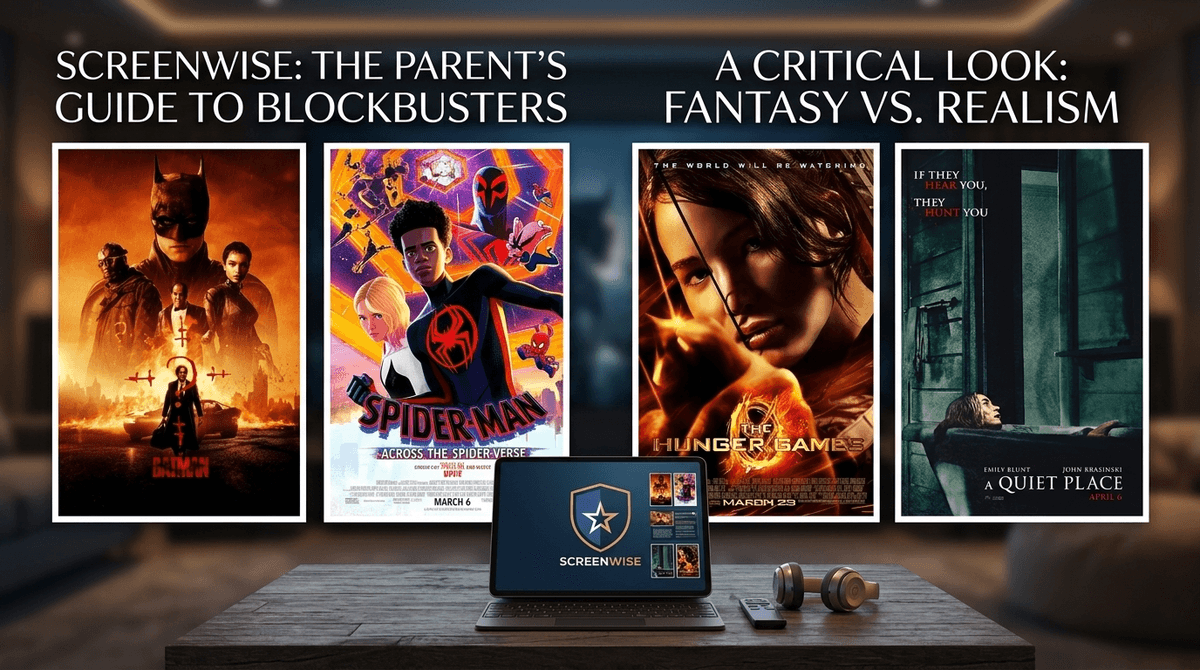
TL;DR: The PG-13 rating is the "Wild West" of media. It covers everything from the mild fantasy of Barbie to the visceral, gritty intensity of The Batman. To protect your kid's sleep (and your own), you need to distinguish between "cartoonish stakes" and "emotional realism."
Quick Links for the Transition Phase:
- Safe "Step-Up" Action: Spider-Man: Into the Spider-Verse
- The "Gritty" Entry Point: The Hunger Games
- High Stakes, Low Gore: Top Gun: Maverick
- The "Too Much" Warning: Deadpool & Wolverine (Even if every kid at school is talking about it, the gore is "Ohio" levels of unhinged).
Let’s be real: the MPAA rating system is a relic from a different era. Back in the day, PG-13 meant a couple of "f-bombs" and some bloodless punching. In 2026, it’s a catch-all. We are living in a world where kids are watching Skibidi Toilet on YouTube — which is essentially a fever dream of heads in toilets blowing each other up — and then we wonder if they can handle The Dark Knight.
The problem isn't just the amount of violence; it's the texture of it. There is a massive difference between a Stormtrooper being blasted by a laser in Star Wars: A New Hope and the sound of a bone snapping in a modern "realistic" thriller. One is a space opera; the other is a nightmare fuel.
When you’re deciding if your kid is ready to level up their viewing, you have to look past the body count and look at the vibe.
1. The "Marvel" Standard (Fantasy Violence)
In movies like The Avengers or Guardians of the Galaxy, the violence is usually "consequence-free." Robots explode, aliens turn into blue dust, and the heroes walk away with a smudge on their forehead. This is generally fine for the 9-12 crowd because it doesn't trigger a "this could happen to me" response. It’s basically a high-budget version of Fortnite.
2. The "Gritty Reboot" Standard (Realism)
Then you have movies like The Batman or Dune. Even though they are PG-13, the violence feels heavy. The sound design is crunchier. The lighting is darker. The stakes aren't just "save the world"; they are "watch this person suffer." This is where the "anxiety-inducing" part kicks in. If your kid is sensitive to "vibes" or has a high empathy drive, this kind of violence hits different. It lingers.
It’s not because they want to see blood. Most of the time, it’s about social currency. If every kid in 6th grade is talking about a scene in Stranger Things, your kid doesn't want to feel like the only one stuck watching Bluey (even though Bluey is objectively a masterpiece).
They are also looking for "stakes." As they grow up, the "safe" stories start to feel like "brain rot." They want to see characters face real danger because they are starting to realize the world actually has real danger. Using media to navigate those feelings is healthy — as long as the media isn't traumatizing them in the process.
Check out our guide on the social pressure of "mature" media
We’ve broken these down by "intensity" rather than just age, because every kid is different.
The Vibe: High-energy, artistic, and emotional. Why it works: It deals with heavy themes (fate, loss, parental expectations) but uses a stylized animation that keeps the violence from feeling too "real." It’s the perfect "mature" movie for a kid who is ready for a complex story but isn't ready for live-action brutality. Age Range: 8+
The Vibe: Dystopian, intense, and thought-provoking. Why it works: This is the ultimate "transition" movie. Yes, the premise is kids fighting kids, which sounds horrific. But the movie handles it with a focus on the political and emotional consequences rather than just gore. It’s a great way to talk about why violence happens in society. Age Range: 12+ (with a conversation)
The Vibe: Pure tension and jump scares. Why it works: There is actually very little "on-screen" violence, but the threat of it is constant. If you want to test if your kid can handle "anxiety-inducing" media without the blood, this is the gold standard. Age Range: 12+
The Vibe: Psychological thriller disguised as a superhero movie. Why it works: This is where things get tricky. The Joker is legitimately scary. Not "boo" scary, but "humanity is inherently evil" scary. This is for the teen who can handle a movie that doesn't have a perfectly happy ending. Age Range: 13-14+
The Vibe: Hyper-violent, "edgy," and hilarious (to adults). Why it's a "No-BS" Warning: Don't let the "Marvel" logo fool you. This is R-rated for a reason. The violence is played for laughs, which can be even more confusing for younger kids. It’s "brain rot" for the soul if they aren't mature enough to understand the irony. Age Range: 16+ (or a very loose 15 if you're okay with them hearing every swear word known to man).
If you’re looking at a trailer or a review and you’re on the fence, ask yourself these four questions:
- Is the violence "stylized"? (Think: The Matrix or John Wick). If it looks like a dance or a video game, it’s usually easier to process than "messy" violence.
- What is the sound design like? Turn up the volume. If you hear wet thuds, bone crunches, or genuine screams of agony, that's "realism" violence. That’s what causes the nightmares.
- Does the violence have weight? In Minecraft, you hit a cow and it turns into steak. In a movie like Logan, when someone gets hurt, they stay hurt, and the characters mourn. If your kid isn't ready for the "grief" part of violence, stick to the fantasy stuff.
- Is there a "Safe Exit"? Does the movie offer a sense of hope or justice? Or is it just "everything is terrible and then you die"?
Learn how to use Screenwise to filter movies by "Vibe" and "Intensity"
Nothing makes a kid want to watch a "forbidden" movie more than a parent pearl-clutching about it. Instead of saying "That's too violent," try:
- "That movie uses a lot of 'visceral realism.' Let's watch the trailer together and see if the vibe feels like something you'd actually enjoy or if it's just stressful."
- "I’m okay with the action, but I’ve heard the sound design is really intense. If it gets to be too much, we can just pause it and check in."
- "You know how Roblox has those 'horror' rooms that are just jump scares? This movie is like that, but for two hours straight. You feeling up for that today?"
By framing it as a choice about their own comfort rather than a "rule" you're imposing, you're teaching them to self-regulate. That’s the ultimate goal of digital wellness.
Violence in media isn't a one-size-fits-all category. We’ve moved past the era where "action" just meant Indiana Jones punching a Nazi. Today’s media is more immersive, more realistic, and more accessible than ever.
The transition from "kid screens" to "mature screens" is a marathon, not a sprint. It’s okay to say "not yet" to The Batman while saying "yes" to Spider-Man: Into the Spider-Verse.
- Check the "Wise Score": Before you head to the theater, look up the movie on Screenwise to see the "Intensity Breakdown."
- Watch a "Gory Bits" Supercut: If you're unsure, search YouTube for "most intense scenes in [Movie Title]." It’ll give you the worst-case scenario in 30 seconds.
- Have the "Sound" Talk: Remind your kid that movies use sound to trick our brains into feeling fear. It helps demystify the "scary" parts.