

The Essential Guide to Movies for Teens: What Parents Need to Know in 2026
TL;DR: Movie nights with teens are tricky—they're too old for kids' stuff but not ready for everything rated R. The rating system is messy (PG-13 can mean wildly different things), streaming makes everything accessible, and your teen's friends have probably seen things you haven't approved yet. Here's how to navigate it without becoming the uncool parent or accidentally letting them watch something that keeps them up at night.
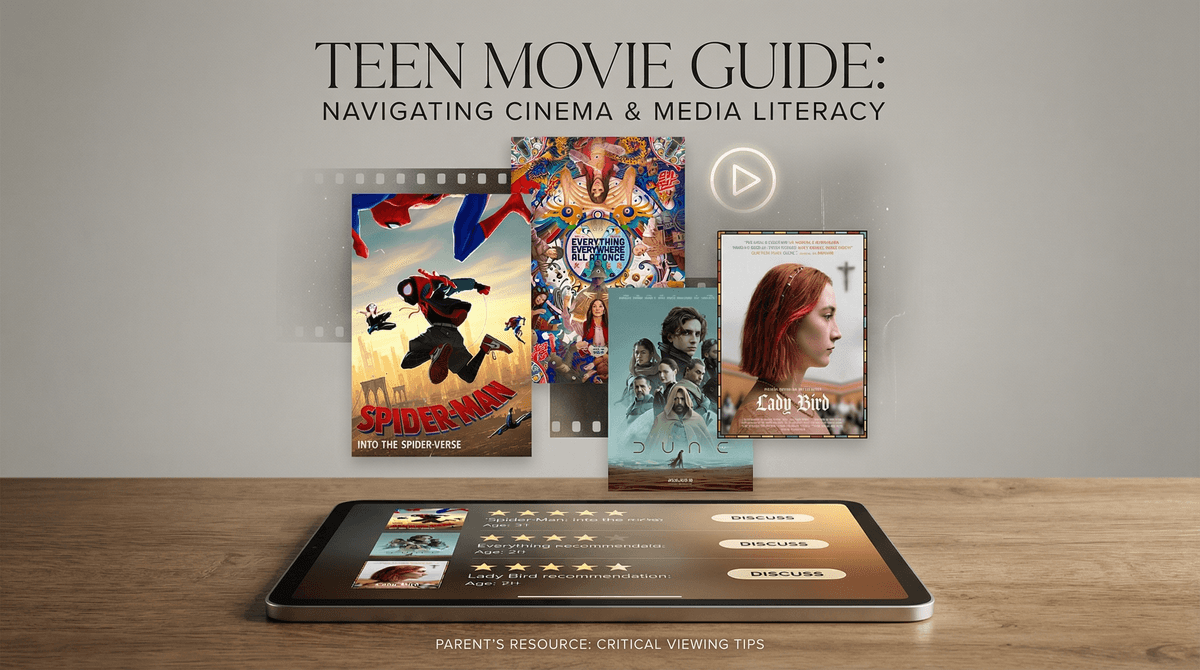
Quick picks by age:
- Ages 11-13: Spider-Man: Into the Spider-Verse, The Mitchells vs. The Machines, Encanto
- Ages 14-15: Everything Everywhere All at Once, Knives Out, The Fallout
- Ages 16-17: Dune, Lady Bird, Get Out
The MPAA rating system was designed in 1968 and hasn't evolved much since. Here's what you're actually dealing with:
PG-13 is the most useless rating in existence. It can mean Spider-Man: No Way Home (some action violence, totally fine for most 11-year-olds) or it can mean something with intense themes, sexual content just shy of R-rated, or genuinely disturbing imagery. The rating tells you almost nothing about whether it's right for YOUR teen.
R-rated doesn't automatically mean "no way." Some R-rated films earn that rating for language alone—lots of F-bombs but otherwise appropriate themes. Others are R because of graphic violence, sexual content, or drug use. The Breakfast Club is rated R. So is Saw. These are not the same.
The real question: What specifically earned this rating, and does that matter for your teen?
Instead of relying solely on that letter grade, consider:
Mature themes vs. mature content: A movie can deal with heavy topics (mental health, discrimination, loss) in an age-appropriate way, or it can show graphic content your teen isn't ready for. The Perks of Being a Wallflower deals with trauma and sexual abuse but does so thoughtfully. Your 15-year-old might be ready for the conversation it sparks, even if it's heavy.
Your teen's sensitivity level: Some 13-year-olds can handle intense action sequences and aren't fazed by jump scares. Others get nightmares from mild horror. You know your kid better than any rating board.
Friend group norms: By age 14, about 60% of teens have seen at least one R-rated movie. By 16, that number jumps to over 80%. I'm not saying let peer pressure decide, but understanding what their friends are watching helps you contextualize their requests.
Discussion potential: The best teen movies are conversation starters. Everything Everywhere All at Once has some violence and weird imagery, but it's also a profound story about family, identity, and generational trauma that teens connect with deeply.
Ages 11-13: The Tween Sweet Spot
This age wants to feel grown-up without actually being exposed to adult content. They're done with "kids' movies" but not ready for most R-rated fare.
Safe bets:
- Spider-Man: Into the Spider-Verse - Visually stunning, emotionally resonant, genuinely great filmmaking
- The Mitchells vs. The Machines - Hilarious, heartfelt, and surprisingly deep about family dynamics
- Turning Red - Puberty metaphor that actually gets it right
- Shazam! - Superhero fun without the dark Snyder-verse vibes
- The Princess Bride - Classic for a reason, works for every generation
PG-13 to approach carefully:
- Marvel movies vary wildly - Guardians of the Galaxy is lighter than Infinity War
- A Quiet Place is PG-13 but genuinely intense for sensitive viewers
- The Hunger Games deals with kids killing kids - read the book together first
Ages 14-15: The "Almost Adult" Phase
This is when movie choices get interesting. They're developing more sophisticated taste, can handle complex themes, and are probably already seeing R-rated content at friends' houses whether you know it or not.
Strong choices:
- Everything Everywhere All at Once - Some violence and weird moments, but it's a masterpiece about mother-daughter relationships
- Knives Out - Smart mystery that respects the audience's intelligence
- The Fallout - Deals with school shooting aftermath (no graphic violence shown) in a realistic way
- Eighth Grade - R-rated for language, but perfectly captures this age's social anxiety
- Ferris Bueller's Day Off - PG-13 classic that holds up
R-rated films worth considering:
- The Breakfast Club - Language and drug references, but essential teen cinema
- Dead Poets Society - Deals with suicide but in a thoughtful way
- Hidden Figures - PG but feels mature, great for this age
Ages 16-17: Pre-Adult Territory
At this point, you're preparing them for adult media literacy. They can handle most content, but guidance around context and media analysis becomes more important than restrictions.
Excellent choices:
- Dune - Epic, thoughtful sci-fi without gratuitous content
- Lady Bird - R-rated but the most accurate mother-daughter relationship on film
- Get Out - Horror that's really social commentary, perfect for discussing racism
- The Social Network - About the tech they use daily
- Parasite - R-rated, subtitled, and brilliant class commentary
Still worth discussing first:
- Anything with graphic sexual content (most teens aren't ready for Blue Is the Warmest Color level)
- Extreme violence without purpose (Saw franchise, torture porn)
- Films that glorify drug use or self-harm without consequences
Every streaming service has different parental controls, and your teen probably knows how to get around most of them. Netflix, Disney+, HBO Max, and Prime Video all have rating filters, but they're only useful if you set them up AND have conversations about why they exist.
Reality check: If your 15-year-old wants to watch something you've blocked, they'll watch it at a friend's house or find it on TikTok in clip form. Better to watch together and discuss than have them see it without context.
The goal isn't to shield your teen from everything challenging—it's to help them process what they're seeing. Some conversation starters:
Before watching: "This movie deals with [topic]. Have you heard about this? What do you already know?"
During/after: "What did you think about how they showed [scene]? Did that feel realistic?"
For tough content: "That was intense. How are you feeling about what we just watched?"
Media literacy questions: "Why do you think the filmmaker made that choice? What were they trying to say?"
The teens who handle mature content best are the ones whose parents watch with them and talk through it, not the ones with the most restrictions OR the most freedom.
Your teen will see things you don't approve: Accept this now. The question is whether they see it with your guidance or in secret.
Ratings creep is real: What earned an R rating in 1985 might be PG-13 today. What was PG-13 in 2000 might be PG now. Don't assume ratings from your childhood mean the same thing.
International films are underrated: Many teens love subtitled films once they try them. Spirited Away, Your Name, and Parasite are gateway drugs to world cinema.
Horror is a genre, not a moral failing: Some teens love horror movies. It's okay. A Quiet Place, Get Out, and Hereditary are actually brilliant films that happen to be scary.
Old movies still work: The Princess Bride, Ferris Bueller, Back to the Future—classics are classic for a reason. Don't assume your teen won't like something because it's "old."
- Common Sense Media - Detailed content breakdowns beyond just ratings
- IMDb Parents Guide - User-generated specific content warnings
- Letterboxd - See what other people (including teens) think about films
- Does the Dog Die? - Crowdsourced triggers and content warnings for sensitive viewers
Want to explore more age-appropriate content? The Screenwise chat can help you find films based on your teen's specific interests and sensitivities.
Movie selection for teens isn't about finding the "perfect" content—it's about building media literacy while respecting their growing maturity. A 14-year-old who can watch Everything Everywhere All at Once and discuss the multiverse as a metaphor for identity is learning more than a 14-year-old still restricted to Pixar movies.
The rating system is a starting point, not an ending point. Your teen's maturity, sensitivity, friend group context, and your family's values all matter more than whether something is PG-13 or R.
Next steps:
- Have a conversation about what they want to watch and why
- Look up specific content warnings, not just ratings
- Watch together when possible, especially for first R-rated films
- Discuss what you watch—that's where the real learning happens
- Trust your instincts about your specific teen
And remember: letting your 16-year-old watch The Breakfast Club doesn't make you a bad parent. Neither does saying no to Euphoria for your 14-year-old. You know your kid. The rating board doesn't.