

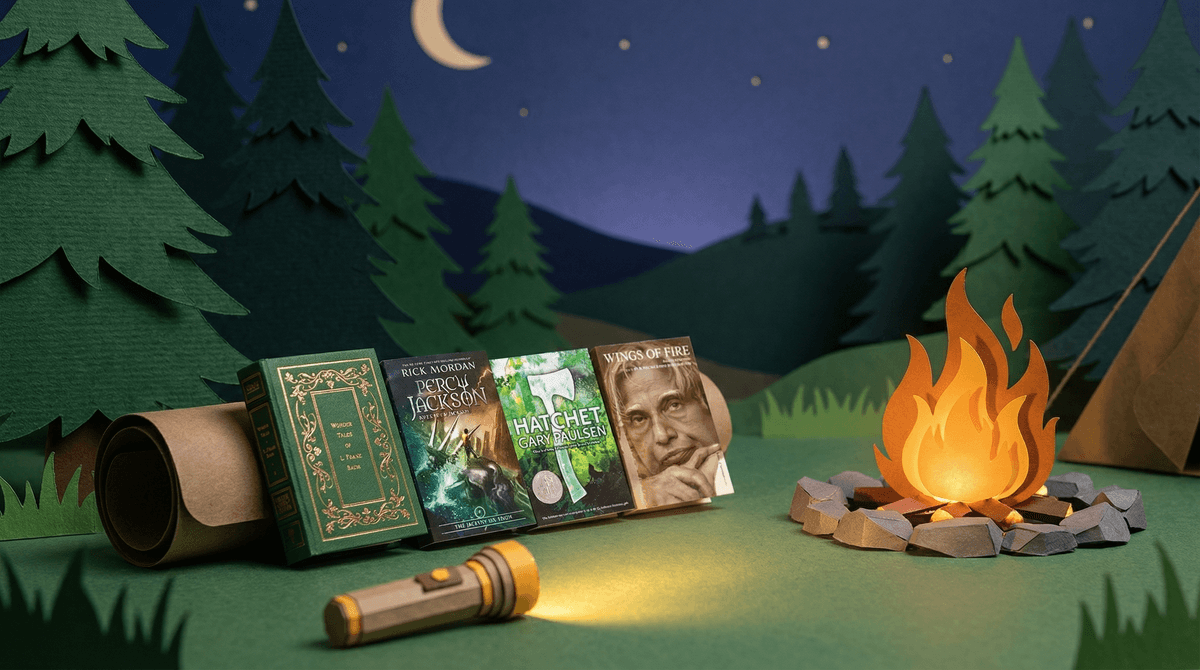
Look, we need to talk about something that gets lost in all the "should my kid have a phone at camp?" anxiety: actual physical books. You know, those paper things that don't need charging and can't accidentally connect to camp WiFi.
Summer camp books are specifically chosen reads that kids can enjoy away from home—books that fit in a duffle bag, survive a little dirt and bug spray, and ideally spark conversations around the campfire. They're the antidote to the "I'm bored" texts you might get during visiting day, and honestly, one of the best ways to keep reading skills sharp when school's out.
The trick is finding books that feel like a choice, not homework. Books that make kids want to read by flashlight after lights-out (which, let's be real, they're going to do anyway).
Here's the thing about summer reading loss: it's real. Kids can lose 1-3 months of reading progress over summer break, and that gap widens as they get older. But here's what also matters—camp is one of the few times kids are genuinely unplugged from the constant dopamine hits of TikTok, YouTube, and Roblox.
This is your window. When the alternative entertainment is literally staring at the ceiling of a cabin, a good book becomes genuinely appealing. Plus, camp culture is weirdly perfect for reading—there's downtime between activities, quiet periods before bed, and rainy days when everything gets cancelled.
And unlike at home where you're competing with every screen in the house, at camp you're competing with... friendship bracelets and gossip. Much better odds.
Ages 6-8 (First-Time Campers)
For this age, you want books that feel like friends. Short chapters, big emotions, and ideally something they can finish and feel accomplished about.
Comfort reads:
- Ivy + Bean series - Perfect for kids who need something familiar and funny
- Mercy Watson series - Short, silly, and great for reluctant readers
- The Bad Guys series - Graphic novel format, moves fast, kids genuinely love these
Building independence:
- Ramona Quimby, Age 8 - Classic for a reason; Ramona's anxiety about new situations is SO relatable
- Junie B. Jones - Controversial grammar aside, kids connect with her voice
Ages 9-11 (Peak Camp Years)
This is the sweet spot. Old enough to handle real plots, young enough to still get excited about books. These kids want adventure, friendship drama, and maybe some light magic.
Page-turners:
- Percy Jackson series - If they haven't read it yet, camp is the perfect time. Greek mythology + summer camp setting = chef's kiss
- Hatchet - Survival story that hits different when you're sleeping in the woods
- Wonder - Heavy on kindness themes that align perfectly with camp values
For the fantasy kids:
- Keeper of the Lost Cities - Long enough to last the whole session
- Wings of Fire series - Dragon obsession is real and this feeds it
- Nevermoor - Whimsical and weird in the best way
For reluctant readers:
- Dog Man series - Graphic novels count as reading, full stop
- Diary of a Wimpy Kid - Gets kids reading who swear they hate reading
Ages 12-14 (CITs and Older Campers)
Middle schoolers need books that respect their intelligence but don't feel like assignments. They want real stakes, complex characters, and stories that acknowledge that life is complicated.
Can't-put-down reads:
- The Hunger Games - Survival + social commentary, still hits
- Six of Crows - Heist story with found family vibes
- They Both Die at the End - Yes it's sad, yes they'll love it
For contemporary fiction fans:
- The Hate U Give - Important and genuinely gripping
- Eleanor & Park - First love story that doesn't feel cheesy
- Speak - Tough subject matter but incredibly powerful
For the genre readers:
Pack multiple books. One book for a two-week session is optimistic at best. If your kid is a reader, send 3-4. If they're not, send 2-3 anyway—peer pressure is real and when their bunkmate is reading, they might actually join in.
Series are your friend. If they're into the first book, they'll want the second. This is why Harry Potter, Percy Jackson, and Wings of Fire dominate camp trunks—built-in momentum.
Graphic novels absolutely count. The reading snobs can fight me on this. Smile, Guts, New Kid—these are legitimate literature that kids actually finish.
Don't send precious copies. Books at camp get dropped in lakes, sat on, used as bug-squashing tools. Send paperbacks you're okay never seeing again.
Let them choose. A book they picked themselves (even if it seems "too easy" or "not challenging enough") beats a book you chose that sits unread in their cubby. The goal is reading, not impressing their English teacher.
E-readers are a gamble. Some camps allow Kindles, some don't. If they do, a Kindle can hold their whole library and removes the "I finished all my books" excuse. But it's also one more electronic thing to worry about, and honestly, the physical book experience at camp is part of the charm.
Before camp, make the book selection process fun. Hit up your local bookstore or library together. Let them browse. Don't force the "important" books—there's value in reading anything voluntarily.
Try: "You'll have some downtime at camp when you're not doing activities. What kind of books sound good for that? Adventure? Funny? Scary?"
Not: "You need to read over the summer so you don't fall behind."
Also, normalize re-reading. If they want to bring a comfort book they've read five times, that's fine. Re-reading is still reading, and sometimes when you're homesick, familiar stories hit different.
Summer camp is genuinely one of the last bastions of unplugged childhood. Use it. A good book at camp isn't just about maintaining reading skills (though that's great)—it's about giving kids something absorbing that isn't algorithmically designed to hijack their attention span.
Will every kid become a voracious reader at camp? No. Will some books come home unread? Absolutely. But the ones who do connect with a book away from the constant pull of screens often come home asking for the next one in the series.
That's a win.
Next step: Take your kid to the bookstore or library this week. Let them pick. Put their name in the books with a Sharpie. Pack them in the trunk. And then let camp do its thing.
Need more screen-free activity ideas? We've got you covered.