

Look, I get it. You open up the most popular games list and it's basically a lineup of shooting, stabbing, and explosions. Fortnite. Call of Duty. Even Minecraft has you fighting off zombies and skeletons. And maybe your tween is totally fine with that level of combat, or maybe you're looking for something different—games that engage their brain, challenge their skills, and give them something to talk about at lunch that doesn't involve headshots.
The good news? There's a whole universe of incredible games that don't rely on violence as their core mechanic. We're talking puzzle games, life sims, racing games, sports games, creative builders, and story-driven adventures where the challenge comes from thinking, not fighting.
These aren't "baby games" either. These are legitimately engaging, sometimes challenging, often social experiences that tweens actually want to play. They're just built around different core loops: problem-solving instead of combat, creation instead of destruction, strategy instead of reflexes.
Here's the thing—violence in games isn't automatically bad, and nonviolent games aren't automatically better. But variety matters. If every single game your kid plays revolves around eliminating enemies, they're missing out on other types of gameplay that build different skills and offer different kinds of satisfaction.
Nonviolent games tend to emphasize:
- Creative problem-solving over quick reflexes
- Long-term planning over immediate reactions
- Collaboration without the competitive combat element
- Emotional intelligence through character interactions and story choices
Plus, let's be real: some kids just don't enjoy combat mechanics. They find them stressful or boring or just not their thing. And that's completely fine! Gaming should be fun, not something they tolerate because "everyone else is playing it."
Cozy Life Sims & Builders
Stardew Valley (Ages 10+)
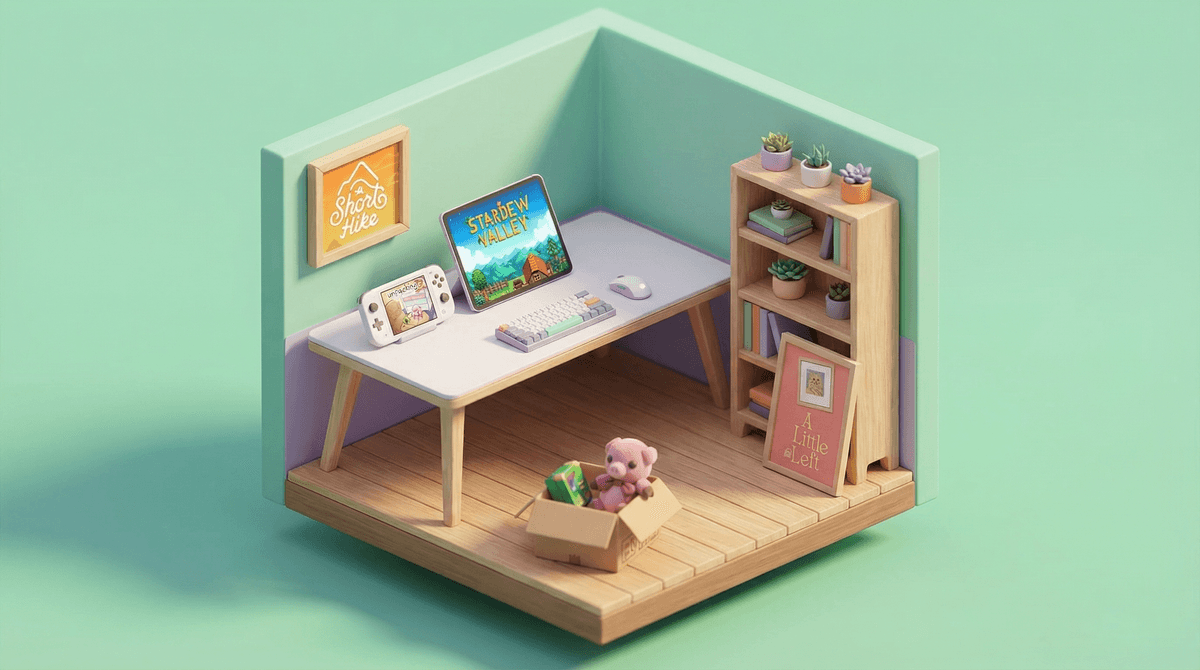
This is the gold standard of cozy gaming. Your kid inherits a farm, plants crops, raises animals, explores the town, makes friends, and slowly builds their little agricultural empire. It teaches resource management, planning, and patience. Warning: it's wildly addictive in the best possible way.
Animal Crossing: New Horizons (Ages 8+)
You build and customize your own island, catch bugs, fish, decorate your house, and hang out with adorable animal villagers. It's social (kids can visit each other's islands), creative, and operates in real-time, which naturally limits binge sessions.
The Sims 4 (Ages 12+)
Your tween creates people, builds houses, and guides their Sims through life. It's basically a digital dollhouse on steroids. Just know that Sims can die (usually hilariously), relationships get messy, and there are some mature themes. Check out our full Sims 4 guide for what to watch for.
Creative & Sandbox Games
Minecraft (Creative/Peaceful Mode) (Ages 8+)
Yes, Minecraft has combat in Survival mode, but Creative mode is pure building without any enemies. Peaceful mode keeps the survival elements but removes hostile mobs. It's LEGO for the digital age, and the creativity kids display is genuinely impressive.
Roblox (Ages 9+, with supervision)
Roblox isn't one game—it's a platform with millions of user-created games. Many are combat-focused, but there are tons of nonviolent options: fashion shows, obstacle courses (obbies), tycoon games, roleplay worlds, and creative builders. The social element is huge here. Just make sure you set up proper parental controls because it's an open platform.
Puzzle & Strategy Games
Portal 2 (Ages 10+)
This is a first-person puzzle game where you use a "portal gun" to create doorways through space. It's mind-bending, hilarious, and the co-op mode is fantastic for siblings or parent-kid play. No combat, just pure spatial reasoning and problem-solving.
Unpacking (Ages 8+)
You unpack boxes and arrange items in various homes throughout someone's life. That's it. That's the whole game. And it's weirdly meditative and surprisingly emotional. Great for kids who love organizing and spatial puzzles.
A Little to the Left (Ages 8+)
Similar vibe to Unpacking—you organize household items in satisfying ways. Perfect for the kid who color-codes their bookshelf.
Sports & Racing
Rocket League (Ages 9+)
It's soccer with rocket-powered cars. Incredibly fun, genuinely competitive, and requires real skill. The community can be toxic in chat, so disable or monitor that , but the gameplay itself is pure sports action.
Mario Kart 8 (Ages 6+)
Classic racing that's accessible for younger players but still fun for older kids. Yes, you throw shells at other racers, but it's cartoonish and not remotely violent.
FIFA / NBA 2K / Madden (Ages 10+)
If your kid is into sports, these games are incredibly detailed simulations. Just be aware of the Ultimate Team modes in these games, which are basically loot box gambling mechanics you'll want to monitor or disable.
Story-Driven Adventures
Spiritfarer (Ages 10+)
You play as a ferrymaster for the deceased, helping spirits move on to the afterlife. It's beautiful, emotional, and deals with death and grief in a gentle, age-appropriate way. Expect tears (the good kind).
A Short Hike (Ages 8+)
You're a bird hiking up a mountain. That's it. It's short (2-3 hours), sweet, and absolutely delightful. Perfect for a weekend afternoon.
Gris (Ages 10+)
A gorgeous platformer about a girl dealing with loss. No dialogue, no combat, just stunning visuals and emotional storytelling through gameplay.
Even nonviolent games can have online components that need attention:
- Chat features: Roblox, Rocket League, and many others have chat. Disable it for younger tweens, monitor it for older ones.
- User-generated content: Roblox especially—not every game on the platform is appropriate, even if it's nonviolent.
- Spending: Many of these games have in-game purchases. Set up purchase controls or use gift cards instead of credit cards.
Nonviolent doesn't mean boring. These games offer genuine challenge, creativity, social connection, and skill-building—just through different mechanics than combat.
The best approach? Mix it up. Maybe your kid plays Fortnite with friends but also has Stardew Valley for solo chill time. Maybe they race in Mario Kart and build in Minecraft. Gaming diets, like food diets, benefit from variety.
And here's the secret: many of these nonviolent games are actually more addictive than shooters because they tap into different reward systems—the satisfaction of creation, the dopamine hit of solving a puzzle, the emotional connection to characters and stories. So time limits still matter, but at least you're negotiating over farm management instead of kill counts.
Start with one game that matches your kid's interests:
- Love organizing? → Unpacking
- Want to be social? → Roblox (with controls) or Animal Crossing
- Into sports? → Rocket League or their favorite sport sim
- Creative builder? → Minecraft (Creative mode) or Stardew Valley
- Story lover? → Spiritfarer or Gris
Watch them play for a bit, ask questions about what they're doing, and see if it clicks. Not every game will land, and that's fine. The goal isn't to eliminate all combat games—it's to show your tween that gaming offers way more variety than just shooting things.