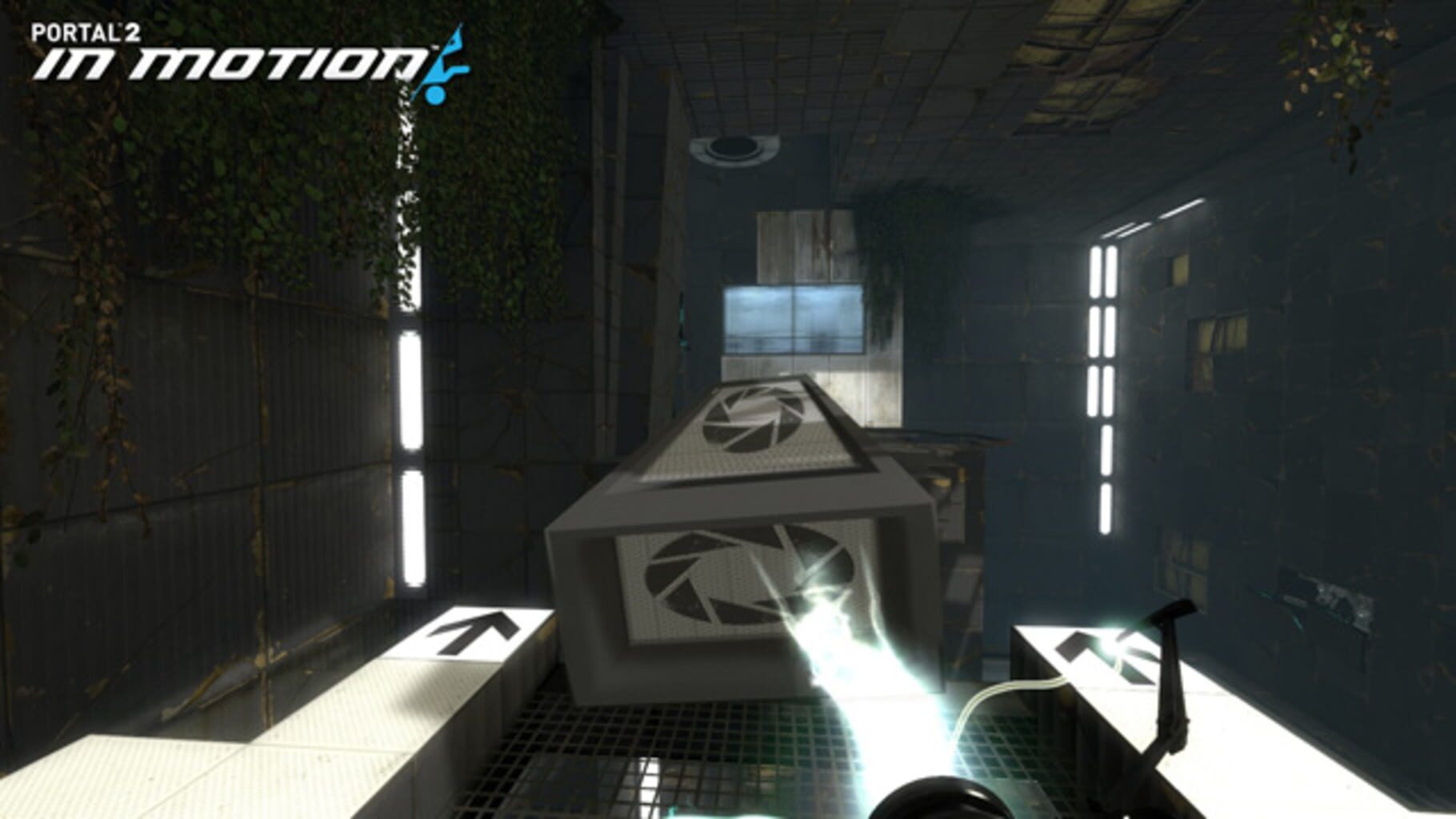
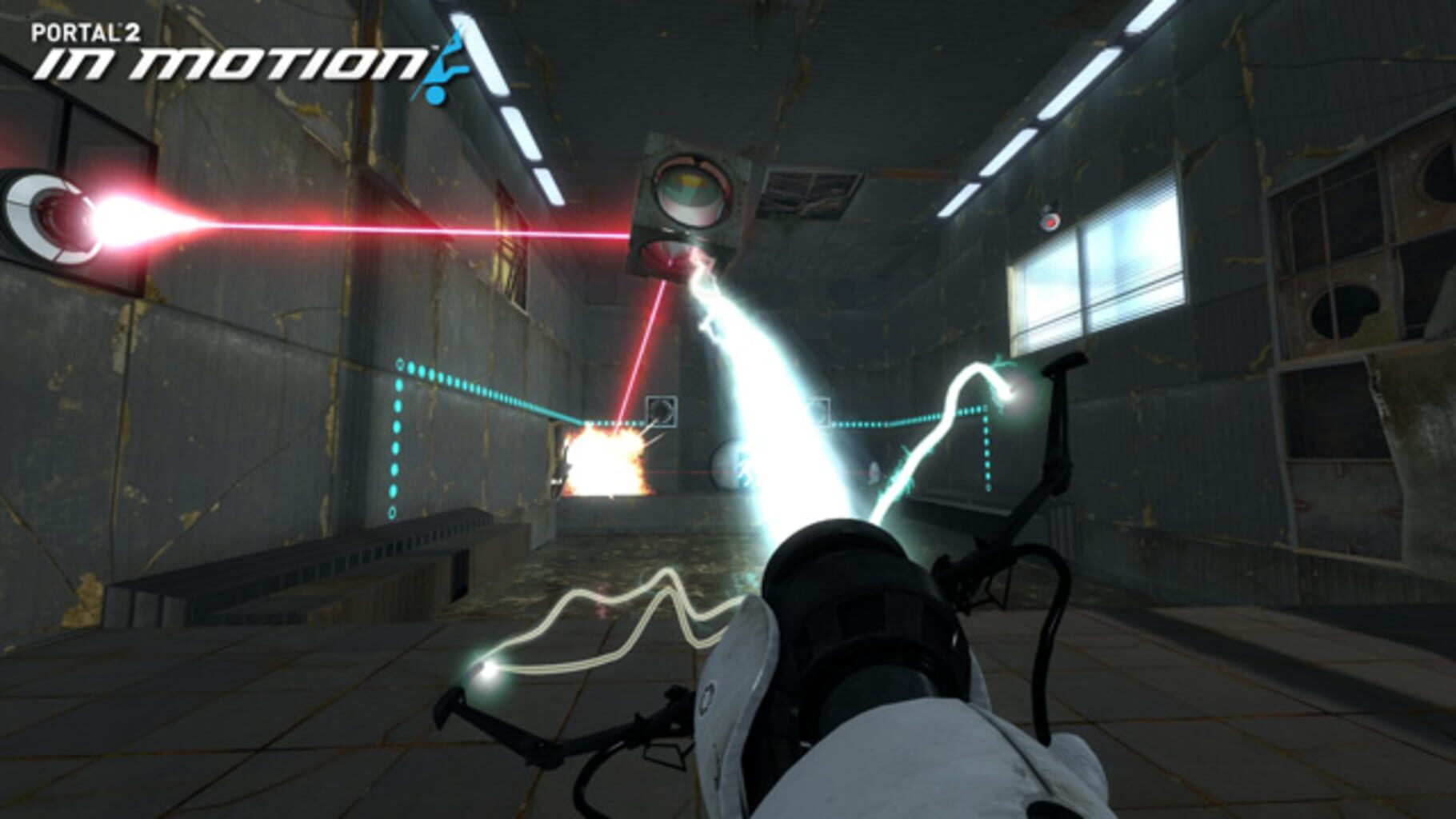
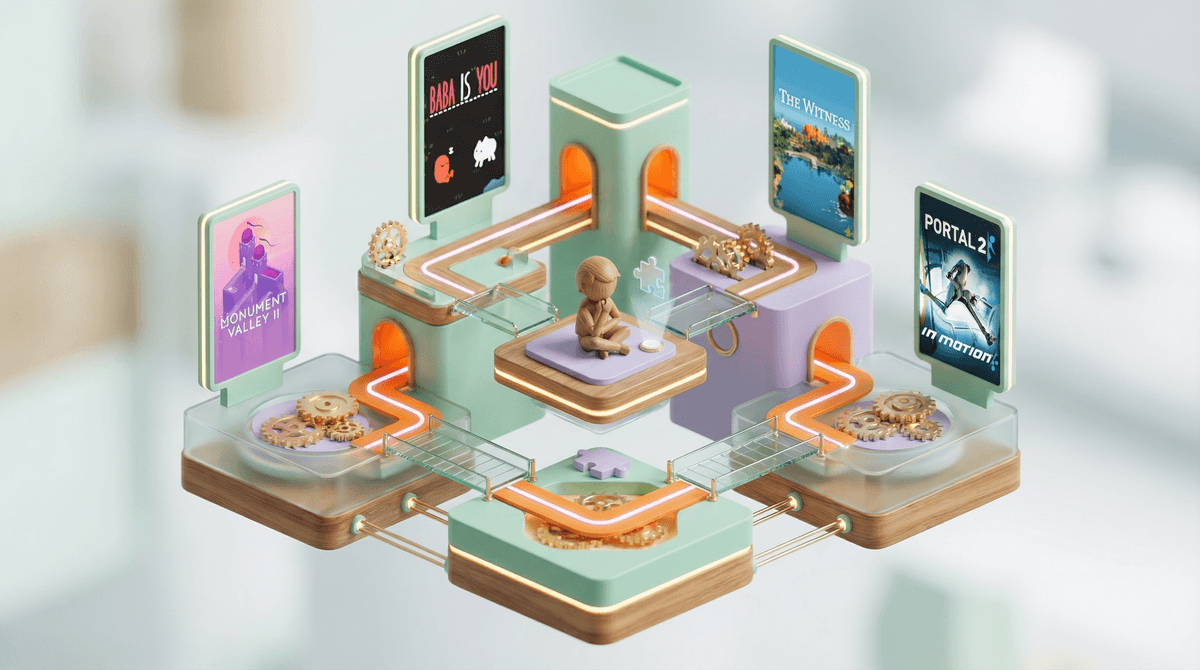
Even in 2026, we are still measuring every other puzzle game against a title that dropped when the iPad was brand new. There’s a reason for that. Portal 2 doesn't just give you puzzles to solve; it demands you rewire your brain to think in four dimensions. If your kid is currently burnt out on the high-decibel, battle-pass-grind energy of modern shooters, this is the perfect palate cleanser. It’s a first-person shooter where the only thing you’re hunting is a way out of a room, and the only "ammo" you have is a pair of interconnected holes in space.
The "Stealth Learning" Sweet Spot
Most games labeled "educational" feel like a lecture with a thin coat of digital paint. Portal 2 is the opposite. It is a masterclass in educational games that actually teach physics because it never mentions a single formula. Instead, it teaches through momentum.
You’ll see your kid realize that if they jump into a portal on the floor from a high ledge, they’ll come flying out of the portal on the wall with the same speed. That "Aha!" moment—when they use gravity as a slingshot—is genuine scientific intuition in action. If they’ve spent years building complex machines in Minecraft or logic-heavy "obbies" in Roblox, this is the professional-grade version of those concepts.
The Sibling Stress Test
While the single-player story is a classic, the co-op campaign is where the real parenting intel lies. You play as two robots who have to work together to solve rooms that one person literally cannot finish alone. It is one of the most effective cooperative games for siblings because it forces communication.
You can’t just "carry" a weaker player here; both people have to understand the logic of the room. You will hear them arguing about portal placement, laughing when one accidentally drops the other into a pit of acid, and eventually, the high-five when they finally sync up. It’s a rare piece of media that turns a gaming session into a legitimate exercise in teamwork.
The Friction Points
It isn't all smooth sailing. The difficulty curve is fair, but the final third of the game introduces different "gels" (liquids that make you bounce or run fast) that can make the puzzles feel incredibly abstract. If your kid is prone to "rage-quitting" when they get stuck, you might need to be the sounding board for a few minutes while they talk through the logic.
Also, the first-person movement is fast. Because the game involves being flung through the air and falling long distances, players who are sensitive to motion sickness might need to take breaks. It’s a very different sensation than the grounded movement of something like Fortnite.
Why It Still Works
At 15 years old, the game’s aesthetic—a sterile, decaying laboratory—still looks great because it’s stylistic rather than hyper-realistic. It’s one of the best PC games for families specifically because it’s a "one-and-done" experience. There are no daily login bonuses, no skins to buy, and no social lobbies full of strangers. It’s just a brilliant, funny, slightly dark story that respects the player's intelligence. If you want to see if your kid has the patience for high-level problem solving, hand them a portal gun and get out of the way.