

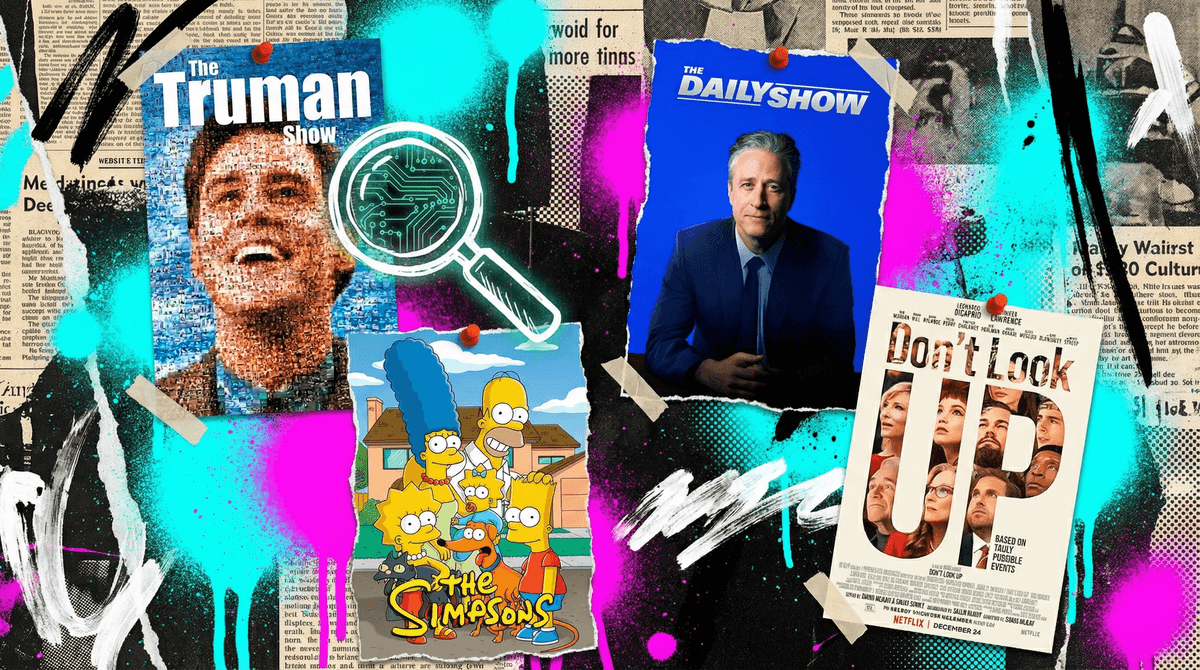
Satire is that special kind of comedy that makes you laugh and then makes you think. It's humor with a purpose—using irony, exaggeration, and wit to expose stupidity, hypocrisy, or corruption in society, politics, and culture. And for teens? It's basically a masterclass in critical thinking disguised as entertainment.
We're talking about shows like The Daily Show, movies like Don't Look Up, books that skewer social norms, and even TikTok creators who use humor to call out absurdity. The best satirical content teaches teens to question what they're told, recognize manipulation, and understand that authority figures—including the media itself—aren't always operating in good faith.
In an era of deepfakes, rage-bait, and algorithm-driven echo chambers, teaching teens to decode satire is basically teaching them to navigate reality.
Your teen is consuming an absolutely bonkers amount of media every day. Between TikTok, YouTube, Instagram, Discord, and whatever new app launched this week, they're being hit with thousands of messages about how to think, what to buy, who to be, and what to believe.
Satire is one of the few tools that teaches them to step back and ask: "Wait, is this trying to manipulate me?"
Good satire shows teens that:
- Authority can be questioned (and should be)
- Media has agendas (yes, even their favorite YouTuber)
- Outrage is often manufactured (for clicks, views, and engagement)
- Humor can be a form of resistance (and a way to process heavy topics)
Plus, honestly? Sophisticated humor is just more fun. Once your teen "gets" satire, they start seeing it everywhere—and they develop a much sharper bullshit detector.
Ages 11-13: Gateway Satire
Start with content that's clearly comedic but introduces the concept of questioning norms:
Shows:
- The Simpsons (classic episodes, not the weird later seasons) - Social satire that's been poking fun at American culture for 30+ years
- Abbott Elementary - Mockumentary style that gently satirizes public school bureaucracy
- The Great British Bake Off - Wait, hear me out. It's unintentionally satirical of American competition shows by being genuinely kind and low-stakes
Books:
- The Hunger Games by Suzanne Collins - Satirizes reality TV and authoritarian spectacle
- Hatchet by Gary Paulsen - Not satire, but pairs well with discussions about survival narratives
- Anything by Gordon Korman - His books gently mock middle school social hierarchies
YouTube:
- Channels that do media analysis for younger audiences (think educational satire)
Ages 14-16: Building Critical Skills
Shows:
- Last Week Tonight with John Oliver - Deep dives into policy with biting humor (watch together initially)
- Derry Girls - Historical satire about growing up during The Troubles in Northern Ireland
- Community - Meta-humor that satirizes TV tropes and pop culture
- Parks and Recreation - Government bureaucracy as comedy gold
Movies:
- Knives Out - Satirizes wealthy families and true crime obsession
- The Truman Show - Reality TV and surveillance culture (still incredibly relevant)
- Mean Girls - High school social hierarchies (yes, it's satire)
Books:
- The Hate U Give by Angie Thomas - Satirizes code-switching and performative activism
- Feed by M.T. Anderson - Dystopian satire of consumer culture and social media
- A Modest Proposal by Jonathan Swift - Classic satire (yes, from 1729, but teens love the shock value)
Ages 17+: Advanced Satire
Shows:
- Succession - Brutal satire of wealth, power, and family dysfunction (some mature content)
- Veep - Political satire with rapid-fire insults (lots of language)
- Atlanta - Surreal satire of race, class, and the music industry
Movies:
- Don't Look Up - Climate change denial and media circus
- Sorry to Bother You - Capitalism, code-switching, and corporate exploitation (gets weird)
- The Big Short - Financial crisis satire that makes economics actually interesting
Books:
- Catch-22 by Joseph Heller - War bureaucracy satire
- Slaughterhouse-Five by Kurt Vonnegut - Anti-war satire with sci-fi elements
Satire requires context. If your teen doesn't understand what's being satirized, the humor won't land—and worse, they might take the exaggerated position seriously. This is how people miss that The Colbert Report was satire and thought Stephen Colbert actually held those views.
Co-watching is your friend here. Especially with political satire, watching together gives you a chance to discuss the real issues being mocked and your family's values around them.
Some satire punches down, not up. Not all satire is created equal. The best satire challenges power and exposes hypocrisy. Bad satire just makes fun of marginalized groups or reinforces stereotypes. Help your teen learn the difference.
Cynicism is a risk. Too much satire without balance can lead to "nothing matters" nihilism. Make sure your teen is also consuming content that shows people working toward solutions, not just mocking problems.
Try these conversation starters:
- "What do you think this show/movie is actually making fun of?"
- "Who has power in this story? Who's being criticized?"
- "Is this punching up (at people with power) or punching down (at vulnerable people)?"
- "What would someone who disagreed with this satire say?"
- "Does this make you want to change anything, or just laugh?"
Satire is one of the best tools we have for teaching teens to think critically about media, question authority, and develop sophisticated humor. In a world of algorithm-fed outrage and manufactured authenticity, kids who understand satire have a superpower.
Start with age-appropriate content, watch together when possible, and use it as a jumping-off point for real conversations about media literacy, power, and values.
And hey—if your teen starts pointing out the satirical elements in Roblox capitalism or TikTok performativity, congratulations. You've created a critical thinker.
Want more recommendations? Check out our guide on media literacy for teens or explore alternatives to doomscrolling.
Concerned about political content? Learn how to discuss current events with teens without it becoming a fight.
Want to understand what your teen is watching? Take our quick survey to see how your family's media habits compare to others in your community—and get personalized recommendations based on your values.