

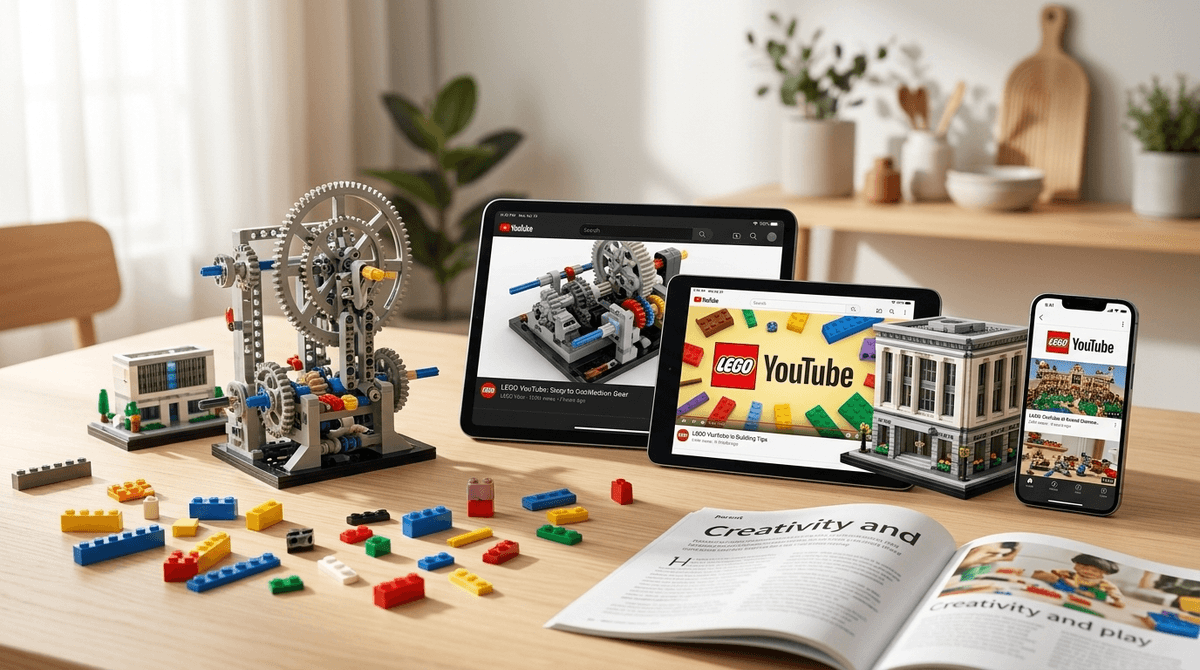
TL;DR: LEGO YouTube is a mixed bag. You’ve got engineering geniuses teaching your kids physics and "MOC" (My Own Creation) masters sparking real creativity, but you’ve also got "haul" culture and professional collectors who make kids feel like their modest bucket of bricks isn't enough.
Quick Recommendations:
- For Engineering & Mechanics: JK Brickworks
- For Pure Inspiration: Beyond the Brick
- For Pro Building Tips: Tiago Catarino
- For High-Energy Entertainment: Brick Science
If your living room floor currently looks like a colorful minefield of plastic caltrops, you’re not alone. LEGO is the ultimate "safe" toy, right? It’s spatial reasoning, fine motor skills, and quiet play all wrapped in one. So when your kid asks to watch "LEGO videos" on YouTube, it feels like an easy "yes." It’s certainly better than Skibidi Toilet or watching someone scream over a Roblox obby.
But here’s the reality: LEGO YouTube isn't just one thing. It’s a massive ecosystem that ranges from brilliant MIT-level engineering to what I call "consumerist brain rot." One minute your kid is learning how to build a working transmission, and the next they’re watching a 40-year-old man with a $100,000 basement collection explain why they "need" the new $800 LEGO Star Wars UCS Interceptor or their life is incomplete.
At its core, it’s a community of creators (often called AFOLs—Adult Fans of LEGO) who film everything from set reviews and "speed builds" to massive custom dioramas. For kids, it’s a way to see sets they don’t own and learn techniques they wouldn’t find in the instruction manual.
According to recent community data, about 65% of kids in the 7-12 age range engage with some form of "hobbyist" YouTube, and LEGO is consistently in the top three. It’s the digital version of the old LEGO catalogs we used to circle with a Sharpie, but on steroids and with a 24/7 hype cycle.
When done right, LEGO YouTube is basically a free masterclass in design. There are creators who focus on "MOCs"—My Own Creations. This is where the real magic happens. Instead of just following the box art for The LEGO Movie sets, these creators show kids how to use "SNOT" (Studs Not On Top) techniques or how to turn a dinosaur tail into a palm tree leaf.
If you want your kid to actually learn something, start here. Jason Allemann is a legend. He focuses on "kinetic sculptures." He’s the guy who built a working LEGO clock and a galloping horse. It’s heavy on physics and mechanics but explained in a way that makes kids want to go raid their bin for Technic gears.
Think of this as the "Travel Channel" for LEGO. They go to conventions and interview builders who have spent months creating 10-foot-long spaceships or functioning cities. It’s pure inspiration and shows kids that LEGO is a medium for art, not just a toy you buy at Target.
Tiago is a former LEGO set designer. His videos are short, punchy, and focus on "building hacks." He’ll show you 10 different ways to build a LEGO chair or a fireplace using pieces you probably already have. This is the antidote to the "I need a new set" syndrome.
Then there’s the other side of the brick. A huge portion of LEGO YouTube is dedicated to "Hauls" and "Reviews."
While reviews can be helpful if your kid is saving up their own allowance, many of these channels cater to collectors, not players. They focus on "investment value," "retired sets," and "rarity." For a 9-year-old, this creates a sense of FOMO (Fear Of Missing Out) that is hard to manage. They stop looking at their bricks as a way to build a castle and start looking at them as a collection that is "missing" the latest $200 LEGO Fortnite drop.
Riley at Brick Science is incredibly talented, but he uses the "Mr. Beast" style of editing—fast cuts, high energy, and "I spent 24 hours building a LEGO house" type hooks. It’s entertaining, and he actually builds cool stuff, but it can be a bit overstimulating for younger kids. It’s "edutainment" that leans heavily on the "tainment."

- Ages 5-7: Stick to YouTube Kids. Search for "LEGO building tutorials" or "LEGO stop motion." Avoid the "unboxing" channels which are essentially just long-form commercials that trigger the "I want" reflex before they even understand what money is.
- Ages 8-12: This is the prime age for learning techniques. Encourage them to watch "MOC" builders. If they start getting deep into the "collector" side of YouTube, it’s a good time to talk about how those creators often get sets for free or do this as a full-time job.
- Ages 13+: At this point, they might be interested in the "LEGO Investing" side of YouTube. This is actually a decent entry point for a conversation about supply and demand, but keep an eye on the "hustle culture" vibe that can creep in.
The biggest risk isn't the LEGO content itself—it’s where the algorithm takes them next. Because LEGO is a "kid" topic, YouTube's "Up Next" sidebar might transition from a wholesome tutorial to weird, knock-off animations. You might start with LEGO Minecraft and end up on a video where a LEGO-style character is in a "skibidi" situation that’s way more violent or suggestive than the actual toy brand would ever allow.
Pro-tip: Create a "LEGO" playlist for your kid and add specific videos from creators like JK Brickworks or Tiago Catarino. Tell them they can watch anything in the playlist, rather than just browsing the home feed.
Check out our guide on setting up YouTube supervised accounts
If your kid is suddenly asking for every "retired" set they see on Bricksie or MandRproductions, it’s time for a "Behind the Scenes" talk.
You can say: "Hey, I noticed that guy has a whole room full of LEGO. That’s actually his job! He gets paid by YouTube and sometimes by companies to show those off. It’s like a commercial that lasts 20 minutes. What’s something cool you could build with the bricks we already have that looks like his?"
Shift the focus from acquisition to creation.
LEGO YouTube can be a fantastic resource that turns a "plastic toy" into an "engineering kit." The key is curation. If they are watching people build, they are getting inspired. If they are watching people shop, they are just being marketed to.
Encourage the tutorials, the stop-motion (LEGO Stop Motion Animation is a great rabbit hole), and the "MOC" showcases. Steer clear of the "haul" videos and the "investment" bros.
Next Steps:
- Sit down for 15 minutes and watch a video with them. Is the creator shouting? Are they focusing on how much the set costs? Or are they showing how the gears work?
- If they’re inspired to build, grab a board game or a book like The LEGO Ideas Book to provide offline inspiration.
- Use the Screenwise survey to see how your kid's YouTube habits compare to other families in your community.