

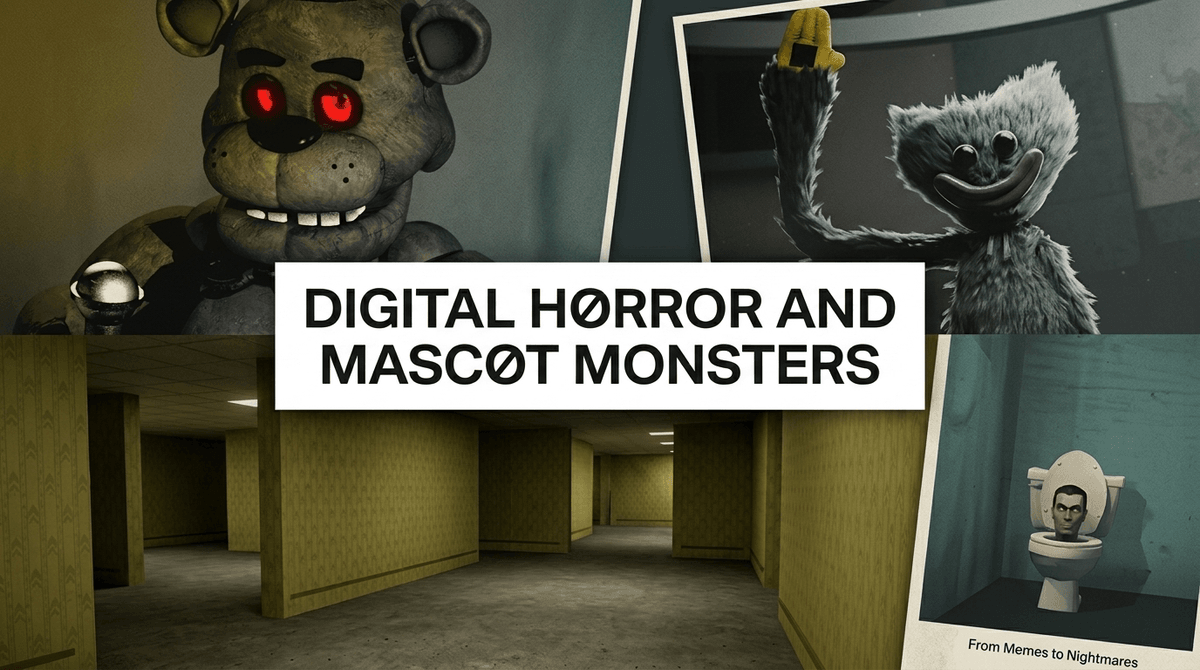
TL;DR: Digital horror isn't what it used to be. Today, it’s "mascot horror" (creepy versions of childhood toys) and "analog horror" (distorted, lo-fi videos) found on YouTube and Roblox. If your kid is having nightmares, obsessing over "deep lore," or suddenly afraid of the dark, it’s time to pivot.
Quick links to the usual suspects:
- Five Nights at Freddy's (The gateway drug to jump scares)
- Poppy Playtime (Home of the long-limbed Huggy Wuggy)
- Garten of Banban (Bright colors, weird vibes)
- Skibidi Toilet (Not strictly "horror," but definitely uncanny and loud)
- The Backrooms (The infinite yellow office space of your nightmares)
Remember when "scary" for kids meant Goosebumps books or that one scene in Large Marge? Today’s digital landscape has birthed a completely different beast. We’re seeing a massive rise in content that looks like it’s for toddlers—bright colors, googly eyes, playground settings—but features lore about murder, experiments, and psychological torment.
This isn't an accident. Creators know that the "uncanny valley"—that uncomfortable feeling when something looks almost human or familiar but is off—is highly clickable. For an 8-year-old, seeing a blue fuzzy monster like Huggy Wuggy from Poppy Playtime is confusing because it triggers the "this is a toy" part of their brain and the "this thing wants to eat me" part simultaneously.

Mascot horror is a subgenre of games and videos that takes childhood-adjacent characters (think Chuck E. Cheese or Sesame Street vibes) and turns them into monsters.
It usually starts with Five Nights at Freddy's. About 60% of middle schoolers have played or watched a "Let's Play" of FNAF. It relies heavily on jump scares—sudden, loud noises and images popping up—which provides a dopamine hit that can be addictive for kids.
Then you have Poppy Playtime and Garten of Banban. These games are often played by YouTubers who scream and overreact, making the content feel like a high-energy "event." The problem? The merchandise for these games is everywhere. You’ll see Huggy Wuggy plushies at the local fair or in claw machines, which makes parents think the content is as harmless as Bluey. It’s not.
Analog horror is a bit more sophisticated and, frankly, a bit creepier. It uses the aesthetic of old VHS tapes, 1990s emergency broadcast alerts, and low-quality security footage to tell a story.
The most famous example is The Backrooms. It started as an internet "creepypasta" about falling out of reality into an endless maze of yellow-carpeted office rooms. It’s eerie, lonely, and features "entities" that chase you.
There’s also The Mandela Catalogue, which is much darker, involving "alternates" (doppelgängers) that drive people to madness. While a 10-year-old might find the lo-fi look "cool" and "retro," the psychological themes are often way over their head and can lead to genuine existential dread.
It’s the "forbidden fruit" effect. If every kid on the playground is talking about the "Skibidi Scientist" or the latest Roblox horror map like DOORS, your kid is going to feel left out if they haven't seen it.
There’s also a developmental component. Around ages 7 to 11, kids are testing their own boundaries. They want to see how much they can handle. Surmounting a jump scare is a "win" for them. It’s a way to practice bravery in a controlled environment—except sometimes, the environment isn't as controlled as we think.
How do you know if your kid has crossed the line from "having fun being scared" to "actually traumatized"?
- Sleep Disruption: This is the big one. If a kid who usually sleeps fine is suddenly asking for the hall light on, or claiming they see shapes in the corner of the room, they’ve likely consumed something their brain can't process yet.
- Obsessive Research: If they are spending hours reading the "lore" wikis for Five Nights at Freddy's or watching theory videos about why a character was murdered, they might be trying to "solve" their fear by knowing everything about it. This often backfires by keeping the scary images front and center.
- Increased General Anxiety: If they are more jumpy or nervous in everyday situations, the "fight or flight" response triggered by these games might be staying "on" even after the screen is off.
- Age Inappropriateness: If your 6-year-old is watching Skibidi Toilet and laughing, it might seem fine, but the uncanny visuals can manifest as night terrors later.
Every kid is different, but here’s a general rule of thumb based on community data and developmental milestones:
Ages 5-7: The "No-Go" Zone
At this age, kids struggle to distinguish between fantasy and reality. Even "mild" horror like Garten of Banban can be genuinely terrifying. Stick to "spooky-lite" content like The Last Kids on Earth or Hotel Transylvania.
Ages 8-10: The "Proceed with Caution" Zone
This is when the Roblox peer pressure kicks in. DOORS is a popular entry point. It’s scary, but it’s more of a puzzle game with jump scares. Avoid the "Lore" videos on YouTube which often feature much darker fan-made content than the games themselves.
Ages 11-13: The "Deep Lore" Zone
Tweens are the primary audience for Five Nights at Freddy's. At this age, you can start having conversations about how the media is trying to make them feel. If they want to watch horror, suggest they do it in the living room, not alone in their bedroom at night.
If you find out your kid has been watching something like The Mandela Catalogue and they’re clearly rattled, don't lead with "You're grounded" or "That's stupid."
Try this instead:
- Acknowledge the pull: "I get why that looks interesting. The mystery is cool, right?"
- Explain the mechanics: "The people who make these videos use specific sounds and colors to make your brain feel panicked. It’s like a trick for your eyes."
- De-mystify the "Lore": Sometimes looking at "behind the scenes" or "how it was made" videos can help. Seeing that a monster is just a 3D model made by a guy named Kevin in his basement takes the power away from the image.
- Set the "Sunlight Rule": If you’re going to engage with "creepy" content, it happens during the day. No horror content within two hours of bedtime. Period.
Digital horror is a rite of passage for many kids, but the current "mascot" and "analog" trends are specifically designed to bypass adult filters by looking innocent.
You don't need to be the "fun police," but you do need to be the "sanity police." If the Huggy Wuggy plushie is giving your kid nightmares, it’s not "just a toy"—it’s a sign that their digital diet needs a detox.
- Check the Search History: Take a quick peek at their YouTube history for terms like "Analog Horror," "FNAF Lore," or "Backrooms."
- Audit Roblox: See what games they’ve played recently. If you see icons with blood or distorted faces, ask them to show you the gameplay.
- Replace the Rot: If they love the mystery of horror, steer them toward high-quality "spooky" mystery books like Small Spaces by Katherine Arden or shows like Gravity Falls.