

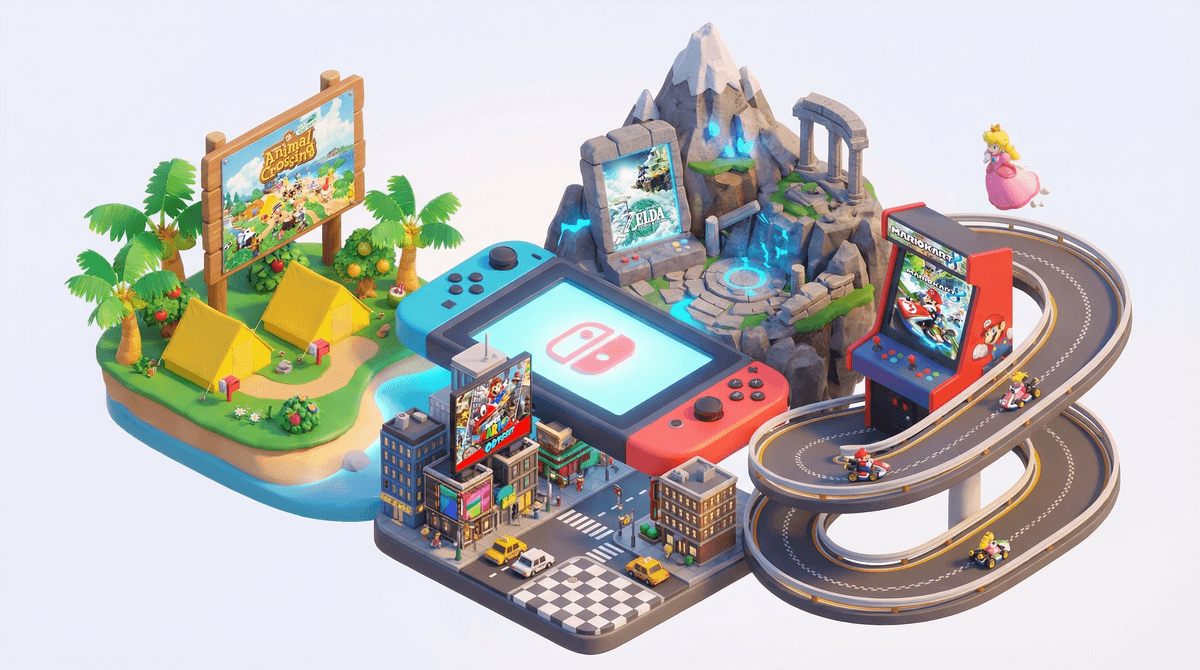
The Nintendo Switch is basically the perfect storm of gaming for families. It's a hybrid console that works both as a handheld device and plugs into your TV, which means kids can play on road trips, then seamlessly continue on the big screen at home. Released in 2017, it's become the go-to gaming system for families because Nintendo actually gives a damn about age-appropriate content.
Unlike PlayStation or Xbox, which lean heavily into mature games, the Switch has an enormous library of games designed specifically for kids. We're talking everything from creative building games to party games that get the whole family off the couch (well, sort of).
Here's the thing: the Switch isn't trying to be everything to everyone. It knows its lane. The games are colorful, imaginative, and genuinely fun without relying on violence or edgy content to keep kids engaged. Plus, the parental controls are actually useful (shocking, I know).
The portability factor is huge. Long car ride? Switch. Waiting room at the dentist? Switch. Rainy Saturday when everyone's going stir-crazy? Switch on the TV with four controllers for Mario Kart chaos.
And unlike mobile games that are constantly trying to extract money through in-app purchases, most Switch games are pay-once-and-done. Sure, some have DLC, but it's not predatory. You're not going to accidentally rack up $200 in charges because your kid wanted a sparkly unicorn skin.
Ages 5-7: Gateway Games
Kirby and the Forgotten Land is genuinely delightful. Kirby is this adorable pink blob who inhales enemies and copies their powers. The game has a co-op mode where a parent can help without taking over, and it's forgiving enough that younger kids won't get frustrated. Plus, Kirby's "Mouthful Mode" (where he swallows huge objects like cars) is hilarious.
Paw Patrol games exist if your kid is in that phase. They're not going to win any awards for innovation, but they're competent and let kids play as their favorite characters. Sometimes that's enough.
Mario Kart 8 Deluxe with the "Smart Steering" option is perfect for this age. The game literally won't let them drive off the track, so they can actually compete without constant frustration. Fair warning: this will become a household staple for years.
Ages 8-10: Building Skills and Creativity
Minecraft on Switch is the same Minecraft you've heard about everywhere else, but with the benefit of Nintendo's parental controls and no chat features to worry about. Kids can build, explore, and create in both Creative (no danger) and Survival (mild threat) modes. If you're wondering whether Minecraft is actually educational or just another time sink , the answer is: kind of both, and that's okay.
Animal Crossing: New Horizons is the cozy game that took over during the pandemic. Kids design their own island, catch bugs and fish, decorate their house, and interact with adorable animal villagers. It runs in real-time, which teaches patience (you can't binge it), and there's genuine creativity in the design elements. No violence, no pressure, just vibes.
Super Mario Odyssey is a masterclass in game design. It's a 3D platformer where Mario travels to different kingdoms, each with unique mechanics and challenges. The difficulty scales naturally, and there's a two-player mode where the second player controls Mario's hat (weird but fun). This is the game that reminds you why Nintendo has been doing this for 40 years.
Splatoon 3 is Nintendo's take on online shooters, except instead of guns, kids have paint weapons, and instead of killing opponents, they're covering the map in their team's color. It's fast-paced, strategic, and the online community is surprisingly wholesome. This is the rare online multiplayer game I'd actually recommend for this age group.
Ages 11-13: More Complex Gameplay
The Legend of Zelda: Breath of the Wild and Tears of the Kingdom are legitimately among the best games ever made, for any age. Open-world exploration, puzzle-solving, combat that requires strategy, and a story that unfolds naturally. These games respect players' intelligence and reward curiosity. Yes, there's fantasy violence (fighting monsters), but it's stylized and not graphic. Many kids this age will sink 100+ hours into these games, and honestly? That's not the worst thing.
Mario Maker 2 lets kids design their own Mario levels and share them online. It's creative, it teaches game design principles, and playing other people's levels exposes them to wild creativity. The online features are well-moderated.
Pokémon Scarlet/Violet are the latest in the Pokémon series. If your kid isn't already into Pokémon, these are solid entry points. If they are into Pokémon, you already know they want this. The games are more open-world now, which gives kids more freedom in how they explore.
Stardew Valley is a farming simulator that's way more engaging than it sounds. Kids inherit a farm, grow crops, raise animals, explore caves, and build relationships with townspeople. It's chill, it's deep, and it teaches resource management without feeling like homework.
Super Smash Bros. Ultimate is the ultimate party fighting game. Up to 8 players, dozens of Nintendo characters, and enough chaos to make everyone laugh. Yes, characters "fight," but it's cartoonish—they're trying to knock each other off platforms, not drawing blood.
Overcooked 2 is a cooperative cooking game that will test your family's communication skills. You work together to prepare and serve meals in increasingly absurd kitchens (on pirate ships, in haunted houses, etc.). It's frantic, funny, and requires actual teamwork.
Luigi's Mansion 3 has a great co-op mode where one player is Luigi and the other is Gooigi (a goo version of Luigi, obviously). You explore a haunted hotel, solve puzzles, and catch ghosts with vacuum cleaners. It's mildly spooky but not actually scary, making it perfect for kids who want to feel brave.
About online features: Many Switch games have online multiplayer, but Nintendo's approach is more locked-down than other platforms. To play online, you need a Nintendo Switch Online subscription ($20/year for individuals, $35 for families). The voice chat situation is intentionally clunky (requires a separate phone app), which actually protects younger kids from toxic online interactions.
About parental controls: Download the Nintendo Switch Parental Controls app. Seriously. You can set time limits, restrict games by age rating, disable online features, and see exactly what your kids are playing. It's free and actually works well.
About screen time: The Switch has a built-in tracker that shows how many hours have been spent on each game. This can be enlightening (or horrifying). Use it as data, not ammunition. If your kid has played Fortnite for 40 hours this month, that's a conversation starter about balance, not necessarily a crisis.
About game ratings: The ESRB ratings on Switch games are generally accurate. E for Everyone means everyone. E10+ means some cartoon violence or mild language. T for Teen means more intense violence or themes. For kids under 13, stick with E and E10+ unless you've specifically researched the game.
Fortnite is free-to-play on Switch, which means it's everywhere. The game itself is fine—cartoony battle royale with building mechanics. The problems are: 1) the social pressure around cosmetics (skins cost real money), 2) the voice chat with strangers, and 3) the "just one more game" addictiveness. If your kid plays Fortnite, read up on how to manage the V-Bucks situation and consider disabling voice chat.
Roblox on Switch is newer and more limited than on other platforms, which is actually a good thing. But the same concerns apply: user-generated content means variable quality and safety. Set up parental controls before letting kids loose.
The Nintendo Switch is legitimately the best gaming console for families right now. The game library is enormous, the content is generally appropriate, and the parental controls actually work. You're not going to prevent all screen time conflicts, but you can feel reasonably good about what your kids are playing.
Start with the classics—Mario Kart, Animal Crossing, Minecraft—and branch out based on your kid's interests. Look for games with co-op modes so you can play together, at least initially. And use those parental controls.
Gaming isn't inherently bad. Good games teach problem-solving, creativity, persistence, and sometimes even cooperation. The Switch has a lot of good games.
-
Set up parental controls before you hand over the Switch. Future you will thank present you.
-
Start with one or two games rather than overwhelming kids with choices. Mario Kart and one other game based on their interests is plenty.
-
Play together for the first few sessions. You'll understand what they're doing, and it's actually fun.
-
Check out our guide to game-specific parental controls for detailed setup instructions.
-
Join the conversation about what games your kid's friends are playing. Sometimes the social aspect matters more than the game itself, and that's worth understanding.
The Switch isn't going to raise your kids, but it's a pretty solid tool in the entertainment arsenal. And honestly? Some of these games are genuinely great. You might find yourself "checking on the kids" and then accidentally playing Zelda for two hours. It happens.