

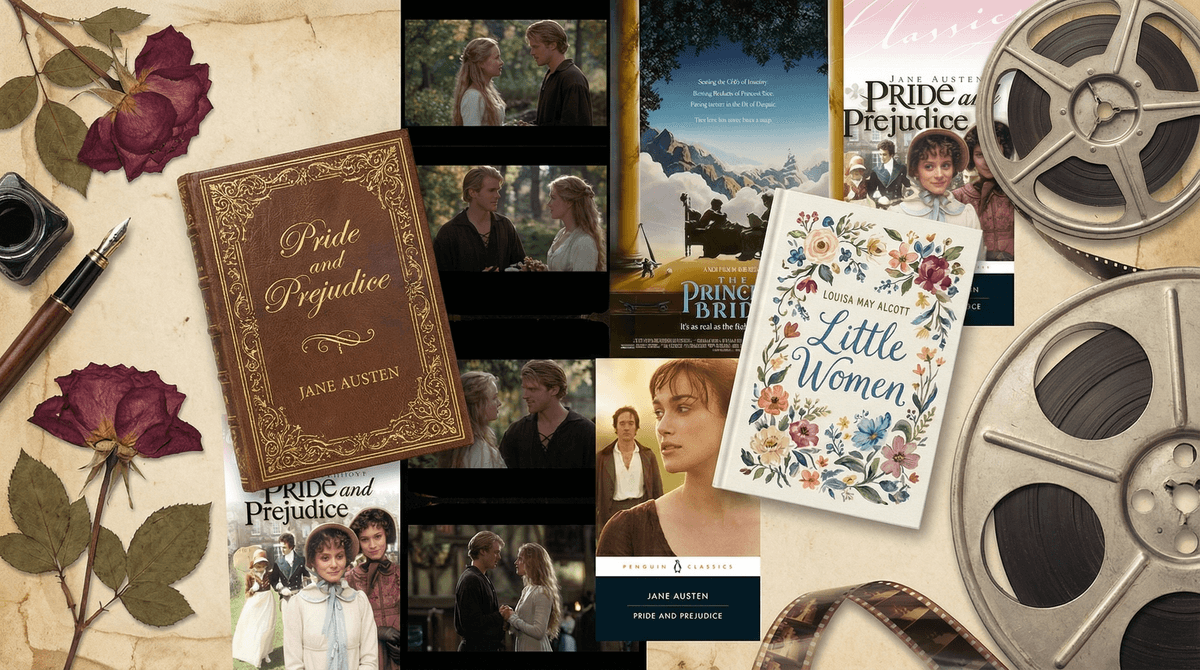
Classic Love Stories: Building a Family Reading & Movie List
TL;DR: Classic love stories aren't just romance—they're master classes in character development, emotional intelligence, and what healthy relationships actually look like. Here are the best ones to read and watch with your kids, organized by age and complexity.
Quick picks by age:
- Ages 8-12: Anne of Green Gables, The Princess Bride, Emma (2020)
- Ages 12-15: Pride and Prejudice, Little Women, When Harry Met Sally
- Ages 15+: Jane Eyre, Persuasion, Roman Holiday
Your kids are learning about relationships from somewhere. If it's not from thoughtful stories with actual character development, it's from TikTok relationship drama, YouTube shorts of people pranking their partners, or whatever toxic situationship is playing out in their favorite streamer's life.
Classic love stories offer something genuinely useful: they show relationships developing over time, through conversation and shared values, with actual obstacles that aren't manufactured drama. They model respect, wit, emotional growth, and the kind of slow-burn connection that doesn't exist in a 60-second vertical video.
Plus, these stories are just good. The writing holds up, the adaptations are often gorgeous, and they give you a shared cultural vocabulary with your kids that goes beyond knowing who's beefing with who on Discord.
Ages 8-12: First Introductions
Anne of Green Gables by L.M. Montgomery
This is the perfect gateway classic. Anne and Gilbert's relationship spans years—from her literally smashing a slate over his head in elementary school to a slow-burn friendship-to-romance that doesn't even fully resolve until later books. It's about respect, intellectual equals, and someone who sees you for who you actually are.
The 1985 miniseries with Megan Follows is chef's kiss—watch it together. The Netflix series Anne with an E is also excellent but deals with heavier themes (racism, sexuality, trauma) that skew it toward ages 11+.
The Princess Bride by William Goldman
"As you wish" is the gold standard for showing love through actions, not just words. The movie is endlessly quotable and works for this age range because it's funny, adventurous, and the romance is sweet without being cringey. It's also a great conversation starter about what "true love" actually means—spoiler: it's not just looking pretty and being rescued.
Studio Ghibli does it again. Sophie and Howl's relationship is weird, wonderful, and based on two complicated people learning to be vulnerable with each other. It's visually stunning, age-appropriate, and shows that love stories can be magical without being about a prince saving a princess.
Ages 12-15: Getting More Complex
Pride and Prejudice by Jane Austen
The GOAT. Elizabeth Bennet is sharp, funny, makes mistakes, and learns from them. Mr. Darcy is initially terrible and has to actually grow as a person before he deserves her. This is the blueprint for "I was wrong about you, and you were wrong about me, and we both became better people."
For the movie, the 2005 version with Keira Knightley is gorgeous and accessible. The 1995 BBC miniseries with Colin Firth is the gold standard for Austen purists but it's six hours, so pick your battles.
Conversation starter: Talk about first impressions, how we judge people, and what it means when someone actually changes their behavior (not just says sorry).
Little Women by Louisa May Alcott
Jo March rejecting Laurie and choosing Professor Bhaer is one of the most important relationship lessons in literature: you don't owe someone romance just because they're your best friend and they love you. The 2019 Greta Gerwig film is phenomenal and makes this point even more explicitly.
Also great for talking about different types of love—sisterhood, friendship, romantic love, and the love of your work/calling.
Emma is a meddling, privileged, slightly insufferable main character who has to learn that she doesn't know everything about other people's hearts—including her own. The 2020 adaptation is witty, visually stunning, and Anya Taylor-Joy is perfect. It's a great story about humility, growth, and realizing the person you've been looking for was right there all along.
Fair warning: Emma is kind of mean to Miss Bates, and it's uncomfortable to watch. That's the point. Use it.
Ages 15+: The Deep Cuts
Jane Eyre is not here for your nonsense. She's principled, independent, and walks away from Rochester when she discovers his secret—even though she loves him. She only comes back on her own terms, as his equal. This is a masterclass in self-respect and not compromising your values for romance.
The 2011 film with Mia Wasikowska and Michael Fassbender is moody and excellent.
Content note: There's the whole "mad wife in the attic" thing, which is deeply problematic by modern standards. Great opportunity to talk about how even classics can have harmful elements, and how we can appreciate the good parts while critiquing the rest.
Anne Elliot is 27 (ancient by Regency standards) and gets a second chance with the man she was persuaded to reject eight years earlier. It's about regret, maturity, and whether people can really change. It's Austen's most mature novel and hits different when you're old enough to understand lasting consequences.
The 1995 adaptation is lovely. The 2022 Netflix version is... fine if you want something more modern and quirky, but purists will hate it.
Can men and women be friends? This movie says yes—and then complicates it beautifully. It's smart, funny, and the relationship develops over years through actual conversations. The dialogue is so good that your teens will probably quote it forever.
Content note: It's PG-13 for a reason (the famous deli scene, some sexual content). Best for mature 15+.
Audrey Hepburn and Gregory Peck in Rome. A princess escapes her duties for one day of freedom with a journalist. They fall in love. And then—spoiler—they don't end up together, because sometimes duty and reality matter more than romance. It's bittersweet, beautiful, and a great conversation about sacrifice and choosing your path.
"We'll always have Paris." This is about lost love, doing the right thing even when it hurts, and how sometimes the most loving thing you can do is let someone go. It's also just an incredibly well-made film that holds up 80+ years later.
Best for ages 15+ because the emotional complexity requires some maturity to appreciate.
Pure joy. Gene Kelly and Debbie Reynolds have incredible chemistry, the musical numbers are legendary, and it's about finding someone who matches your energy and values your talent. It's also genuinely funny—the "Make 'em Laugh" scene is physical comedy gold.
Works for ages 10+ and is a great palate cleanser if you've been watching too many angsty period dramas.
The Notebook: I know, I know. But hear me out—the relationship in this movie is actually kind of toxic? The constant fighting, the emotional manipulation, the "if you're a bird, I'm a bird" codependency... it's not the model you want for your teens. If they want to watch it, fine, but use it as a conversation starter about what looks romantic in movies vs. what's actually healthy.
Romeo and Juliet: They're 13 and 17, they know each other for three days, six people die, and it ends in double suicide. This is not a love story—it's a cautionary tale about impulsivity and family feuds. If you read it (and you probably will, because high school English), frame it that way.
Wuthering Heights: Heathcliff is an abusive nightmare. Cathy is toxic. Everyone is miserable. It's a great Gothic novel about obsession and revenge, but it's absolutely not a romance to model. Save it for older teens who can analyze it critically.
Start with the movies. Seriously. If your kid isn't a big reader yet, the visual adaptations are gorgeous and will hook them into the stories. Then they might want to read the books.
Watch together and pause to talk. When Mr. Darcy gives that first terrible proposal in Pride and Prejudice, pause and ask: "Why is Elizabeth saying no? What would need to change?" When Anne walks away from Gilbert in Anne of Green Gables, talk about self-respect and not settling.
Compare to modern media. How is Elizabeth Bennet different from the love interests in Euphoria? What does Anne Shirley have in common with Devi from Never Have I Ever? Making these connections helps kids see why these stories still matter.
Let them hate it. Some kids will bounce off Jane Austen. Some will think old movies are boring. That's fine! The goal isn't to force-feed the classics—it's to offer them as options and see what resonates. If your kid loves Heartstopper but can't get through Pride and Prejudice, that's okay. They're still learning about healthy relationships.
Classic love stories aren't about teaching your kids to wait for Prince Charming or to pine away for someone who doesn't respect them. The good ones—the ones on this list—are about mutual respect, personal growth, witty banter, and choosing someone who sees you for who you actually are.
They're also just beautifully written, well-crafted stories that have endured for a reason. In a media landscape of 60-second attention spans and manufactured drama, there's something powerful about sitting down with your kid and watching two people fall in love over the course of two hours (or 600 pages) through actual conversation and shared values.
Plus, when your teen inevitably has their heart broken for the first time, you'll have a shared language. You can say, "Remember when Anne rejected Gilbert?" or "Think about how Elizabeth felt when she realized she was wrong about Darcy." These stories become scaffolding for processing real emotions.
Pick one movie from the age-appropriate list and schedule a watch night this week. Make popcorn, turn off phones, and actually watch together. See what sticks.
If your kids are readers, grab one book from the list and read it alongside them—or start a mini family book club where you all read it separately and then discuss over dinner.
And if you want more recommendations for books about relationships and emotional intelligence, or you're looking for modern YA romance that doesn't suck, Screenwise has you covered.