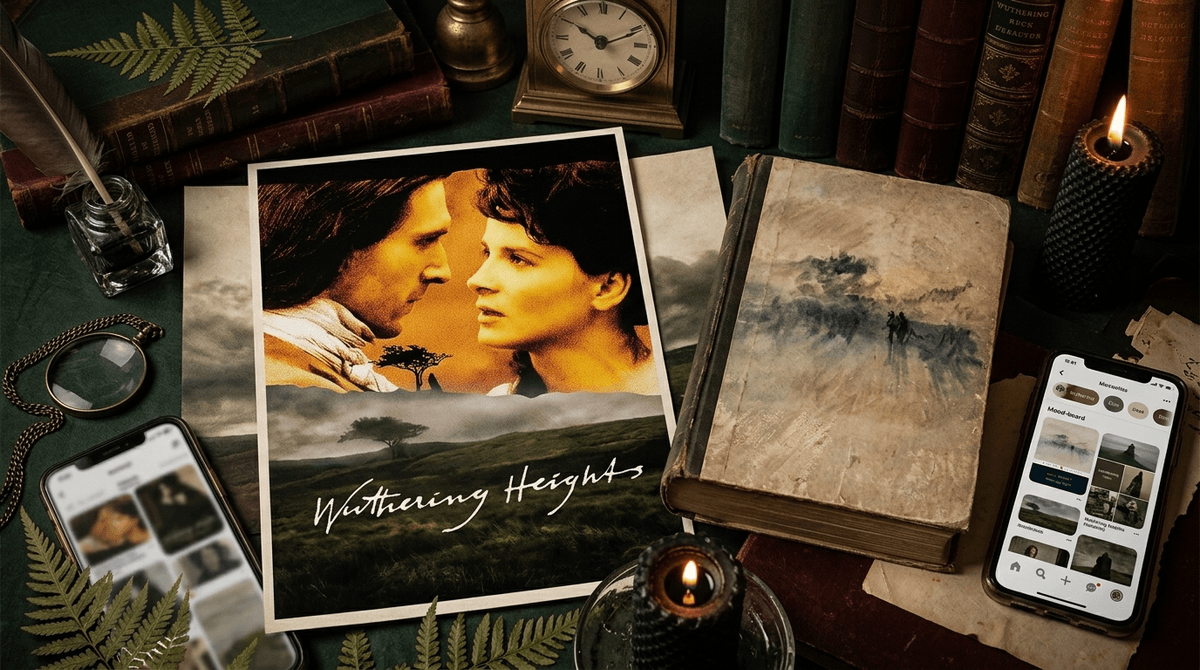
With the Emerald Fennell film adaptation sparking new debates online, Wuthering Heights is having a massive cultural second wind. But if your teen is picking this up because they saw a viral clip of Jacob Elordi or Margot Robbie, they are in for a serious vibe-check. This isn't a swoony, star-crossed lovers story; it’s a brutal, psychological cycle of violence where the "romance" is closer to a mutual haunting.
The BookTok trap
There is a high chance your teen is approaching this through the lens of modern "dark romance." On social media, Heathcliff is often framed as the ultimate "misunderstood bad boy." In reality, he is a monster. Brontë didn't write a hero; she wrote a man who hangs puppies and spends decades systematically destroying two different families because he got his feelings hurt.
If your kid is coming off a binge of contemporary YA or Colleen Hoover, they might expect the "toxic" elements to be spicy or misunderstood. Instead, they’ll find a story that is relentlessly bleak. It’s worth checking out our guide on whether Wuthering Heights is too dark for high schoolers to see how these themes of obsession and revenge land with modern readers.
The "Joseph" problem
Even for strong readers, there is one specific friction point that makes kids want to throw this book across the room: the character Joseph. He speaks in a thick, phonetic Yorkshire dialect that looks like a foreign language on the page.
"T' maister, Joseph, and Maister Hareton, is in t' laith."
Most adults skip his dialogue entirely. If your teen is struggling, tell them to ignore his specific words and just focus on the fact that he’s usually complaining or being self-righteous. Don't let a minor character’s accent be the reason they DNF (did not finish) a classic. If they want a smoother entry into the genre, you might look at other classic romance books worth sharing with teens that don't require a linguistic decoder ring.
The 2026 movie context
The upcoming film is already leaning into a more provocative, psychosexual energy than previous versions. This makes the book a fascinating "compare and contrast" project. The novel is surprisingly chaste in terms of physical action, but the emotional violence is cranked to eleven.
Reading the book now is the best way to prepare for the inevitable "Is the movie too much?" conversation. You can get ahead of the curve with our Wuthering Heights book and movie guide, which breaks down how the 2026 film's R-rated choices stack up against Brontë’s original text.
How to actually enjoy it
To get the most out of this, stop treating it like a love story. Tell your teen to read it as a horror novel. Once you view the Grange and the Heights as two competing haunted houses, the "boring" parts start to feel much more like a slow-burn thriller. The narrative structure is like a set of nesting dolls—Lockwood is listening to Nelly, who is telling a story about people who are already dead. It’s a masterclass in the unreliable narrator, and figuring out who is lying (hint: it's everyone) is the only way to make the 300-page slog feel like a win.