

TL;DR
The Faraway Paladin is a rare gem in fantasy anime: thoughtful, philosophical, and deeply invested in questions about purpose, mortality, and what it means to live a good life. If your teen is into fantasy worlds but you're exhausted by the typical anime tropes (fan service, power-level obsession, harems), this might be exactly what you're looking for. It's currently streaming on Crunchyroll and has a second season that aired in 2023.
Best for: Ages 13+ who enjoy slower-paced, character-driven fantasy Watch with caution: Themes of death, loss, and existential questions run throughout Parent win: Actually explores faith and philosophy without being preachy
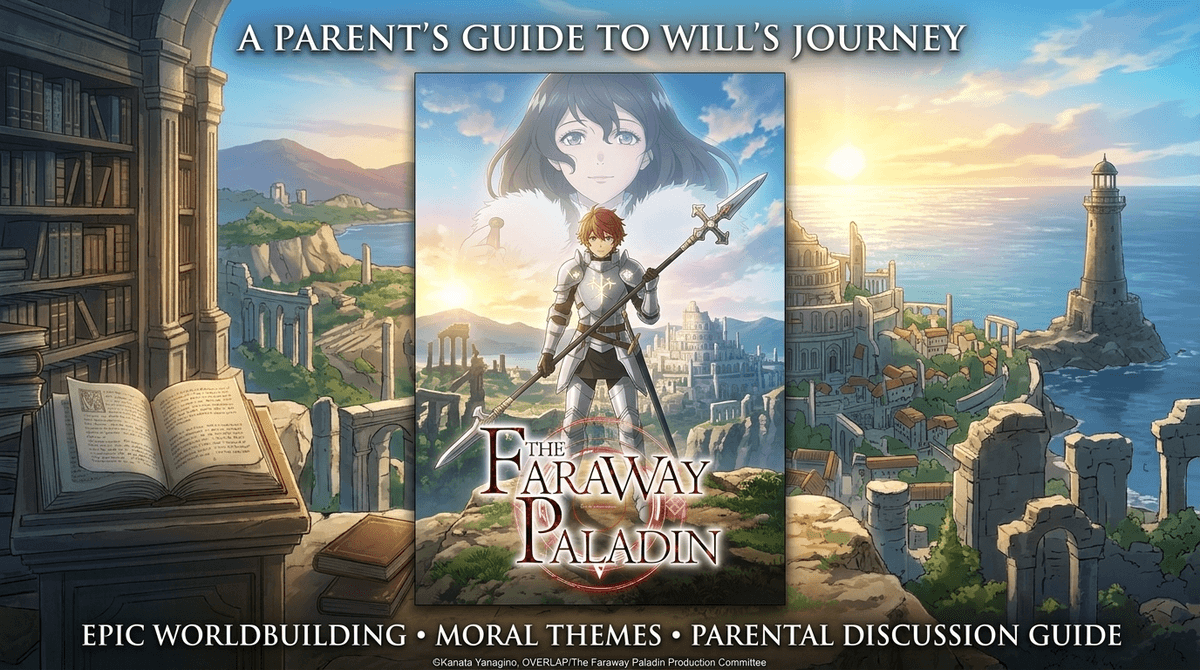
Based on a light novel series, The Faraway Paladin (Saihate no Paladin) follows Will, a human boy raised by three undead guardians in a ruined city of the dead. There's Blood, an undead warrior who teaches him combat; Mary, a mummy priestess who teaches him magic and faith; and Gus, a skeletal mage who teaches him scholarship. It's essentially a fantasy coming-of-age story, but one that takes its time exploring big questions about life, death, purpose, and what we owe to those who raised us.
The show is deliberately slow-paced—especially in the first season—spending significant time on Will's childhood and education before moving into more traditional fantasy adventure territory. This isn't Demon Slayer with constant action, and it's not My Hero Academia with flashy powers and tournament arcs. It's more contemplative, more interested in internal growth than external spectacle.
In our community data, 92% of families report some TV usage, and 42% of kids have solo YouTube access where anime content is huge. But finding anime that treats serious themes with genuine respect—without undercutting them with typical genre nonsense—is surprisingly difficult.
The Faraway Paladin earned praise from anime critics specifically for what it doesn't do. No fan service. No harem dynamics. No isekai "cheat powers" where the protagonist is overpowered from episode one. Will has to actually learn, struggle, and grow. The show takes religion and faith seriously as character motivations without being preachy or dogmatic about any particular belief system.
The fantasy world-building draws from Western medieval fantasy rather than Japanese RPG tropes, which gives it a different feel from most anime. Think more Lord of the Rings vibes than Sword Art Online.
The Death Thing Is Real This show opens with a child being raised by the undead, and it doesn't shy away from exploring what that means. Will's guardians are literally dead—they're animated by magic and divine permission, and their existence is explicitly temporary. The first season builds toward a deeply emotional conclusion about mortality, sacrifice, and letting go. Multiple parents in online forums noted their teens (and themselves) crying during certain episodes.
If your kid struggles with death anxiety or has recently experienced loss, this might hit harder than expected. But if they're ready to engage with those themes, the show handles them with remarkable maturity.
Faith as Character Motivation Will becomes a paladin—a holy warrior who serves a goddess of the torch. The show explores his faith journey, prayer, divine calling, and religious vows as central plot elements. It's not evangelizing any real-world religion, but it takes the idea of faith seriously. Some families will love this; others might find it unexpectedly heavy for a fantasy anime.
The gods in this world are real, active beings who grant powers and make demands. Think more Greek mythology or D&D-style polytheism than any specific Earth religion, but the philosophical questions are genuine.
Violence and Combat There's fantasy violence—sword fights, monsters, undead creatures—but it's not gratuitously gory. The combat is more tactical and meaningful than spectacle-driven. The show earns its TV-14 rating primarily through themes rather than graphic content.
Pacing Will Test Some Viewers The first season especially moves slowly. Episodes are spent on lessons, conversations, and internal character development. If your kid is used to the rapid-fire pacing of Attack on Titan or the constant action of Jujutsu Kaisen, they might find this boring. But if they enjoyed the character moments in Frieren: Beyond Journey's End, they'll probably appreciate this.
Ages 13-15: Good fit for mature middle schoolers who enjoy fantasy and are ready for philosophical themes. The slow pacing might actually work better for this age than older teens who've been trained by faster-paced content. Co-watching the first few episodes helps gauge if the death themes are too heavy.
Ages 16+: Ideal audience. High schoolers with any interest in fantasy literature, world-building, or character-driven stories will find a lot to appreciate. The show rewards patience and attention in ways that feel more "literary" than typical anime.
Not recommended for: Elementary-aged kids (themes are too mature), or anyone looking for light entertainment. This requires engagement.
The show is available on Crunchyroll (subscription required) and was briefly available on other platforms. With 30% of families in our data having free access to Amazon Prime Video, it's worth checking if it migrates there, but as of early 2026, Crunchyroll is your main option.
Season 1 (12 episodes) aired in 2021. Season 2 (12 episodes) aired in 2023. Both seasons are complete and available for binge-watching, which actually helps with the pacing issues—it's easier to stay invested when you can watch multiple episodes in one sitting.
Frieren: Beyond Journey's End - Another thoughtful fantasy anime about mortality, legacy, and what matters after the adventure ends. Similar contemplative pacing and philosophical depth.
Delicious in Dungeon - Lighter in tone but still character-driven fantasy with actual world-building logic. Less philosophical, more fun, but still smart.
Mushoku Tensei - WARNING: This one has significant fan service and problematic elements, but it's often compared for its serious approach to character growth in a fantasy world. Preview carefully before recommending.
For non-anime alternatives, point them toward Brandon Sanderson's books or Patrick Rothfuss's The Name of the Wind—similar investment in world-building and character development.
The Faraway Paladin won't be for everyone. It's slow, it's heavy, and it demands emotional investment in themes that many shows treat as background noise. But for families with teens who are ready to engage with questions about mortality, purpose, and faith through a fantasy lens—without the typical anime baggage—this is genuinely special.
In a landscape where 55% of kids in our community data are gaming and likely consuming fantasy content through Dungeons & Dragons, Critical Role, or fantasy games, this show offers a different entry point into those themes. It's the kind of story that might actually spark conversations about belief, sacrifice, and what makes a life meaningful.
Just make sure your teen is ready for the emotional weight. This isn't background-watching content—it's the kind of show that sticks with you, for better or worse.
Find other thoughtful fantasy anime or explore faith themes in media.