If your kid is asking to start Jujutsu Kaisen, they aren't looking for a Saturday morning cartoon. They’re looking for the current heavyweight champion of "dark shonen"—a subgenre that takes the classic "hero gets stronger to save the world" trope and drags it through a meat grinder of horror and existential dread. By 2026, this show has cemented itself as the gold standard for high-budget, high-stakes animation, but it is meaner than the shows you probably grew up with.
The "Cool Factor" and the "Gross Factor"
The hook is simple: the world is infested with "Curses," monsters born from collective human negative emotions like fear, hatred, and shame. To fight them, Sorcerers use that same cursed energy. It’s a brilliant setup because it makes the magic system feel psychological and messy. If you’re trying to decode your child's anime obsession, understand that Jujutsu Kaisen is the "cool" pick because it feels mature. It doesn't lecture the viewer; it just shows a world where mistakes have permanent, often gruesome, consequences.
The friction for parents usually starts with the body horror. The protagonist, Yuji, kicks things off by eating a rotting, mummified finger to save his friends. It only gets weirder from there. We’re talking about villains who can reshape human souls like clay, turning people into unrecognizable monsters. It’s inventive, but it’s unsettling. If your teen is squeamish about biological "glitches" or dental-themed horror, this is a hard pass.
Why it’s more complex than Demon Slayer
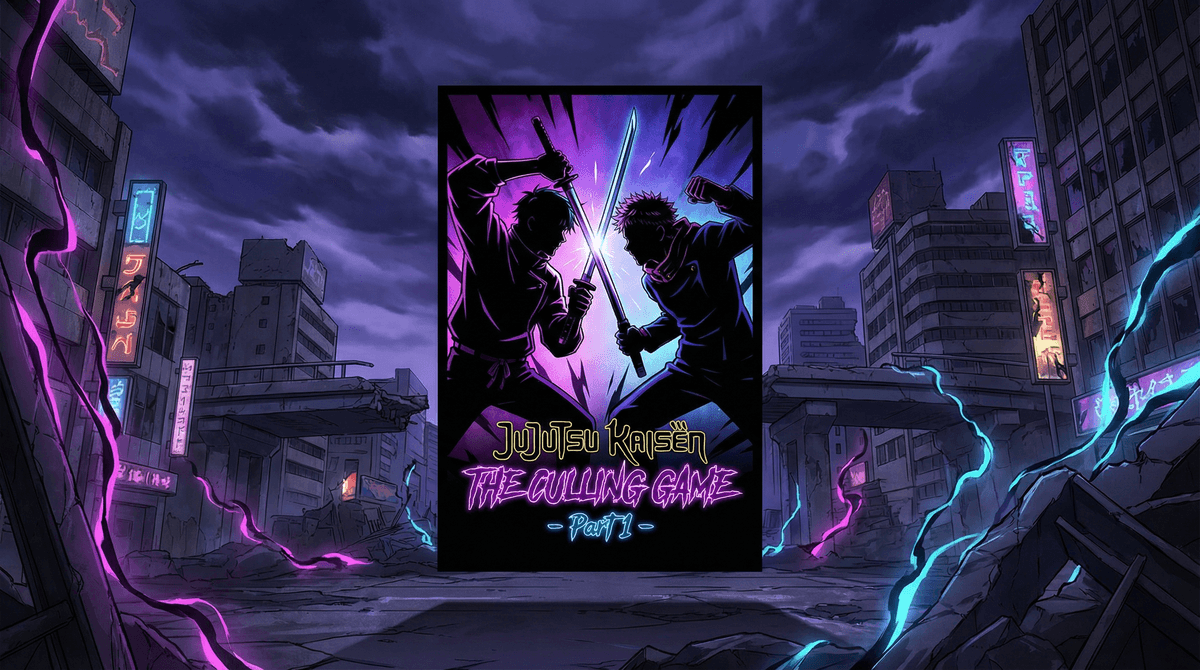
A lot of parents compare this to Demon Slayer. Both involve swords, monsters, and teenagers in over their heads. But where Demon Slayer is a fairly straightforward story about family and breathing techniques, Jujutsu Kaisen is a brain-melter. The "Culling Game" arc in the later seasons introduces rules so dense they practically require a spreadsheet to follow.
This complexity is a huge part of the appeal. Fans love the "limitless" powers and the strategic, chess-like battles. If you want to know why your teen is suddenly obsessed with "Domain Expansions," check out our Jujutsu Kaisen Parents Guide for a breakdown of the power system. This isn't a show you can just have on in the background; it demands your full attention, or you'll have no idea why the main character is suddenly trapped in a void of infinite information.
The Season 2 and 3 shift
If you watched the first few episodes and thought, "This isn't so bad," be warned: the show undergoes a massive tonal shift. The early episodes have a school-setting vibe with some jokes and lighthearted training. That disappears. By the time you hit the Shibuya Incident and the subsequent Culling Game, the show becomes a relentless gauntlet.
The "good guys" don't always win, and when they lose, they lose everything. It’s this willingness to be ruthless that earned the show its 8.5 IMDb score. It feels like anything can happen to anyone. For a 16-year-old, that’s exhilarating storytelling. For a 12-year-old, it might just be traumatizing. If they’ve already powered through the earlier seasons and are hyped for the latest chapters, they’re likely already deep in the fandom, where the "viral heartthrobs" and shocking plot twists are the main currency. Just be ready for the "I can't believe they killed [Character Name]" conversation—it’s coming.