Board Game vs. Tabletop Roleplaying
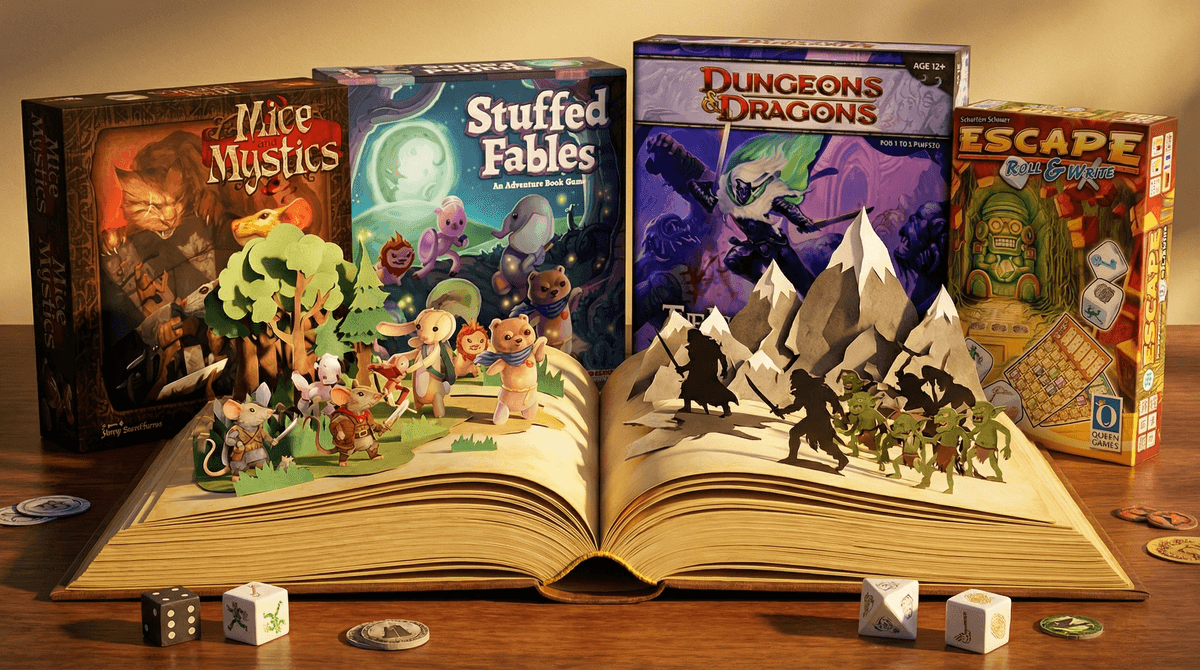
Parents often look at a box labeled Dungeons & Dragons and expect improvisational storytelling with blank character sheets. The D&D Adventure System line (which includes standalone entries like Wrath of Ashardalon, Castle Ravenloft, and The Legend of Drizzt) is something different: a structured, tactical dungeon crawler.
There is no acting, no open-ended problem solving where a kid tries to talk a goblin out of fighting, and nobody has to spend forty hours reading a Dungeon Master's Guide. You pick a pre-made hero card, select a few power cards, place your miniature on an entrance tile, and start flipping tiles.
The Mechanical Flow
Turns move swiftly:
- Move your hero and take an attack against an adjacent miniature.
- Explore the edge of an unexplored tile to place a new room.
- Draw an Encounter card if you revealed a black-arrow tile (usually a curse, trap, or hazard).
- Activate any monsters assigned to your hero using the simple priority rules printed on their cards.
Because monsters operate on basic logic ("If within 1 tile, slash; otherwise charge"), kids quickly learn to predict enemy movements and set up defensive walls for weaker spellcasters. The mathematical complexity stays light: rolling a d20, adding a static bonus, and comparing against an Armor Class target.
Table Dynamics
The cooperative structure makes this an easy game to run on family night. There is zero secret information, meaning a parent can manage the upkeep rules while letting an eight-year-old make the tactical decisions about where to move and which special power to trigger. The primary frustration point is luck mitigation: back-to-back trap draws can pile on damage before the party even finds the boss chamber. Framing failure as a natural dungeon hazard rather than a misplay helps keep the mood light.