

Let's be honest: summer reading lists have become this weird battleground between "I want my kid to read!" and "please just let them have a break." Schools send home those photocopied lists, libraries launch their pizza-prize programs, and suddenly June feels less like freedom and more like homework with better weather.
But here's the thing—summer reading doesn't have to be a fight. And it definitely doesn't have to be either "finish your assigned books or else" OR "screens all day every day." There's actually a middle path that might get your kids genuinely excited about reading while also acknowledging that yes, they're going to watch YouTube and play Roblox.
The research on "summer slide" is real—kids can lose reading skills over the break. But here's what the studies actually show: kids who read anything over summer maintain their skills. It doesn't have to be the classics. It doesn't have to be "literature." Graphic novels count. Magazines count. Even reading game guides or Roblox fan wikis counts.
The goal isn't to turn summer into school-lite. The goal is to keep reading as something that happens in their life, not just something that happens in English class.
Look, if your kid has required summer reading, they have to do it. But let's not pretend most of these lists are well-designed. A lot of schools assign books that were already dated when we were kids, or pick "important" books that are genuinely not engaging for the age group.
Here's the move: Get the required reading done early. Like, June early. Break it into chunks—20 pages a day is way less painful than panic-reading in August. Use audiobooks if that helps (yes, audiobooks count, and anyone who says otherwise is wrong). Then the rest of summer is actually free.
Some families do required reading in the morning before screens. Some do it at bedtime. Some do a chapter while waiting for activities. Find what works, but get it off the plate early so it doesn't poison the whole summer.
The kids who become real readers—the ones who choose books over screens sometimes—they're not the ones who were forced to read "good" books. They're the ones who found books they actually liked.
For younger kids (ages 6-9):
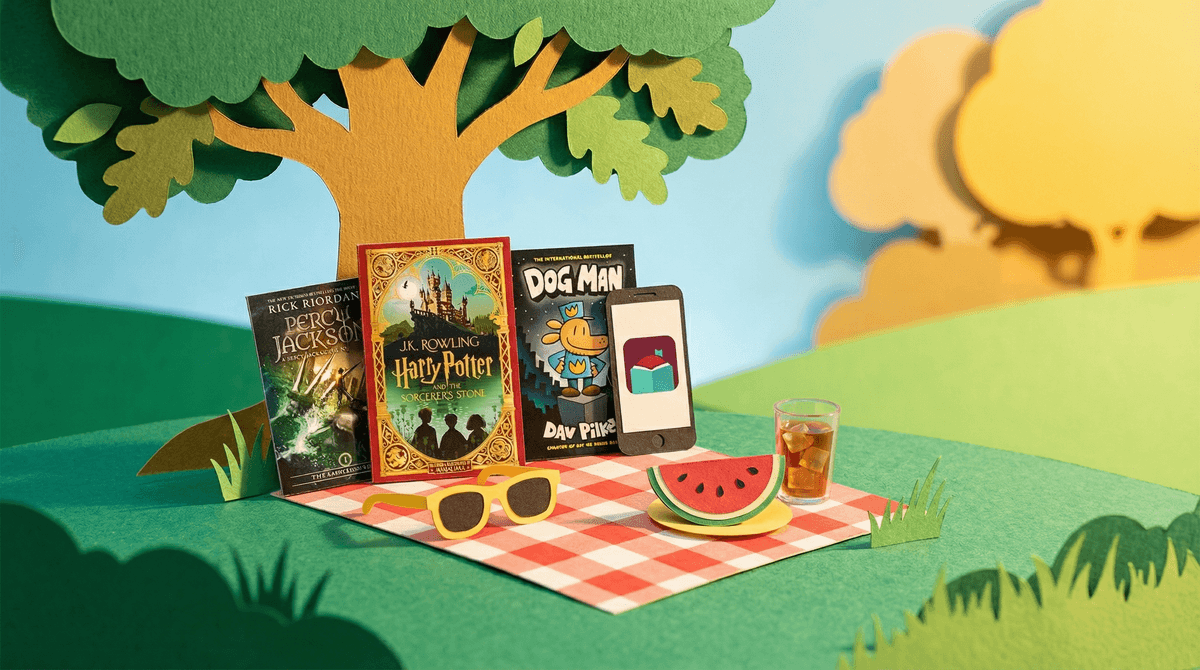
- Graphic novels are your friend: Dog Man, Narwhal and Jelly, anything by Dav Pilkey
- Series books keep them hooked: Magic Tree House, The Bad Guys
- Books about their interests: If they love Minecraft, get the Minecraft guides. If they're into Pokemon, there are chapter books for that
For middle grades (ages 9-12):
- Percy Jackson is still the gold standard for getting reluctant readers hooked
- Wimpy Kid and Dork Diaries are fine—yes, they're formulaic, but they're reading
- Keeper of the Lost Cities, Wings of Fire, and Warrior Cats have massive fan bases for a reason
- Graphic novels level up: Amulet, Smile by Raina Telgemeier
For teens (ages 13+):
- Let them read YA without shame—The Hunger Games, Six of Crows, whatever's trending on BookTok
- Manga is reading (and often gets kids who "hate reading" to devour 20 volumes)
- Nonfiction counts: sports books, true crime, science, whatever interests them
Here's where it gets interesting: you can actually use screens to support reading instead of competing with it.
Audiobooks are reading. Full stop. Kids can listen while doing other things, and for many kids (especially those with ADHD or dyslexia), audiobooks make reading accessible in a way physical books don't. Get a library card and use Libby —it's free and has tons of kids' books.
Book-to-screen can work both ways. Some kids will read Harry Potter because they loved the movies. Some will watch Percy Jackson on Disney+ because they loved the books. Either direction is fine.
Reading about their games counts. If your kid is deep into Minecraft, those fan wikis and strategy guides involve serious reading comprehension. Same with Genshin Impact lore or Five Nights at Freddy's theories.
Don't make reading the reward for screens. That just teaches kids that reading is the unpleasant thing you do to get to the good stuff. Instead, both are just parts of the day.
Model reading. If kids only see you on your phone, they'll think reading is kid stuff. Let them see you reading books, articles, whatever.
Library summer programs are worth it. Yes, the prizes are gimmicky, but the tracking and goals help some kids. Plus, libraries have way more than books now—many have video games, maker spaces, and programs that might get your kid through the door.
Bedtime reading is non-negotiable. Even 15 minutes. Even if they're "too old." It's the one time of day with no competition from screens, and it builds the habit.
Let them quit books. If they're not into it after a few chapters, move on. Nobody becomes a reader by forcing themselves through books they hate. (Required reading excepted—that they have to finish, sorry.)
First, they probably don't hate reading—they hate being forced to read boring books. Second, expand your definition of reading:
- Graphic novels and comics
- Magazines (yes, even gaming magazines)
- Manga and webtoons
- Fan fiction (if age-appropriate)
- Nonfiction about their interests
- Audiobooks
- Even subtitles while watching shows in other languages
The goal is to keep their reading skills active and show them that reading can be enjoyable. Once they find that, they might branch out.
Summer reading works best when it's not a battle. Get required reading done early and painlessly. Then focus on helping your kid find books they actually want to read—which might be graphic novels, might be books about video games, might be manga, might be audiobooks.
Reading and screens don't have to be enemies. They can coexist. Your kid can watch YouTube AND read books. They can play Roblox AND get through their summer reading list.
The families who do summer reading well aren't the ones with the most rules or the longest lists. They're the ones who made reading feel like something other than homework. Start there.
This week:
- Hit the library and let your kid pick 3-5 books (anything they want, no judgment)
- Set up Libby if you haven't already
- Make a plan for required reading (if applicable) that knocks it out by mid-July
- Find one time of day for reading that's built into the routine (bedtime is easiest)
If you need more help:
The goal isn't perfect. The goal is progress. And maybe, just maybe, a kid who occasionally chooses a book.