

TL;DR
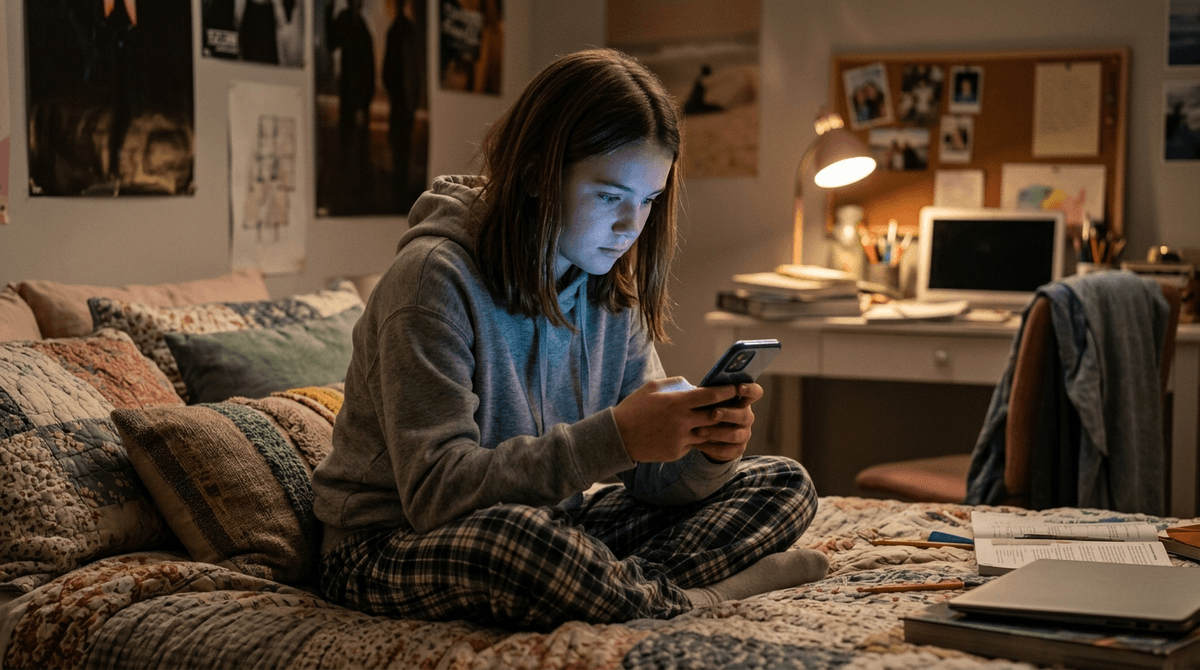
Middle school social life has migrated from the physical cafeteria to the 24/7 digital group chat. This shift has turned "hanging out" into a series of "social chores"—maintaining Snapchat streaks, managing Discord notifications, and deciphering the subtext of a "read" receipt. To help your tween, focus on building "digital agency" rather than just setting time limits.
Quick Resources for the Social Squeeze:
- For perspective: Eighth Grade (A painfully accurate look at digital anxiety)
- For younger tweens: Real Friends by Shannon Hale (Graphic novel about friendship dynamics)
- For conversation starters: Check out our guide on group chat etiquette
- For the tech setup: How to use Apple Screen Time to curb late-night pings
In the "olden days" (the 90s and 2000s), if you had a weird interaction at the lockers or got snubbed at the lunch table, you at least got a break when you went home. You could close your bedroom door, put on some music, and decompress.
For today’s middle schoolers, the cafeteria never closes. It’s in their pocket. It’s buzzing on their nightstand. It’s happening in iMessage groups with names like "The Core Four 💅" or massive Discord servers where the vibe can shift from "Ohio" memes to "cancel culture" in thirty seconds.
When we talk about "social media anxiety," we aren't just talking about kids seeing filtered photos of vacations. We’re talking about the anxiety of presence. The pressure to be "on" 24/7, to respond instantly, and to navigate the complex hierarchy of who is in the chat and who was "left on read."
See the latest social media trends for middle schoolers
Middle school is already a developmental gauntlet. It’s the age where the "social brain" takes over, and being excluded feels like a physical threat. Social media has weaponized this biological drive.
Kids are now managing what I call Social Chores. These aren't fun; they are obligations required to maintain status:
- Snapchat Streaks: Sending a mindless photo every day just to keep a number alive. It’s a digital loyalty test that creates genuine panic if the phone is taken away.
- The "Seen" Receipt: Knowing that three people saw your message and didn't reply is the modern equivalent of being ignored while you're standing right in front of someone.
- The Photo Dump: The pressure to curate a "casual" Instagram or TikTok presence that looks like they aren't trying, even though they spent two hours editing.
According to Screenwise community data, nearly 70% of 7th graders report feeling "obligated" to respond to friends' messages within minutes, even if they are doing homework or trying to sleep. This isn't just "kids being kids"—it's a fundamental shift in how they experience friendship.
Sometimes the best way to talk about digital anxiety is to watch or read about someone else going through it. Here are a few picks that get the nuance right:
Ages 13+ This movie is, frankly, hard to watch for parents because it is so incredibly accurate. It follows Kayla during her last week of middle school as she struggles with her YouTube channel that nobody watches and her desperate desire to be "cool" online. It’s the gold standard for understanding the "performative" nature of modern childhood. Read our full guide on why Eighth Grade is essential viewing for parents
Ages 8-12 While it’s a graphic novel set in a slightly pre-digital era, the "Group" dynamics are exactly what kids face in WhatsApp groups today. It perfectly illustrates the "in-group/out-group" mentality that fuels digital anxiety.
Ages 9+ This show is a rare gem. It updates the classic series for the 2020s, showing kids using tech in ways that feel healthy and functional, while still dealing with the inevitable drama of being a tween. It's a great "anti-brain rot" choice.
Ages 13+ If your kid is begging for social media, BeReal is often a "softer" entry point than TikTok. It only allows one post a day at a random time. It’s not perfect, but it actively fights the "highly curated" vibe that causes so much anxiety on Instagram.
6th Grade: The Gateway Year
This is usually when the pressure to get a phone hits a fever pitch. If you aren't ready for a full smartphone, consider a "dumb phone" or a watch. If they are on Roblox, be aware that the in-game chat is often the first place they experience "cyber-bullying" or social exclusion. Learn how to manage Roblox chat settings
7th & 8th Grade: The Peak of the Storm
This is the era of the "Group Chat from Hell." This is when kids are most likely to be added to chats they don't want to be in, or see things they aren't ready for. This is the time to implement a "Digital Sunset"—all phones in the kitchen by 9:00 PM. No exceptions.
Check out our guide on setting up a family tech contract
Here’s the reality: You cannot "protect" your child from social media anxiety by simply banning the apps. If they are the only kid not in the iMessage group, they are experiencing a different kind of anxiety—the anxiety of being a social ghost.
Instead of a total ban, we need to teach Digital Agency.
1. The "Delete for a Day" Strategy
Teach your kid that they have the power to delete Snapchat or TikTok on a Saturday morning and redownload it on Sunday. Show them that the world doesn't end if they miss a few hours of the "Skibidi Toilet" memes or whatever the current viral trend is.
2. The "Draft Box" Rule
Anxiety often leads to impulsive, "hot" replies. Encourage your tween to write their "angry" reply in a Notes app first. If they still want to send it in an hour, they can. Usually, the impulse passes.
3. Normalize "Ghosting" for Mental Health
In middle school, "ghosting" is seen as a sin. We need to tell our kids: "It is okay to not reply. You do not owe anyone your immediate attention just because they sent you a notification."
Get scripts for talking to your kid about group chat drama
Don't start the conversation with "Why are you always on that phone?" That's a door-slammer.
Try these instead:
- "I heard group chats can get pretty intense. Has anyone ever said something in yours that made things awkward?"
- "Do you ever feel like you have to check your phone even when you don't want to?"
- "If you wanted to leave a group chat because it was getting annoying, do you know how to do that without it being a 'thing'?"
Social media anxiety isn't a "tech" problem; it's a "relationship" problem amplified by tech. Our kids are the first generation to navigate puberty with a megaphone and a 24/7 audience. They are going to mess up. They are going to feel left out. They are going to say something "cringe" and regret it.
Our job isn't to be the "Phone Police." Our job is to be the safe harbor they come back to when the digital storm gets too loud.
- Audit the Notifications: Sit down with your kid and look at their notification settings. Turn off everything except direct messages from actual humans. No "trending" alerts, no "so-and-so posted for the first time in a while" pings.
- Establish Phone-Free Zones: The dinner table and the bedroom are non-negotiable.
- Take the Screenwise Survey: If you haven't yet, walk through our family digital habit survey to see how your family's tech use compares to your local community. It’s much easier to set boundaries when you know what the "norm" actually is in your neighborhood.
Learn more about the Screenwise approach to digital wellness