

TL;DR: If you’ve got 10 minutes and want to move past the mindless scrolling of YouTube shorts or the "brain rot" of Skibidi Toilet, these short films are your best friend. They are high-quality, emotionally resonant, and perfect for starting real conversations about neurodiversity, grief, and resilience.
The Top Picks:
- For Empathy: Float (Disney+)
- For Resilience: The Present (YouTube)
- For Representation: Hair Love (YouTube)
- For Animal Lovers: Kitbull (Disney+)
- For Overcoming Fear: Piper (Disney+)
We’ve all had those days where we just need ten minutes to start dinner or finish an email without someone asking for a snack every thirty seconds. Usually, that means handing over the iPad and hoping they don't fall down a rabbit hole of "Ohio" memes or weirdly aggressive Roblox gameplay videos.
But screen time doesn't have to be a "guilty pleasure" or a "digital babysitter" that leaves your kid's brain feeling like mush. There is a middle ground between the 90-minute feature film commitment and the 15-second TikTok loop. Short films—specifically the ones coming out of indie studios and the Pixar SparkShorts program—are the secret weapon for intentional parents.
These stories are often more experimental, more diverse, and more emotionally raw than the big-budget blockbusters. They pack a massive punch in under 10 minutes, and because they move so fast, they’re perfect for kids with shorter attention spans who still need to learn how to process "big feels."
We are living in an era of "snackable" content. Our kids are being conditioned by YouTube and TikTok to expect a dopamine hit every few seconds. This can make sitting through a slow-burn movie like The Wild Robot or reading a dense book like Wonder by R.J. Palacio feel like a chore to them.
Short films bridge that gap. They provide the quick engagement kids crave but deliver the narrative depth they actually need. Instead of "brain rot," they get a masterclass in empathy. Instead of mindless consumption, they get a story that sticks with them long after the screen goes black.
Find short films based on your child's specific interests
Disney+ has become the gold standard for high-quality shorts, thanks largely to their SparkShorts program, which gives creators six months and a limited budget to tell a personal story.
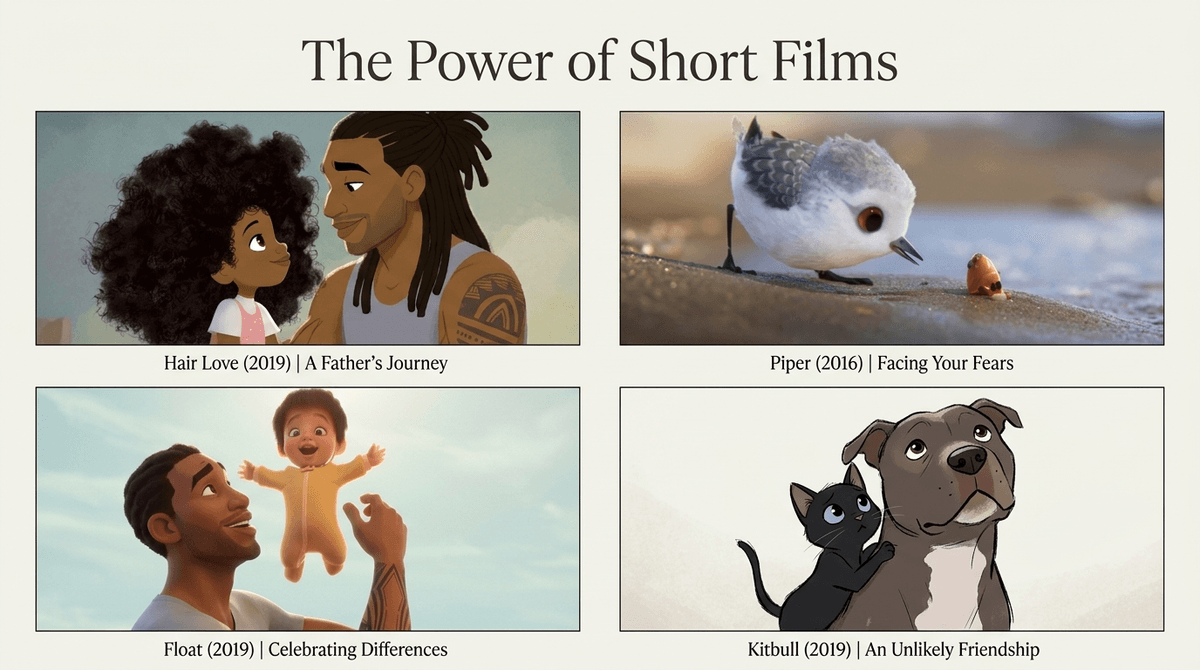
Ages 4+ If you are parenting a child who is "different"—whether they are neurodivergent, have sensory processing issues, or just march to the beat of their own drum—this movie will wreck you in the best way. It’s a metaphor for autism, featuring a father whose son can literally float. The father’s struggle to "hide" his son’s gift to fit in with the neighbors is a heartbreakingly real depiction of the pressure parents feel to have "normal" kids. The Conversation: Talk about what makes us different and why trying to "hide" our unique traits can make us sad.
Ages 7+ (Warning: Themes of animal abuse) This is a 2D-animated story about an unlikely connection between a fiercely independent stray kitten and a pit bull. It’s beautiful, but it doesn't pull punches. It deals with animal neglect and the stereotypes we have about certain breeds (or people). It’s a tear-jerker, but the payoff is a gorgeous lesson in trust. The Conversation: Why do we sometimes fear things we don't understand? How can we show kindness to those who have been hurt?
Ages 3+ This is arguably the cutest short Pixar has ever made. It follows a tiny sandpiper hatchling who is terrified of the waves. It’s a perfect "starter" short for toddlers and preschoolers because there is no dialogue. It’s all visual storytelling about overcoming anxiety and finding a new perspective. The Conversation: What is something that scares you right now? How did Piper find a way to make the waves less scary?
Ages 10+ Purl is a ball of yarn who starts a job at a high-energy, "bro-culture" investment firm. To fit in, she starts acting like the men around her, losing her "softness" in the process. It’s a brilliant commentary on workplace diversity and toxic masculinity. It’s a bit more mature (there’s some mild language), making it a great pick for tweens heading into middle school dynamics. The Conversation: Have you ever felt like you had to change who you are to fit into a group? Is it worth it?
You don't need a subscription to find world-class storytelling. YouTube is home to some of the most awarded short films of the last decade.
Ages 3+ Originally a Kickstarter project that went on to win an Oscar, this film follows an African American father attempting to do his daughter’s hair for the first time. It’s a celebration of Black hair, fatherhood, and family resilience in the face of illness. It’s pure joy and heart. The Conversation: How do we show love to our family members when things get hard?
Ages 5+ A young boy is obsessed with his video games and ignores a gift from his mom: a puppy. When he realizes the puppy is missing a leg, he reacts with disgust—until he realizes he has more in common with the dog than he thought. The twist at the end is a powerful moment for discussing disability and self-acceptance. The Conversation: Why was the boy angry at the dog at first? How did his feelings change?
Ages 6+ This Spanish short (accessible via YouTube) is about a little girl at an orphanage who befriends a boy with cerebral palsy. She uses ropes to help him play, dance, and move. It’s a beautiful, bittersweet look at inclusion and the impact one friend can have on a life. The Conversation: How can we include friends who might play or move differently than we do?
Some short films are designed to help kids process the heaviest parts of life. However, as a parent, you need to know what you’re getting into before you hit play.
Ages 12+ (Netflix) This film is a masterpiece, but it is devastating. it follows two parents grieving the loss of their daughter in a school shooting. It is told through shadows and silence. It is an essential watch for older kids and teens to discuss the reality of gun violence and grief, but it is not for younger children. It will spark a very deep, very heavy conversation.
Check out our guide on how to talk to kids about tragic news
The goal isn't just to watch and walk away. The "magic" of the short film format is that it leaves so much unsaid, which forces the viewer to fill in the blanks. Here’s how to make it count:
- Watch together. These aren't meant for solo iPad time. Sit on the couch for the 7 minutes. It’s a low time investment for a high emotional return.
- Narrate the emotions. For younger kids, point out the characters' faces. "He looks frustrated right now, doesn't he? I wonder why."
- The "What would you do?" question. Short films often end on a poignant note. Ask your kid, "If you were the boy in The Present, would you have kept the dog?"
- Connect it to their world. If you watch Purl, ask if they’ve ever seen someone at school get ignored because they were "different."
We can’t always protect our kids from the fast-paced, often shallow world of digital media. But we can curate their "digital diet" to include things that actually nourish them.
Short films are the "superfoods" of the screen time world. They are quick, they are potent, and they remind our kids (and us) that even a tiny story can change the way we see the world.
Next time your kid asks for "just one more video," skip the unboxing channel and search for one of these instead. You’ll be surprised at how much you can learn about your kid in just under ten minutes.
Learn more about finding high-quality alternatives to YouTube brain rot