

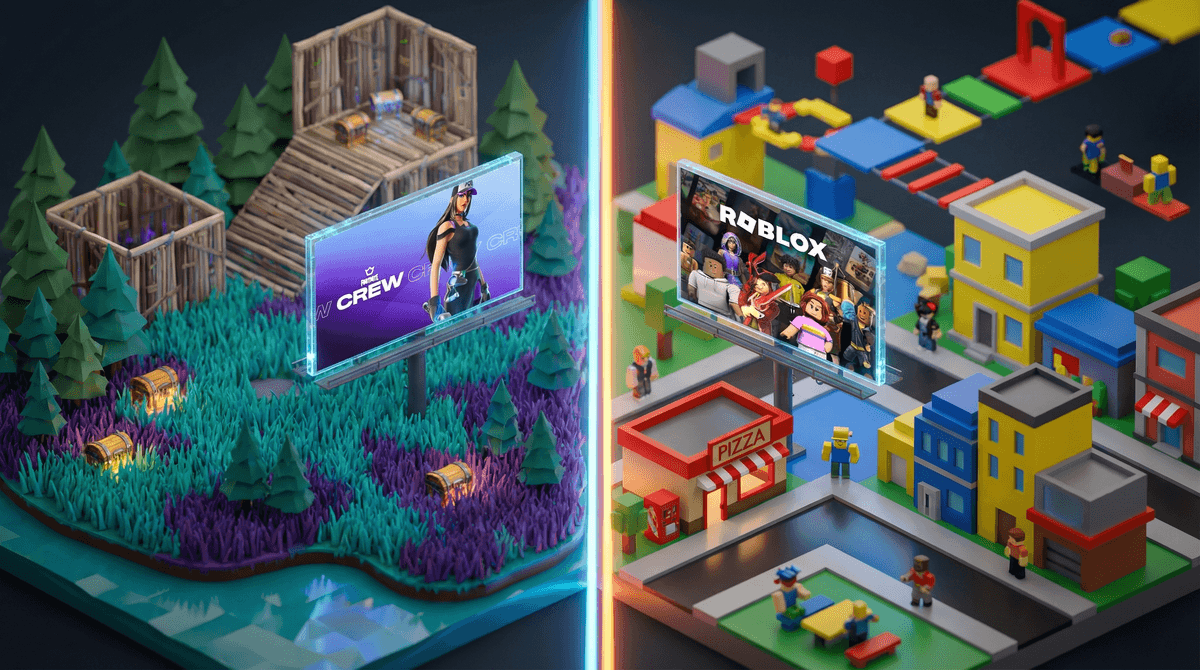
Let's be real: if you have kids between ages 6-16, you've probably heard about both Fortnite and Roblox approximately 47,000 times. They're the two gaming juggernauts that dominate kid conversations, friend group dynamics, and yes—your credit card statements.
But here's the thing: they're actually pretty different games that appeal to different types of kids and teach different skills. This isn't really an apples-to-apples comparison—it's more like comparing a massive multiplayer sports arena to an entire theme park where kids can build their own rides.
Fortnite is primarily a battle royale shooter game where 100 players drop onto an island and compete to be the last one standing. Think Hunger Games meets Saturday morning cartoons, with building mechanics thrown in.
Roblox isn't actually a single game at all—it's a platform with millions of user-created games ranging from obstacle courses to restaurant simulators to horror experiences to, yes, shooting games that look suspiciously like Fortnite.
Before we dive into the comparison, let's talk about what you're really asking. Most parents aren't wondering which game has better graphics or more players. You're asking:
- Which one is safer?
- Which one costs more?
- Which one is more addictive?
- Which one will my kid's friends be playing?
- Which one is actually teaching them something useful?
Fair questions. Let's break it down.
Fortnite has a PEGI rating of 12+ (ESRB rates it T for Teen, 13+). Despite this, tons of younger kids play it—and honestly, the cartoon violence is pretty tame compared to other shooters. But the game does involve shooting other players with various weapons, even if they just disappear in a flash of light when eliminated.
Roblox is rated E10+ (Everyone 10 and up), but kids as young as 6 or 7 are all over it. The age-appropriateness really depends on which Roblox games they're playing, since the content varies wildly from innocent pet adoption games to legitimately creepy horror experiences.
The reality: In most 3rd-4th grade classrooms, you'll find kids playing both. By 5th-6th grade, it's basically universal. The "right" age depends less on the rating and more on your individual kid's maturity and your family's values around violence in media.
This is where things get interesting.
Fortnite's social features are relatively straightforward: voice chat, text chat, and friend lists. The main safety concern is who your kid is talking to. You can disable voice chat, restrict it to friends only, or turn it off entirely. Learn how to set up Fortnite parental controls to lock this down.
Roblox has more complex safety considerations because it's a platform, not just a game. Kids can chat with strangers, join random games, and even be exposed to inappropriate user-generated content that slips through moderation. Roblox has made significant safety improvements in recent years, but it requires more active parenting. Setting up Roblox parental controls is non-negotiable if your kid is under 13.
The verdict: Both require parental controls to be set up properly. Fortnite is simpler to monitor, but Roblox gives you more granular control if you take the time to configure it.
Ah yes, let's talk about everyone's favorite topic: how these "free" games will absolutely cost you money.
Fortnite uses V-Bucks as its currency. Kids want V-Bucks to buy cosmetic skins, emotes, and the Battle Pass (a seasonal progression system that costs about $10 and keeps kids engaged for months). The good news? Nothing you buy affects gameplay—it's all cosmetic. The bad news? Those cosmetics are very appealing to kids, and FOMO is real when their friends have the latest skin.
Typical spend: $10-20 per season (every 2-3 months) if you're being reasonable, but it can easily spiral to $50-100+ if you're not careful.
Roblox uses Robux, and here's where it gets tricky. Kids don't just spend Robux on cosmetics for their avatar—they spend it to access certain games, buy in-game advantages, and purchase virtual items. Plus, Robux feels less "real" than actual money , which makes kids more likely to overspend.
The other wrinkle? Some kids get into creating Roblox games and can actually earn Robux (which can be converted to real money). This sounds great until you realize most kid creators earn pennies while Roblox takes a huge cut. It's teaching entrepreneurship, sure, but also teaching them about exploitative platform economics.
Typical spend: $10-25/month if you're monitoring it, but many parents report spending $50-100+ monthly because kids are constantly asking for "just a little more Robux."
The verdict: Fortnite is more predictable and transparent with costs. Roblox is a financial minefield that requires strict boundaries.
Let's get past the "video games rot your brain" narrative and talk about actual skill development.
Fortnite teaches:
- Quick decision-making under pressure
- Spatial awareness and building mechanics
- Resource management
- Team coordination (in squad modes)
- How to lose gracefully (you'll lose a lot)
It's also genuinely challenging and requires strategic thinking. The building mechanic has a real skill ceiling, which means kids can improve over time and feel a sense of mastery.
Roblox teaches:
- Game design basics (if they get into creating)
- Social navigation in digital spaces
- Problem-solving across different game types
- Basic coding concepts (if they use Roblox Studio)
- Digital literacy and platform navigation
Roblox's creative potential is legitimately impressive. Some kids have learned real programming skills and game design principles through the platform.
The verdict: Fortnite teaches competitive gaming skills. Roblox teaches creative and entrepreneurial skills (if your kid engages with that side of it—many just play and spend).
Here's what actually matters most to your kid: where are their friends?
In most communities, the answer is "both," but with age splits. Younger elementary kids (K-3rd) tend to skew heavily toward Roblox. Upper elementary and middle school (4th-8th) play both, with Fortnite often becoming more dominant. High schoolers might play Fortnite but often move on to other games entirely.
The social dynamics are different too. Fortnite is where kids squad up with 2-3 close friends for intense gaming sessions. Roblox is where kids hang out more casually, hopping between games, sometimes with larger friend groups.
Both games are social hubs, not just games. This is why "just play offline games" doesn't land with kids—they're not just gaming, they're hanging out with friends.
There's no universal "better" choice here. It depends on your kid, your family values, and what you're optimizing for.
Choose Fortnite if:
- Your kid is 10+ and can handle competitive gameplay
- You want more predictable costs
- You're okay with cartoon violence
- Your kid has friends who play it
- You want a simpler safety setup
Choose Roblox if:
- Your kid is younger (6-10) or prefers creative/casual play
- Your kid is interested in game design or creation
- You're willing to actively monitor spending and safety
- Your kid's friend group is primarily on Roblox
- You want more variety in gameplay experiences
Choose both if:
- Your kid is 8+ and you can manage two platforms
- You have the bandwidth to set up parental controls for both
- You're willing to have clear boundaries about time and money for each
Choose neither if:
- Your kid isn't ready for online multiplayer
- You don't have time to properly set up safety features
- Your family values don't align with these types of games
Whatever you choose, here's what to do:
-
Set up parental controls immediately—not next week, not after they've been playing for a month. Day one.
-
Have the money conversation upfront—decide on a monthly budget together and stick to it. Consider using gift cards instead of linking a credit card.
-
Check in regularly—not in an invasive way, but ask them to show you what they're playing, who they're playing with, and what they're enjoying about it.
-
Set time limits that actually work—both games are designed to be hard to put down. Use built-in timers or family agreements, not just "stop when I tell you to."
-
Connect with other parents—find out what safety measures other families are using and what spending patterns are normal in your community.
The goal isn't to find the "perfect" game—it's to make an informed choice that fits your family, then manage it actively. Both games can be fine with proper guardrails. Both can be disasters without them.
Your move.