

TL;DR: The Quick Hits
- What it is: A feature called "Spatial Voice" that allows players to talk in real-time based on how close their avatars are to each other.
- The Age Gate: Officially for users 13 and older only.
- The Barrier: Requires "Identity Verification" via a government-issued ID or a verified phone number.
- The Vibe: It turns Roblox from a silent Lego-style sandbox into a live, unmoderated middle school hallway. It’s high-energy, often chaotic, and occasionally toxic.
- The Verdict: Great for social kids playing with friends; potentially "Ohio" (weird/bad) for younger kids exposed to strangers.
- Quick Links: How to set up Roblox parental controls | Is Roblox safe for 10-year-olds?
 | Alternatives to Roblox
If you’ve spent any time around a kid lately, you know Roblox is less of a "game" and more of a digital planet where they live. For years, communication was limited to a text chat box that filtered out "bad words" into hashtags (the infamous "####").
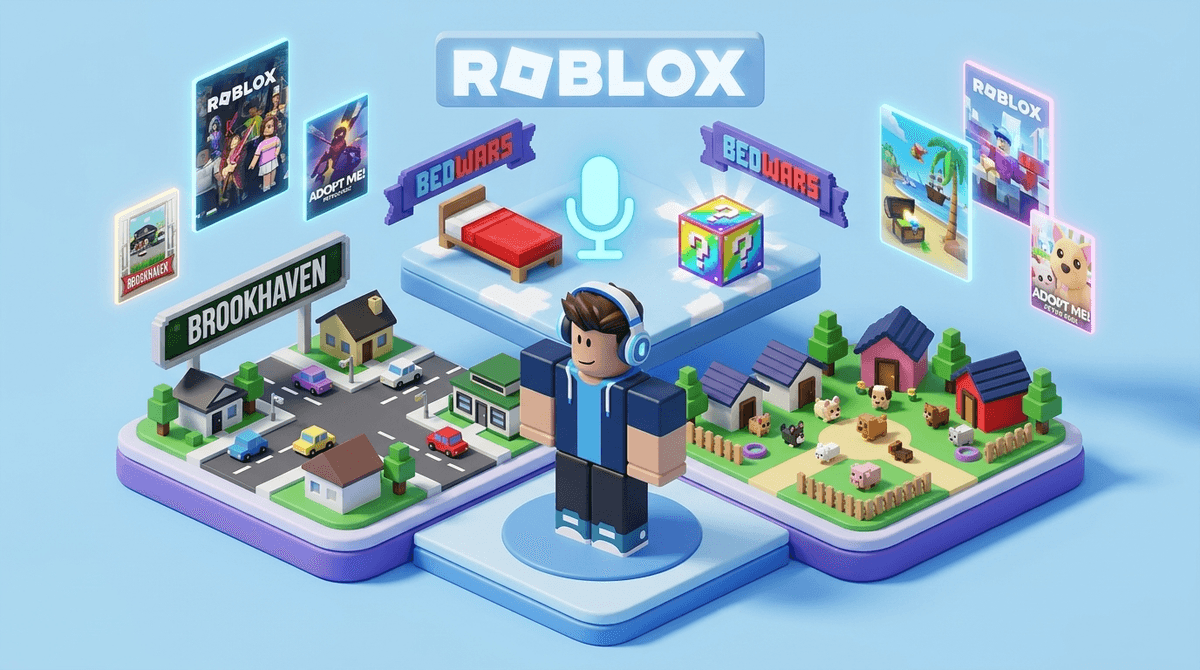
Enter Spatial Voice (often just called "VC" by the kids). It’s a feature that allows users to talk through their microphones. The "spatial" part is key: if your kid’s avatar walks up to another player, the voice gets louder. If they walk away, it fades out. It’s designed to mimic real-life interaction.
While it’s been around for a bit, the way kids use it has evolved. It’s no longer just about coordinating a heist in Jailbreak; it’s where they go to "mic up," show off their "rizz," and unfortunately, sometimes where they get into shouting matches with strangers.
Let’s be real: typing on a tablet or a console controller is a nightmare. It’s slow, the autocorrect is aggressive, and you can’t express tone.
Kids want voice chat because:
- Social Status: Having "VC" is a badge of being a "big kid." Since it’s 13+, younger kids often try to find workarounds just to feel like they’ve leveled up.
- The "Hangout" Factor: In games like Brookhaven or Berry Avenue, the gameplay is secondary to just talking. It’s the new mall.
- Speed: In fast-paced games like BedWars, being able to scream "HE'S AT THE BASE!" is a massive competitive advantage over typing it.
Roblox doesn't just let anyone flip a switch and start talking. To enable voice chat, a user has to prove they are at least 13.
There are two ways they do this:
- Government ID: You take a photo of a driver’s license, passport, or ID card, and a selfie. Roblox uses a third-party service (Veriff) to verify it. They claim they don't store the raw ID data, but for privacy-conscious parents, this is often a hard "no."
- Phone Verification: In many regions, a verified phone number is enough to grant access to voice chat for 13+ accounts. This is the "lower friction" path most teens take.
The Reality Check: If your 10-year-old is using voice chat, they either lied about their age when they set up the account or they’ve used your ID to bypass the system. There is no "official" way for a child under 13 to have voice chat.
Here’s where we stop pulling punches. Voice chat is the "Wild West" of Roblox. While the text chat has filters that catch 99% of profanity, voice moderation is much harder to police in real-time.
1. The "Mic Up" Culture
There is a specific subculture in Roblox called "mic up" games. These are literally just rooms where people stand around and talk. Because these aren't objective-based games, the "content" is whatever comes out of people's mouths. This can range from harmless talk about Skibidi Toilet to some pretty intense bullying, "edgy" humor, and inappropriate sexual talk.
2. Harassment and Bullying
It is much easier to be mean with your voice than with text. We see a lot of "voice trolling" where older players will follow younger-sounding players around just to yell at them or play loud, distorted music (ear-raping) through their mics.
3. The Predator Risk
We have to talk about it. Voice chat allows for a level of grooming that text doesn't. A predator can hear a child’s voice, gauge their age and emotional state, and build "rapport" much faster. They might try to move the conversation from Roblox to Discord or Snapchat.
Is voice chat okay for your kid? It depends on their "digital maturity," not just the number on their birthday cake.
- Ages 9-12: Hard No. Even if they are "mature for their age," the 13+ environment is not built for them. If they want to talk to friends while playing, suggest a supervised FaceTime call or a private Discord server with only real-life friends.
- Ages 13-14: Yellow Light. This is the "training wheels" phase. If you allow it, ensure they know how to Mute and Report instantly. Sit in the room while they play for the first few sessions. If the vibe in a server feels "sus" (suspicious), they need to leave.
- Ages 15+: Green Light (with check-ins). At this age, they are the target demographic. The goal here is making sure they aren't the ones becoming the "toxic" players.
Check out our guide on how to talk to teens about online toxicity
If you decide to let your teen use it, you need to know how to control it. You can't just "turn it off" for specific people; it's an all-or-nothing toggle in the settings.
- Privacy Settings: Go to Settings > Privacy. Look for "Enable Voice Chat." If the account is under 13, you won't even see this option.
- The Bubble Mute: If your child is in a game and someone is being annoying, they can click the microphone icon above that specific player's head to mute them. This is the most important skill they can learn.
- Reporting: Roblox records snippets of voice audio when a report is filed. Teach your child that if someone says something "brain rot" or dangerous, reporting them actually does something.
Recommended "Safe-ish" Games for Voice Chat
Not all games are created equal. Some communities are sweatier (more aggressive) than others.
- Work at a Pizza Place: Generally a more task-oriented, older community that uses voice for actual gameplay.
- Adopt Me!: While huge, the voice chat here is often used for trading, which can lead to scams, but is generally less "edgy" than combat games.
- Royal High: High social element, but tends to be more roleplay-focused.
Roblox Voice Chat is a tool for connection, but it’s also a gateway to the unpolished, unfiltered side of the internet. It’s not "evil," and it’s not "teaching entrepreneurship"—it’s just a telephone line to millions of strangers.
If your kid is under 13, keep the "VC" off. There is plenty of fun to be had in Roblox without it. If they are over 13, treat it like you would a trip to a massive, unsupervised public park. They should know where the exits are, how to handle a bully, and when it’s time to come home.
- Audit the Account: Check your child's birthdate on their Roblox profile. If it's wrong, fix it.
- The "Earbud" Rule: If they are using voice chat, they shouldn't be wearing noise-canceling headphones. You should be able to hear the "spatial" chatter occasionally to get a pulse on the environment.
- Discuss the "Vibe": Ask them, "Who's the most annoying person you heard in VC today?" It opens the door to talking about digital etiquette without it being a lecture.
Learn more about how to set up a "Digital Family Covenant"
Check out our review of Roblox's latest safety updates