

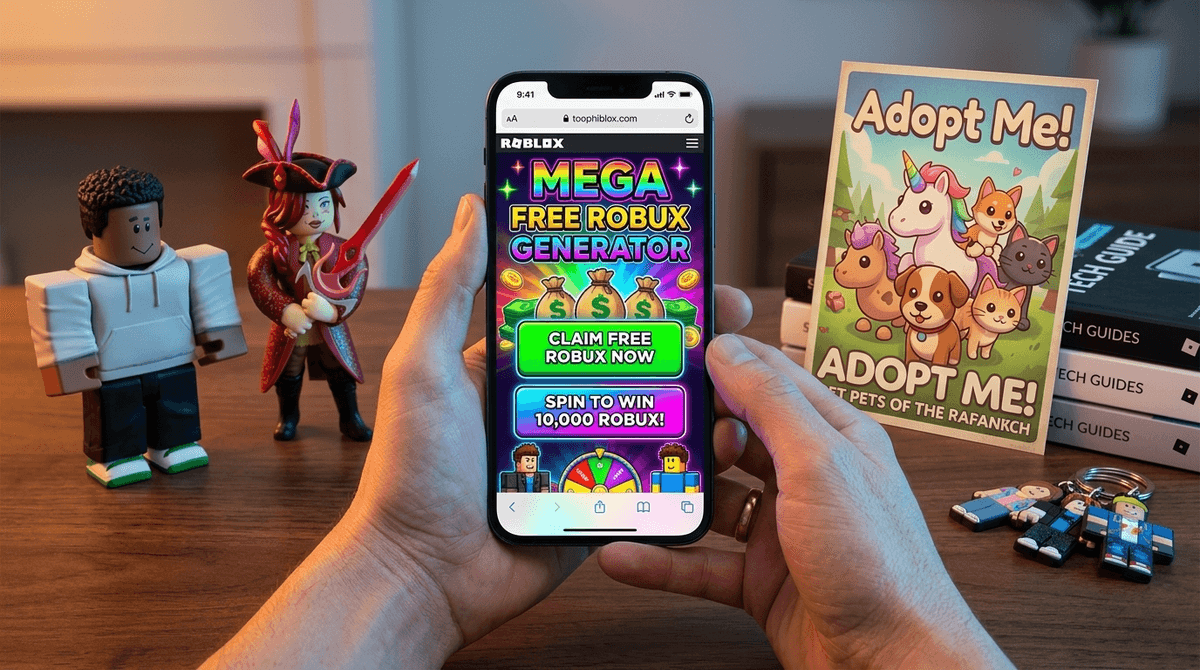
TL;DR: There is no such thing as free Robux. If a site, a "friend" on Discord, or a YouTube video promises your kid a "Robux Generator" or a "secret glitch," they are being phished. These scams aim to steal their account, your credit card info, or install malware. The best defense is a combination of 2FA, a Parent PIN, and a very honest conversation about digital "too good to be true" moments.
Quick Links:
If you have a child between the ages of 7 and 14, Robux is effectively the primary currency of their social life. It’s what they use to buy "skins" (outfits), "gamepasses" (special abilities), and pets in popular games like Adopt Me! or Blox Fruits.
Because Roblox is designed with a "pay-to-win" or "pay-to-look-cool" ethos, kids feel an immense amount of social pressure to have a high balance. Scammers know this. They target the desperation of a kid who wants a 1,000 Robux outfit but doesn't have the $12.50 to buy it.
The "Free Robux" trap is a collection of social engineering and phishing tactics designed to exploit that desire. It usually starts with a promise and ends with a compromised account—or worse, a compromised home network.
It’s easy to think, "My kid is smart, they’d never give away their password." But these scams aren't always "Hey, give me your password." They are often framed as "testing a glitch" or "joining a giveaway."
In the world of Roblox, status is everything. If a kid sees a peer (or a bot disguised as a peer) showing off a "new method" to get rich, the FOMO (Fear Of Missing Out) overrides the logic center of their brain. It’s the digital equivalent of a "Free Candy" sign on a van, but the van is a shiny TikTok video with high-energy music.
Check out our guide on why kids are obsessed with Roblox status
1. The "Robux Generator" Websites
These are the oldest trick in the book. A kid finds a website (often linked from a YouTube description) that looks semi-official. It asks for their username and "how much Robux they want."
After a fake "loading" bar finishes, it tells them they need to "verify they are human" by downloading three other apps or filling out a survey. These apps often contain malware, and the surveys are designed to harvest personal data. The Reality: No Robux is ever generated. The site just made money off your kid's clicks.
2. The "Cookie Logging" Phishing Scam
This is the most dangerous one and it's currently rampant on Discord. A "developer" or "trader" will tell your kid they want to give them a free item, but they need the kid to send them a specific file or a "JavaScript snippet" to "verify the trade."
What the kid is actually sending is their "browser cookie." This cookie contains the active login session for their Roblox account. Once the scammer has that, they don’t even need a password—they can just "be" your kid, bypass 2FA, and strip the account of all its items and currency within seconds.
3. The "Trust Trade" in Games
In games like Adopt Me!, players trade rare pets. A scammer will say, "If you give me your pet first, I'll give you 5,000 Robux." Since there is no official way to trade Robux for items within the game interface, the kid has to "trust" the other person. The Reality: The scammer leaves the server the second they get the pet.
4. Fake YouTube/TikTok Livestreams
You’ll often see "LIVE" videos of someone supposedly giving away thousands of Robux. They tell viewers to click a link in the bio. These links almost always lead to phishing sites designed to steal login credentials.
Let's be real: Roblox is a brilliant platform for creativity and early game dev, but it is also a chaotic, unregulated digital flea market. It’s basically "My First Casino."
The platform's economy is built on scarcity and social signaling. While we love that kids can learn to code using Roblox Studio, the actual "playing" experience is often a gauntlet of advertisements and peer pressure. If you aren't actively managing the security settings, your kid is essentially walking through a high-crime digital neighborhood with a wallet full of cash.
Find the best Roblox alternatives for creative kids
If your kid is on Roblox, you need to do these four things today. Not tomorrow. Today.
1. Enable 2-Step Verification (2FA)
Do not use email-based 2FA if you can avoid it, as kids' email accounts are often poorly secured. Use an authenticator app or, at the very least, make sure the email associated with the account is yours, not theirs.
2. Set a Parent PIN
Roblox allows you to lock the account settings behind a 4-digit PIN. This prevents a scammer (or your kid) from changing the password or the associated email address without your permission.
3. Turn Off "Third-Party" Trades
In the privacy settings, you can limit who can trade with your kid or message them. Setting this to "Friends Only" or "No One" eliminates 90% of the social engineering risks.
4. Use a Unique Password
Kids tend to use the same password for Roblox, Minecraft, and their school Google Classroom account. If one gets leaked in a "Free Robux" scam, they all go down. Use a password manager.
When we lecture kids about "online safety," their eyes glaze over. They hear "blah blah don't have fun." Instead, frame it as a "Pro Player" conversation.
The Script: "Hey, I saw some stuff about people stealing Roblox accounts using 'Free Robux' links. I know how much work you’ve put into your Blox Fruits character, and I’d hate for some random person to steal it. Can we look at your security settings together? Also, just so you know, if anyone ever asks you for a 'cookie' or a 'script' to give you Robux, they are 100% trying to hack you. There is literally no such thing as a Robux Generator."
The "If It Happens" Talk: Make sure they know they won't be in trouble if they do get scammed. Most kids don't tell their parents they got hacked because they're afraid you'll delete the game. This silence gives the scammer more time to do damage.
Learn more about how to talk to your kids about digital scams
Roblox can be a great place for kids to hang out, but the "Free Robux" promise is the gateway drug to account theft.
There is no way to get Robux for free.
- You buy them.
- You earn them by making a game that people play.
- You get them as a gift from a legitimate Roblox Gift Card.
Any other "method" is a scam. Period.
Next Steps for Intentional Parents:
- Audit the account: Log in with your kid and check the "Security" and "Privacy" tabs.
- Check the history: Look at the "Trade" history and "Purchase" history in the Robux menu to see if anything weird has been happening.
- Set an allowance: If you’re okay with it, setting a small monthly Robux allowance through a Roblox Premium subscription can actually reduce the temptation for kids to seek out "free" (scam) alternatives.
- Educate on "The Hook": Teach them that if a stranger is being "too nice" online, there is always a catch.