

Is Roblox Premium Worth It? A Parent's Cost-Benefit Guide
The Short Answer: It depends on how much your kid plays Roblox and whether they're creating or just consuming.
Premium is probably worth it if:
- Your kid plays Roblox 5+ hours a week
- They're actively creating games or items (not just playing)
- You're already buying Robux monthly anyway
- They're trading items or participating in the Roblox economy
Skip it if:
- They're casual players (under 3 hours/week)
- They're happy with free games and don't care about cosmetics
- You want to limit their Roblox engagement, not deepen it
Quick pricing: $4.99/month (450 Robux), $9.99/month (1,000 Robux), or $19.99/month (2,200 Robux). Annual payments save about 16%.
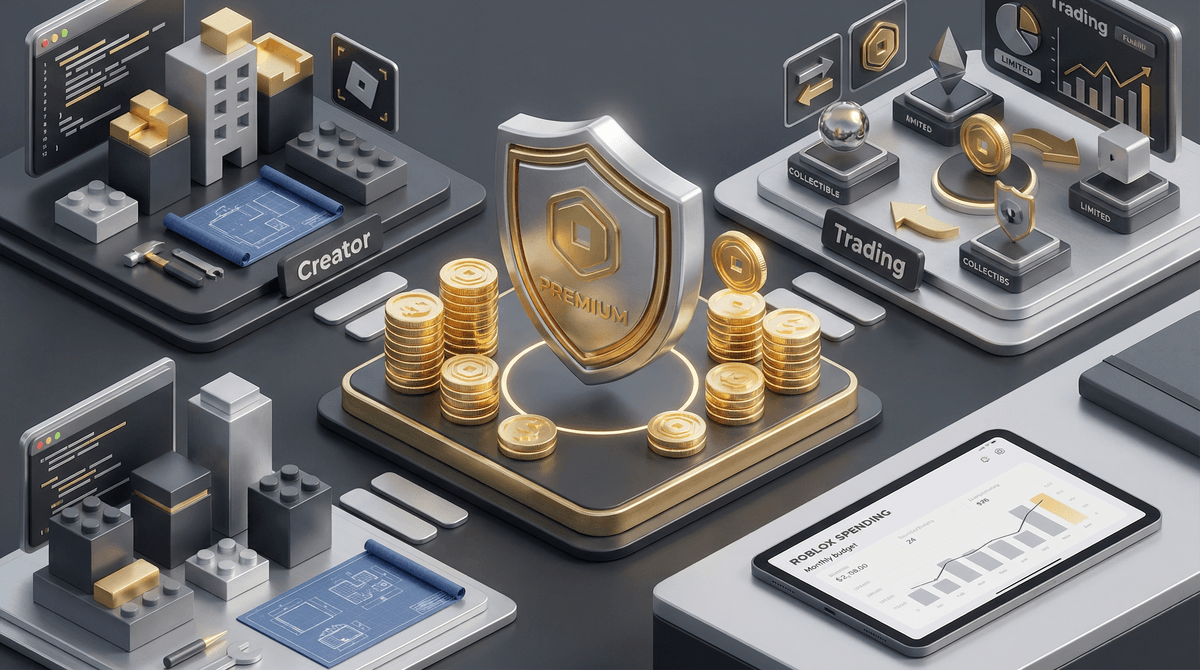
Roblox Premium is the platform's subscription service that gives kids three main things:
- Monthly Robux (the in-game currency)
- The ability to trade items with other players
- A bigger cut of revenue if they're selling games or items they've created (70% instead of 30%)
There are three tiers, and honestly, the pricing is designed to make the middle tier look like the "obvious choice" (classic subscription psychology):
- Premium 450: $4.99/month for 450 Robux
- Premium 1000: $9.99/month for 1,000 Robux
- Premium 2200: $19.99/month for 2,200 Robux
For context, if you buy Robux without Premium, you get about 80 Robux per dollar. Premium gives you 90-110 Robux per dollar, depending on the tier. Not a massive discount, but it adds up.
This is where the math gets interesting. If you're already dropping $10-20/month on Robux through one-off purchases because your kid keeps asking, Premium might actually save you money while giving them predictable access.
Here's the comparison:
- Without Premium: $9.99 gets you 800 Robux
- With Premium 1000: $9.99 gets you 1,000 Robux + trading + creator benefits
If you're buying Robux more than once a month, you're basically leaving money on the table by not subscribing.
But here's the catch: subscriptions create habit momentum. When kids know they're getting 1,000 Robux on the 15th of every month, they start planning around it. They budget it. They anticipate it. You're not just buying currency—you're buying deeper platform engagement.
Some parents love this because it teaches financial planning and delayed gratification . Others hate it because it locks the family into ongoing Roblox dependency.
Without Premium, your kid can buy items but can't trade them. With Premium, they enter Roblox's surprisingly complex trading economy—think collectible sneakers or Pokémon cards, but digital.
Why kids care about trading:
- Some items become "limited" and increase in value over time
- Trading is social—it's how kids connect and negotiate
- For entrepreneurial kids, it's a legitimate way to grow their Robux without spending more money
Why parents should know about it:
- Trading can be a great intro to economics, negotiation, and value assessment
- It can also lead to scams—kids get tricked into bad trades constantly
- The "limited item" market can feel like gambling (artificial scarcity, FOMO, speculation)
If your kid has zero interest in trading or collecting, Premium loses a huge chunk of its value. But if they're already talking about "limiteds" and asking to trade, Premium might unlock something they're genuinely excited about.
If your kid is making Roblox games or designing items (clothing, accessories, etc.), Premium changes the equation entirely.
Without Premium: They get 30% of revenue from their creations
With Premium: They get 70% of revenue
That's not a typo. Premium more than doubles what young creators earn. If your kid is serious about game design or has published even a simple game that's getting plays, Premium pays for itself and becomes an investment in their creative development.
Some kids are making real money on Roblox—like, college fund money. Most aren't. But even earning 500 Robux/month from a game they built is a powerful lesson in creating value and earning through creativity.
Premium isn't just $5-20/month. Here's what actually happens:
1. The Subscription Creep
Once you subscribe, kids start treating that monthly Robux as a baseline, not a luxury. Then they want more for a special item. You're not replacing spending—you're establishing a floor.
2. The Premium-Only Trap
Some games and items are marked "Premium only." Your kid will 100% want to play/buy these specifically because they're exclusive. It's the velvet rope effect.
3. The Sunk Cost Lock-In
After 6 months of Premium, canceling feels like taking something away. You've normalized it. This is by design—subscriptions are stickier than one-time purchases.
4. The Sibling Multiplication
If you have multiple kids playing Roblox, you're either buying multiple Premium subscriptions (ouch) or dealing with fairness battles. "Why does Emma get Premium and I don't?!" is a fight you'll have weekly.
Ages 6-8: Premium is almost never worth it at this age. Kids this young don't understand trading, aren't creating games, and honestly don't need the economic complexity. Stick with occasional Robux purchases for special occasions.
Ages 9-11: This is the sweet spot where Premium starts making sense if your kid is heavily engaged. They're old enough to understand monthly allowances and budgeting, and they're starting to care about cosmetics and social status in games.
Ages 12+: If they're still playing Roblox regularly at this age, Premium is probably worth considering—especially if they're creating. Many tweens and young teens are deep into the trading economy or running their own games. Premium supports that entrepreneurial energy.
Set Clear Expectations
If you're getting Premium, have a conversation about what it means:
- "This is your monthly Robux budget. When it's gone, it's gone."
- "If you want more, you'll need to earn it by [chores/creating games/whatever your family values]."
- "We're trying this for 3 months, then we'll decide if it's worth continuing."
Watch for Scams
Roblox trading is full of scams targeting kids. Common ones:
- "Trust trades" (give me your item first, I'll give you mine later—spoiler: they won't)
- Fake limited items that look valuable but aren't
- Phishing sites promising "free Robux" that steal accounts
If your kid has Premium and is trading, spend 10 minutes learning the basics with them. Here's how to talk about online scams.
Consider Alternatives
Before committing to Premium, ask yourself:
- Could you set up a Robux earning system tied to chores or creative work?
- Would your kid be just as happy playing free Roblox games without cosmetics?
- Is there a better game or platform that aligns more with your family's values?
Premium makes financial sense if you're already spending $10+/month on Robux. It's a better deal than one-off purchases, and the trading/creator benefits can be genuinely valuable for engaged kids.
But subscriptions change behavior. They normalize ongoing spending, deepen platform attachment, and create expectations that are hard to walk back.
The best approach: Try Premium for 2-3 months with clear terms. Track whether your kid actually uses the trading feature, whether they're creating anything, and whether the monthly Robux reduces or just supplements other requests. Then make an informed call.
If your kid is a casual player who just wants to hang out with friends in Brookhaven or Adopt Me, you can probably skip it. If they're building games, trading items, or playing 10+ hours a week, Premium might actually be a reasonable investment in something they're passionate about.
Just don't let Roblox make the decision for you through pressure and FOMO. You're the parent. You get to decide if this particular subscription aligns with your family's digital life—and your budget.
- Check your Robux spending history in your account settings to see what you're actually spending per month
- Ask your kid if they care about trading or creating (don't assume—some kids genuinely don't)
- Set up Roblox parental controls regardless of Premium status
- Consider a trial period with clear metrics for success (are they using the features? Is it reducing conflict? Is it worth the cost?)
And if you're feeling overwhelmed by the whole Roblox economy, you're not alone. This is genuinely complex stuff, and there's no shame in taking time to figure out what works for your family.