

TL;DR: Mindful gaming isn't about setting a 30-minute timer and pulling the plug. It’s about teaching kids to recognize when they’re in a healthy "flow state" versus when they’re just "zombie-grinding" or tilting into a rage. If you're tired of the screaming matches over Roblox or Fortnite, the shift starts with moving from "policing time" to "coaching emotions."
Quick Links for Mindful Gaming:
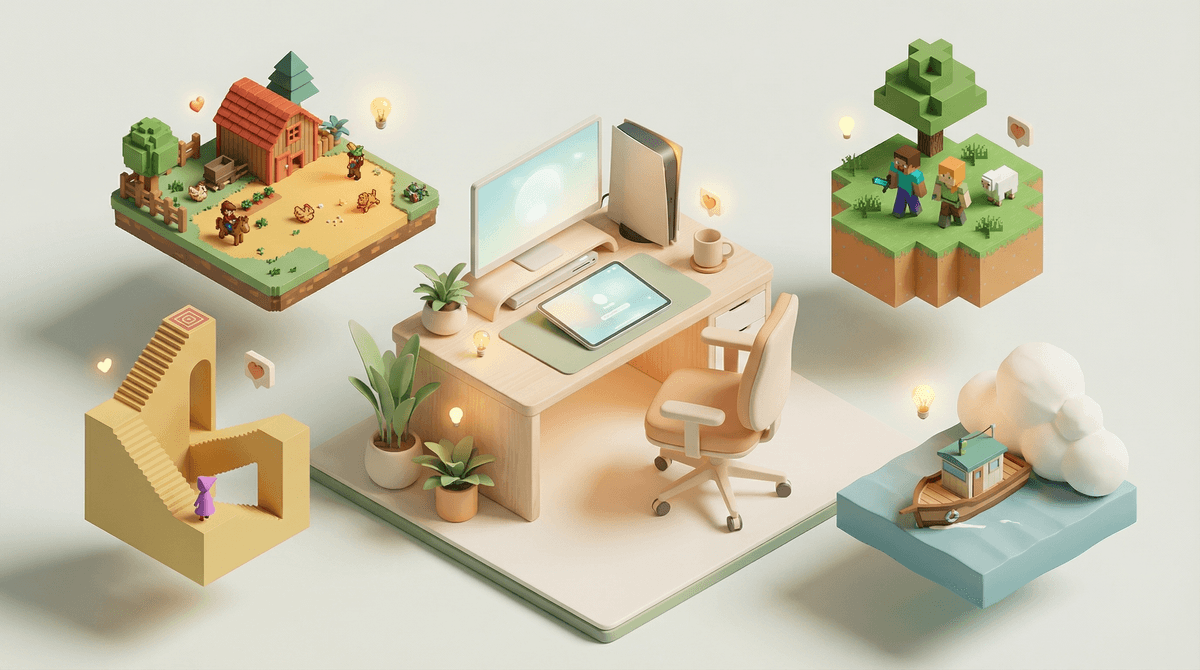
- Best for "Flow" & Calm: Stardew Valley and Unpacking
- Best for Creativity: Minecraft and Scratch
- Best for Social Connection: Among Us and Sky: Children of the Light
- Guide: How to handle gaming-induced meltdowns
We’ve all been there. You announce that dinner is ready, and instead of a "coming, Mom/Dad!" you hear a blood-curdling scream from the other room because someone just got "L-danced" on in Fortnite or lost their streak in a "totally Ohio" (read: weird/bad) round of Bedwars.
When our kids are deep in the digital paint, it can feel like they’ve been possessed by a dopamine-hungry demon. But here’s the no-BS truth: gaming isn't inherently "brain rot." In fact, for most kids today, gaming is their town square, their art studio, and their competitive sports field all rolled into one. By the time they hit 4th grade, about 75% of kids are playing Roblox regularly. Telling them to "just stop playing" is like telling a 1990s teen they can’t use the rotary phone.
The goal isn't to eliminate gaming; it’s to develop mindful gaming habits.
Mindful gaming is the ability to play with intention. It’s the difference between playing Minecraft because you have a cool idea for a castle, and playing it because you’re bored and don’t know how to stop.
In the gaming world, we talk about the Flow State—that magical zone where a challenge perfectly matches your skill level, and time seems to disappear. Flow is great; it’s actually linked to better mental health and creativity. The problem is when flow turns into Compulsive Grinding, where the game uses "dark patterns" (like daily login rewards or limited-time "Skibidi" themed skins) to keep kids playing long after the fun has stopped.

Before we fix the habits, we have to respect the medium. Kids aren't just staring at pixels; they are often:
- Building Systems: In Roblox, they aren't just playing; many are learning the basics of the Roblox Studio and understanding economy, supply and demand, and even basic scripting.
- Regulating Social Status: Being good at Brawl Stars is the modern equivalent of being the captain of the kickball team.
- Decompressing: After a day of rigid school schedules, a sandbox game like Toca Life World offers total agency.
The "Rage Quit" is the ultimate sign of unmindful gaming. When a kid is screaming at the screen, their prefrontal cortex (the logic center) has left the building, and their amygdala (the fight-or-flight center) is running the show.
Instead of just punishing the behavior, we need to teach the "Body Check."
- Is your heart racing?
- Are your hands clenched?
- Are you actually having fun right now, or are you just trying to "get back" at someone?
Read our guide on teaching kids emotional regulation during gaming
If you want to move away from the high-stress, "brain rot" style of gaming, try introducing titles that naturally encourage mindfulness, creativity, or genuine cooperation.
Ages 8+ This is the gold standard for "cozy gaming." There’s no ticking clock forcing you to act, no predatory microtransactions, and the "work" of the game (farming, fishing, befriending villagers) is inherently meditative. It teaches delayed gratification—you can't just buy a bigger farm; you have to grow the pumpkins first.
Ages 10+ If you want a game that actually builds empathy, this is it. You play as a "ferrymaster" to the deceased. It sounds heavy, but it’s beautiful, slow-paced, and requires deep care for the characters. It’s the opposite of the fast-twitch stress of a battle royale.
Ages 6+ A puzzle game that feels like an Escher painting. It’s short, contained, and visually stunning. It’s a great "palate cleanser" game for kids who are used to the visual noise of YouTube shorts.
Ages 8-16 Technically a coding platform, but kids use it like a game. This moves them from "consumer" to "creator." If they want a certain game mechanic, they have to build it. It’s the ultimate mindful digital habit.
Ages 9+ A social game where the primary mechanic is helping others. You literally hold hands with strangers to fly across beautiful landscapes. It’s a peaceful, non-toxic alternative to the often-aggressive chat rooms found in other social MMOs.
Digital habits look different at every stage. Based on Screenwise community data, here’s what the landscape looks like:
- Grades K-2: Most kids are on PBS Kids or Toca Boca. Mindfulness here is about transitioning off the screen without a meltdown.
- Grades 3-5: This is the Roblox explosion. About 82% of kids in this bracket are gaming socially. Mindfulness here is about chat safety and recognizing "scams" (like fake Robux offers).
- Grades 6-8: Discord enters the chat. Gaming becomes 100% social. Mindfulness here is about balance—making sure the "digital hang" doesn't replace sleep or homework.
We can't talk about mindful gaming without talking about money. Many modern games are designed like slot machines. Fortnite and Roblox use "virtual currencies" to distance the player from the reality of spending real money.
If your kid is constantly asking for "just $5 for a skin," they aren't playing mindfully; they are being manipulated by a billion-dollar marketing engine.
- The Rule: No "impulse buys." If they want a skin or a game pass, it goes on a list and they wait 24 hours. This one hack destroys the "limited time offer" pressure that games use to drain your bank account.
The biggest mistake we make as parents is the "5-minute warning." In many games, 5 minutes is useless. If they are in the middle of a League of Legends match or a Minecraft raid, leaving early can result in social penalties or loss of progress.
Try this instead: Ask, "How much longer is this round?" or "Where is a good saving point?" By respecting the "natural stopping point" of the game, you’re teaching them to look ahead and plan their exit—a key skill in digital self-regulation.
Gaming isn't the enemy; mindlessness is. When we stop being the "screen time police" and start being "gaming coaches," the dynamic changes. We move away from the "rage quit" culture and toward a world where our kids can enjoy their digital hobbies without letting those hobbies own them.
If your kid is currently stuck in a cycle of "brain rot" content and high-stress gaming, don't panic. Start by introducing a "cozy" alternative like Animal Crossing: New Horizons or a creative outlet like Scratch.
- Do a "Gaming Audit": Sit with your kid for 15 minutes while they play. Don't judge, just watch. Is it high-stress or high-flow?
- Set "Stopping Point" Rules: Move away from the timer and toward "rounds" or "levels."
- Diversify the Diet: Introduce one "mindful" game this week from the list above.
Take the Screenwise survey to see how your family's gaming habits compare to your community