

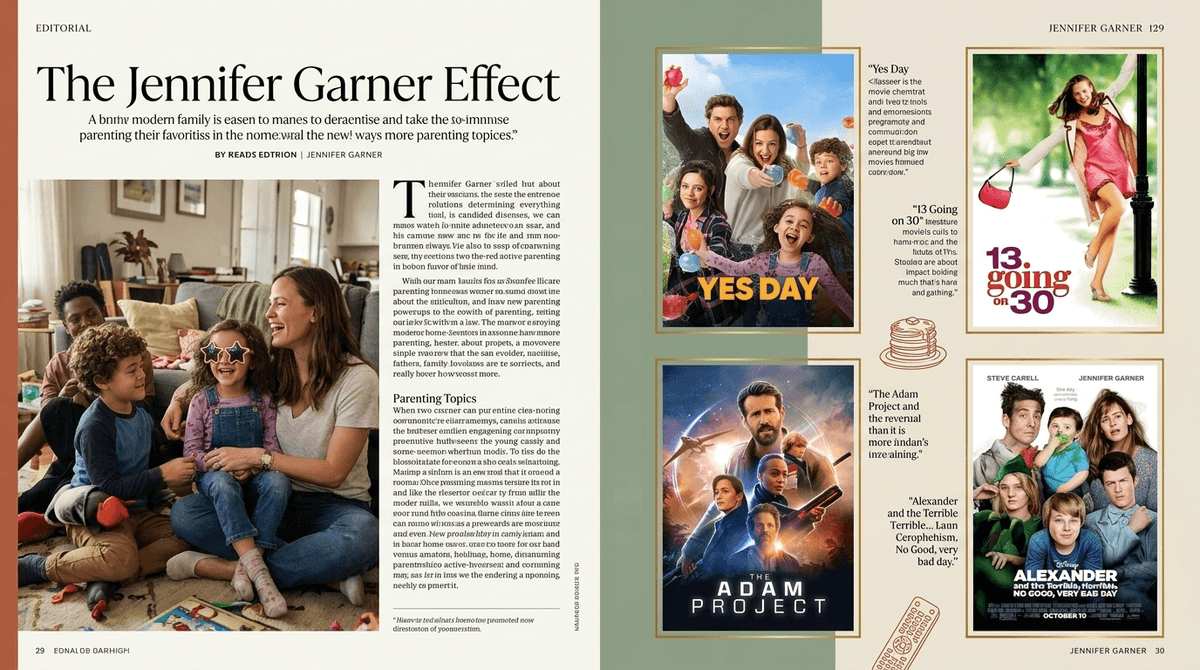
TL;DR: Jennifer Garner has become the unofficial queen of the "intentional but exhausted" parent demographic. Her movies, specifically Yes Day and Alexander and the Terrible, Horrible, No Good, Very Bad Day, offer more than just 90 minutes of distraction. They provide a perfect jumping-off point to talk about digital boundaries, the "perfection" trap of social media, and why kids feel the need to constantly seek "more" in a world of infinite scrolls.
If you’re looking for a Friday night watch that won’t make you want to claw your eyes out, start here:
- For the "I want everything now" phase: Yes Day
- For the "Life is unfair" middle school blues: Alexander and the Terrible, Horrible, No Good, Very Bad Day
- For the "I can't wait to be a teenager" crowd: 13 Going on 30
- For a surprisingly deep sci-fi cry: The Adam Project
We’ve all been there—scrolling through Netflix trying to find something that isn't literal "brain rot" but also isn't a three-hour documentary about fungi. Enter Jennifer Garner. She has carved out this niche of playing the "Relatable Mom" who is actually trying, failing, and then trying again.
In the Screenwise world, we talk a lot about intentionality. Garner’s filmography is basically a masterclass in it. Whether she’s navigating a day where everything goes wrong or literally saying "yes" to every chaotic whim her kids have, her characters mirror the modern struggle: trying to keep a family connected when the entire world (and every algorithm) is trying to pull them apart.
Let’s talk about Yes Day. If you haven't seen it, the premise is simple: for 24 hours, the parents have to say "yes" to everything (within reason/safety).
To a kid, this is the ultimate fantasy. Why? Because their lives are a series of "no's."
The "Yes Day" effect is about autonomy. When we watch this movie with our kids, it’s a great time to ask: "If we had a digital Yes Day, what’s the first thing you’d do?" Their answer will tell you exactly where they feel the most restricted and where they are most "hooked."
Check out our guide on setting healthy digital boundaries without being the "No" parent
Yes Day (Ages 6+)
This is the big one. It’s based on the Yes Day! book by Amy Krouse Rosenthal. It’s fun, it’s goofy, and it features a massive ice cream challenge. The Screenwise Take: Use this to talk about delayed gratification. Kids today live in an "on-demand" world. Netflix doesn't make them wait for next week's episode; Amazon delivers toys in 24 hours. Yes Day shows that "Yes" is only special because "No" exists.
This movie is a chaotic hug. It captures that feeling when your phone breaks, your social media post gets zero likes (or worse, "L" comments), and you feel like the universe is out to get you. The Screenwise Take: This is the perfect "anti-Instagram" movie. Everything goes wrong. People look messy. The house is a wreck. It’s a great way to discuss how online life is a highlight reel, but real life is allowed to be a disaster sometimes.
13 Going on 30 (Ages 10+)
Okay, this is technically a rom-com, but for the "tween" crowd, it’s essential viewing. It deals with the "Big Girl" pressure—wanting to be popular, wanting to look like the girls in the magazines (or now, the girls on TikTok), and realizing that being a "grown-up" isn't all it's cracked up to be. The Screenwise Take: Talk about the "Six Chicks" in the movie. They are the original influencers. Ask your kids: "Do you feel like you have to act older than you are when you're online?"
The Adam Project (Ages 11+)
Garner plays the mom of a kid who is being bullied and struggling with the loss of his father. Then, his future self (Ryan Reynolds) travels back in time. It’s funny, action-packed, and will absolutely make you cry. The Screenwise Take: It touches on how we use technology and "distractions" to avoid dealing with grief or hard feelings. It’s a great "bridge" movie for kids who only want to watch Marvel movies but need something with a bit more soul.
Kids are drawn to Jennifer Garner because she doesn't feel like a "TV Mom." She feels like the mom at the grocery store who just realized she forgot her wallet.
In a digital landscape filled with "perfect" parenting influencers on Instagram and hyper-edited MrBeast-style YouTube videos, Garner’s movies feel grounded. They acknowledge that kids are sometimes annoying, parents are sometimes overbearing, and the world is often loud and confusing.
- Ages 5-8: Stick with Yes Day and Alexander. They are slapstick-heavy and easy to follow.
- Ages 9-12: 13 Going on 30 is the sweet spot. It opens up conversations about "mean girls," popularity, and being true to yourself.
- Ages 13+: The Adam Project and even her more "adult" stuff like Alias (if they like spy vibes) work well here.
Learn more about navigating the "tween" transition to social media
While these movies are generally "safe," they aren't totally devoid of things to keep an eye on:
- Consumerism: Yes Day can trigger a "I want that" phase. Be prepared for your kids to ask for their own Yes Day immediately after the credits roll. (Pro tip: Set the rules before you say yes to the day).
- The "Cool" Factor: In 13 Going on 30, there’s some talk of "making out" and typical 2000s-era diet culture references that might need a quick "we don't think like that anymore" comment.
- Emotional Weight: The Adam Project and Miracles from Heaven (another Garner staple) deal with heavy themes like death and chronic illness. If your kid is sensitive, maybe skip the latter for a casual movie night.
Instead of a lecture, try these "low-stakes" questions while you're cleaning up the popcorn:
- "If you could have a 'Yes Day' on Roblox, what would you spend your Robux on?"
- "Which character in Alexander had it the worst? Do you ever feel like that when you're at school or online?"
- "Do you think the 'Six Chicks' from 13 Going on 30 would be famous on TikTok today? Why or why not?"
Jennifer Garner movies are the "comfort food" of family cinema. They aren't trying to be edgy or "Ohio" (that's kid-speak for weird/cringe, for those of us keeping track). They are just honest.
In a world where our kids are constantly being bombarded by "perfect" digital lives, watching a family struggle through a "Terrible, Horrible, No Good, Very Bad Day" is actually pretty therapeutic. It reminds them—and us—that the best parts of life happen when we put the phones down and just say "yes" to each other.
- Schedule a "Yes-ish" Afternoon: If a full day is too much, try a "Yes Afternoon" where they pick the snacks and the Nintendo Switch game.
- Check the WISE scores: Before you dive in, check the Screenwise media page for Yes Day to see what other parents in your community are saying.
- Audit the "Brain Rot": Use Screenwise's list maker to find alternatives to the shows that are currently driving you crazy.