

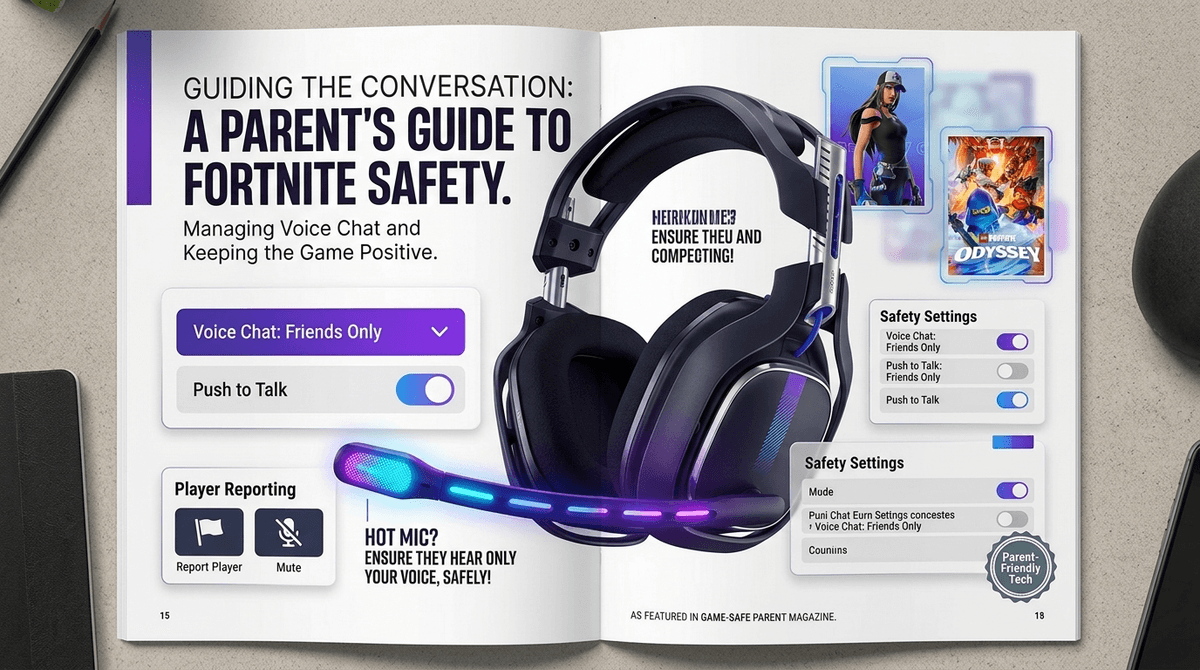
TL;DR: If your kid is playing Fortnite, the voice chat is where the real "game" happens—and where the risks live. For kids under 10, keep the mic OFF. For middle schoolers, stick to Friends Only. Epic Games has actually leveled up their safety with Cabined Accounts and Voice Reporting, but no filter is perfect.
Quick links for safer social gaming:
- Minecraft (Best for private, controlled social play)
- Roblox (Great, but requires heavy parental control setup)
- Among Us (Use "Quick Chat" to remove the typing/voice risk entirely)
- Lego Fortnite (A gentler, survival-based entry point)
Let’s be real: the first time you walk past your kid’s room and hear them screaming "He's one shot! He's cracked! That's so Ohio!" into a headset, it’s a lot. You’re probably wondering who exactly is on the other end of that digital line and what kind of influence they’re having on your child's vocabulary (and sanity).
Fortnite isn't just a battle royale game anymore; it’s a global playground. And just like a real playground, there are the "good kids," the kids who just learned a bunch of new swear words, and the occasional weird adult who shouldn't be there.
The "hot mic" is the centerpiece of the Fortnite experience. It’s how they strategize, how they bond, and—unfortunately—how they get exposed to things they might not be ready for. Here is the no-BS breakdown of how to handle the mic.
In Fortnite, there are two main ways to talk: Party Chat and Game Chat.
- Party Chat: This is the "safe" zone. It’s a private channel for people your child has specifically invited to their group. Usually, these are real-life friends or people they’ve played with before.
- Game Chat: This is the Wild West. If your child is playing a team mode (like Squads) with "Fill" turned on, the game will pair them with random strangers. Game Chat allows them to talk to those strangers.
The danger isn't just "stranger danger" in the 1980s-PSA sense. It’s the toxicity. We’re talking about 14-year-olds who think being edgy is a personality trait, use slurs like they’re punctuation, and generally make the environment miserable for anyone who isn't "cracked" (really good) at the game.
Epic Games (the creators of Fortnite) actually deserves some credit here. They’ve implemented a few features that make our lives as intentional parents a little easier.
If your child is under 13 and creates an account, they are automatically placed in a "Cabined Account." This is a restricted environment where certain features—like voice chat and spending money—are disabled by default until a parent provides consent. If you didn't set this up, your kid might have lied about their age (it happens). You can still go into the Epic Games Parent Portal and lock this down.
Voice Reporting
This is a relatively new and huge feature. Fortnite now "listens" to the last five minutes of audio on a rolling basis. It’s not stored forever, but if your child reports someone for harassment or toxic behavior, the game can pull that audio clip as evidence. This has actually cut down on some of the most egregious behavior because kids know they can get banned if they're caught on "tape."
It’s easy to say "just turn the mic off," but for a 12-year-old, that’s like being invited to a birthday party but having to wear earmuffs and a gag.
- Social Currency: If all their friends are in a Discord call or Fortnite party, being left out feels like social death.
- Strategy: You literally cannot play high-level Fortnite well without communication. You need to tell your teammates where the enemies are and when you're dropping "medkits."
- The "Vibe": For many kids, the game is just the background noise for the conversation. They’re talking about school, YouTube videos, and the latest Skibidi Toilet episode.
Every kid is different, but here’s a general framework based on community data and developmental stages:
Ages 7-10: The "Mic Off" Era
At this age, kids don't have the emotional regulation to handle a 19-year-old calling them a "loser" or using a racial slur. Keep the mic Off or restricted to Nobody. If they want to play with a cousin or a best friend, sit next to them and let them use the "Party Chat" only.
Ages 11-13: The "Friends Only" Era
This is the sweet spot for Friends Only settings. They can talk to their buddies from school, but they are shielded from the randoms in the lobby. This is also the time to start talking about "Digital Resilience"—what to do when someone says something that makes them uncomfortable.
Ages 14+: The "Open, but Monitored" Era
By high school, they’re going to encounter the real world. If you’ve built a foundation of trust, you can move to Friends & Teammates, but keep the console in a common area. If you hear them starting to adopt that toxic "gamer" tone, it’s time to pull the plug for a bit.
Don't just take their word for it. Open Fortnite, go to the Settings menu (the gear icon), and navigate to the Audio tab.
- Voice Chat: Set to "Friends Only" or "Nobody."
- Voice Method: Change from "Open Mic" to "Push to Talk." This is a pro-parent move. It means their mic is only hot when they hold down a specific button. It prevents the entire internet from hearing you yell "Dinner's ready!" or hearing your younger child's Bluey episode in the background.
- Parental Controls PIN: Go to the "Parental Controls" section in the main menu and set a 6-digit PIN. This prevents your kid from just toggling the settings back the second you leave the room.
If Fortnite feels too high-stakes or toxic right now, there are "softer" ways to let them be social:
- Minecraft: Set up a private Realm. It costs a few bucks a month, but it’s a walled garden where only invited friends can play and talk.
- Lego Fortnite: It’s inside the Fortnite app, but it’s a survival crafting game (think Minecraft but with Legos). It’s much less "sweaty" and generally attracts a younger, chill crowd.
- Toca Life World: For younger kids who want to "play house" digitally without the combat or open voice chat.
- Animal Crossing: New Horizons: The ultimate "cozy" social game. Communication is limited and much harder for strangers to infiltrate.
We often worry about predators, and while that is a valid (though statistically rare) concern, the more common "stranger danger" is information leaking. Kids are surprisingly chatty. They’ll tell a random teammate what city they live in, what school they go to, or even their full name.
The Talk: Sit them down and explain that "Game Chat" is like talking to someone at a bus stop. You can be polite, you can talk about the weather (or the game), but you don't tell them where you live or give them your phone number.
Get a script on how to talk to your kid about digital privacy
Fortnite voice chat isn't inherently evil, but it is a high-exposure environment. It’s the digital equivalent of letting your kid hang out at a massive, unmonitored skate park. There’s a lot of fun to be had, but they’re going to see and hear some "stuff."
Your job isn't to be the fun-police; it’s to be the equipment manager. Make sure they have the right "pads" (settings) on before they drop into the arena.
- Audit the Settings: Check the Fortnite audio settings tonight.
- Enable Push-to-Talk: It’s a game-changer for household privacy.
- Listen In: Occasionally, don't use headphones. Let the game audio play through the TV so you can hear the "vibe" of the people your child is playing with.
- Discuss Reporting: Make sure your child knows how to mute and report a player. Empower them to leave a game if it gets weird.