

Look, I get it. You're trying to get your kid to read literally anything that isn't Diary of a Wimpy Kid for the seventh time (no shade—those books are great), and someone mentioned "the classics." But what does that even mean?
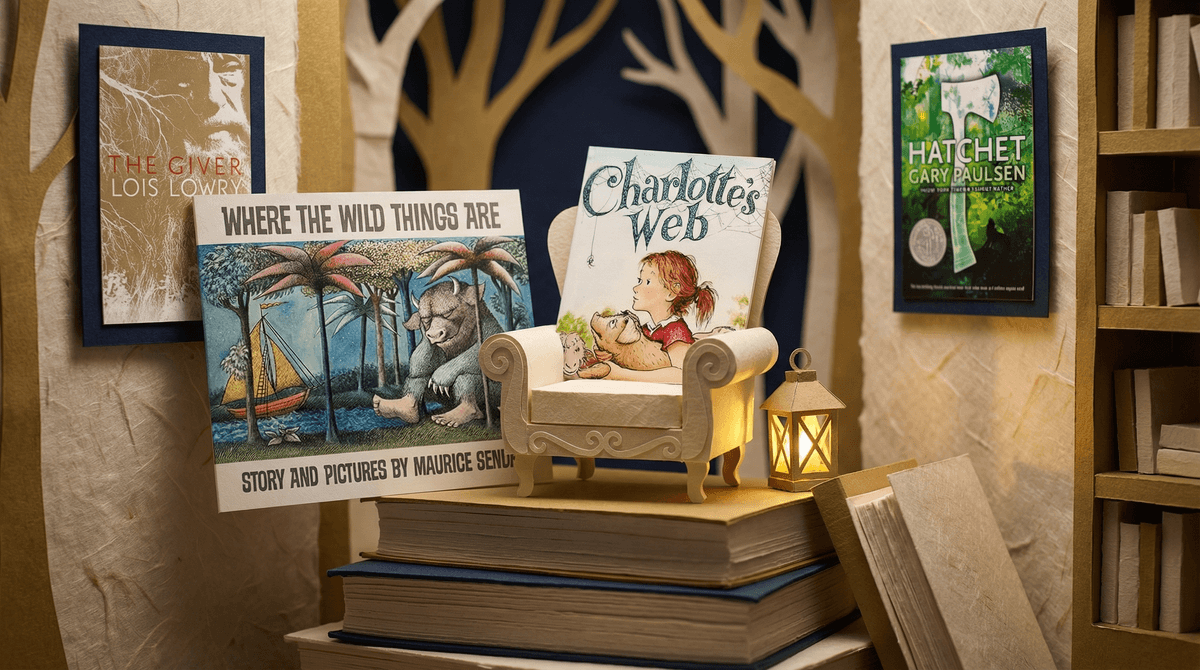
Classic American children's literature is basically the literary equivalent of comfort food—books that have been passed down through generations, that your parents probably read, that somehow still resonate despite being written before TikTok, before iPads, sometimes even before TV. We're talking Charlotte's Web, Where the Wild Things Are, The Giver, Hatchet—books that have earned their place on the shelf.
These aren't just "old books your English teacher made you read." They're stories that have survived decades of changing trends because they nail something fundamental about childhood, growing up, or being human. They create shared cultural references—when your kid finally gets why everyone jokes about "Some Pig," or understands what people mean when they reference Atticus Finch, they're joining a bigger conversation.
Here's the thing: in a world where your kid's media diet is algorithmically curated to keep them scrolling, classic books offer something genuinely different. They're slower, they require imagination, and they don't have a comment section full of strangers arguing.
These books teach kids that stories can be satisfying without jump cuts every three seconds. They build vocabulary in a way that YouTube videos just... don't. And honestly? They give you something to talk about at dinner that isn't Skibidi Toilet lore.
But here's what I really love about classics: they create shared experiences. When you and your kid both know Bridge to Terabithia, you have a shorthand for talking about friendship, loss, and imagination. When they read Holes and you read it twenty years ago, you can have an actual conversation about it—not just you nodding along while they explain Among Us mods.
Plus, let's be real: these books are free at the library, don't require a subscription, and can't hit you with in-app purchases.
Ages 4-7: Picture Books That Punch Above Their Weight
Start with Where the Wild Things Are by Maurice Sendak. It's short, it's weird, and it perfectly captures that kid feeling of being angry and wanting to run away but also wanting dinner. The Snowy Day by Ezra Jack Keats is pure joy in book form—and was groundbreaking for featuring a Black protagonist in 1962.
Don't sleep on Make Way for Ducklings or Goodnight Moon—yes, they're simple, but they're also beautifully written and illustrated. These are books that teach kids what good storytelling looks like before they can even read.
Ages 6-9: Chapter Books That Hook Them
Charlotte's Web is the GOAT here. It's about friendship, death, and a spider who can spell—what's not to love? Stuart Little and The Cricket in Times Square are also E.B. White and George Selden gold.
Little House on the Prairie (the whole series, really) gives kids a window into American history through Laura Ingalls Wilder's eyes. Fair warning: there's some dated language and perspectives about Native Americans that you'll want to discuss. Read more about how to approach problematic classics with kids .
.
Ages 8-12: The Heavy Hitters
This is where American children's literature really shines. Hatchet by Gary Paulsen is pure survival story adrenaline. The Giver by Lois Lowry will mess them up in the best way—it's dystopian before dystopian was cool.
Bridge to Terabithia by Katherine Paterson will make them cry (it's fine, crying over books is healthy). Holes by Louis Sachar is genuinely brilliant—funny, mysterious, and everything connects in the most satisfying way.
Want to tackle race and justice? Roll of Thunder, Hear My Cry by Mildred D. Taylor is powerful and necessary. To Kill a Mockingbird is typically assigned in middle school, but some mature 11-12 year olds can handle it with parental guidance.
Ages 12+: Books That Stick With You
The Outsiders by S.E. Hinton (written when she was 16!) is the ultimate book about class, loyalty, and finding your place. A Wrinkle in Time by Madeleine L'Engle blends science fiction with philosophy in a way that still feels fresh.
The Catcher in the Rye is controversial (language, themes of teenage angst and alienation), but it captures teenage frustration like nothing else. Some families love it for teens, others wait until high school or skip it entirely—know your kid.
Not All Classics Age Well
Some of these books contain language, stereotypes, or perspectives that reflect when they were written. Little House on the Prairie has problematic depictions of Native Americans. Older books might use racial slurs in historical context (like in To Kill a Mockingbird or The Adventures of Huckleberry Finn).
This doesn't mean you should avoid them—it means you should read alongside your kid and talk about it. These conversations are valuable. "This book was written in 1935. What do you notice about how the author describes [this group]? How would we talk about that today?"
They're Slower Than Modern Books
Kids raised on Diary of a Wimpy Kid and Dog Man might find classics slower-paced. That's okay! You might need to read the first few chapters together to get them hooked. Audiobooks can be a great bridge—hearing a skilled narrator bring Charlotte's Web to life can hook a reluctant reader.
Don't Force It
If your kid hates Treasure Island, that's fine. Not every classic will resonate with every kid. The goal isn't to check boxes—it's to find books that make them want to keep reading. Try a few different ones and see what sticks.
Start with the movie, then the book (controversial, I know). Watching Holes together and then reading the book can show kids how much more depth books have. Same with Bridge to Terabithia or Charlotte's Web.
Read aloud, even to older kids. Family read-aloud time isn't just for little kids. Reading The Giver or Hatchet aloud creates natural discussion points and makes it a shared experience rather than homework.
Use audiobooks guilt-free. Listening to a book is still reading. A well-narrated audiobook of A Wrinkle in Time during a road trip? That's quality time and literature combined.
Connect to their interests. Kid obsessed with survival games like Minecraft? Try Hatchet or My Side of the Mountain. Into dystopian stuff from Roblox games? The Giver is their jam.
Classic American books for kids aren't about being pretentious or forcing "vegetables" reading on your kids. They're about giving them access to stories that have proven their worth over decades—stories that build vocabulary, spark imagination, create cultural literacy, and give you something to bond over that isn't a screen.
Start with one book that matches your kid's interests and age. Read it together. Talk about it. See what happens. The worst case? They don't love it and you try another. The best case? They discover that books written before they were born can still feel like they were written just for them.
And honestly, in a world where everything is optimized for engagement metrics and algorithmic feeds, there's something quietly radical about handing your kid a 70-year-old book and watching them get lost in it.
Not sure where to start? Check out alternatives to popular kids' books to find classics that match your kid's current favorites.
Want more book recommendations? Explore our guide to chapter books for kids or middle grade books for age-specific suggestions.
Dealing with a reluctant reader? Learn strategies for getting kids to read more that don't involve bribery (okay, maybe a little bribery).