

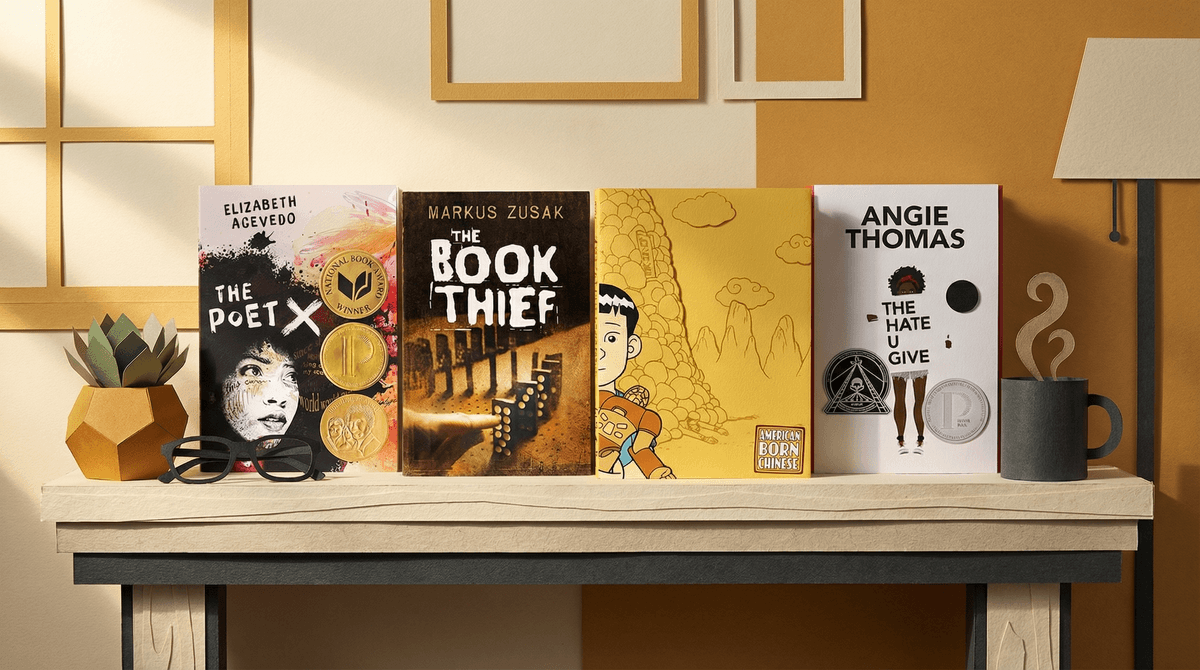
Here's the thing about award-winning teen books: they're not all dusty classics your English teacher forced you to read. Sure, some of them are capital-L Literature that make you feel like you should be taking notes, but a lot of them are genuinely page-turners that happen to also be beautifully written, tackle big ideas, and give teens something real to chew on.
We're talking Newbery Medal winners, National Book Award finalists, Printz Award recipients, and those books that somehow win every award going. These are books that literary professionals—librarians, authors, educators—have collectively said "yes, this one matters." But more importantly, these are books that actually resonate with teens, not just with the adults selecting them.
The sweet spot? Finding award winners that your teen will actually want to read, not just books that look impressive on a shelf.
Look, I get it. Your teen is probably more interested in scrolling TikTok or watching YouTube than picking up a book. But here's why award-winning teen lit is worth the effort:
These books are conversation starters. The good ones tackle identity, justice, grief, love, mental health, and all the complicated stuff teens are processing anyway. Books like The Hate U Give by Angie Thomas or All the Bright Places by Jennifer Niven give you a shared language to talk about hard things.
They're actually good. Not "good for a teen book" but legitimately well-crafted stories. The Book Thief, Eleanor & Park, Monster by Walter Dean Myers—these aren't homework, they're art.
They build critical thinking. Award-winning books tend to have layers. They don't spell everything out. They trust teen readers to handle ambiguity, unreliable narrators, and complex themes. That's the opposite of the algorithmic content they're getting everywhere else.
They're screen-free depth. In a world of 30-second videos and infinite scroll, books offer something rare: sustained attention, nuanced storytelling, and the space to actually think. No notifications, no autoplay next episode.
Here's how to approach this without it feeling like an assignment:
Start With Their Interests
Don't lead with "this won a Newbery." Lead with "this is about a kid who hacks into the government" (Little Brother by Cory Doctorow) or "this is a murder mystery told in reverse" (One of Us Is Lying).
Into fantasy? Try The House of the Scorpion (Newbery Honor, dystopian sci-fi) or Akata Witch (think Nigerian Harry Potter but better).
Love realistic drama? Speak by Laurie Halse Anderson is a modern classic about trauma and finding your voice. The Absolutely True Diary of a Part-Time Indian is funny and heartbreaking.
Historical fiction fan? Code Name Verity (female WWII spies) or Between Shades of Gray (not the Fifty Shades thing—this is about Stalin's genocide).
Want something weird and wonderful? The Graveyard Book by Neil Gaiman (Newbery winner, boy raised by ghosts) or When You Reach Me (time travel mystery in 1970s NYC).
Follow the Book-to-Screen Trail
Teens are more likely to read a book if they've seen the adaptation. Use that. The Hunger Games, The Fault in Our Stars, Everything Everything—all award winners or finalists, all have movie/show versions they might've already seen.
The trick: "The book has so much more detail about why Katniss does what she does" is more compelling than "you should read more."
Don't Sleep on Verse Novels
If your teen says they hate reading, try a novel in verse. The Poet X by Elizabeth Acevito won basically every award and it's poetry, so it reads fast. Long Way Down by Jason Reynolds is 60 seconds in an elevator, told in verse, absolutely gripping.
These books look less intimidating, move quickly, and pack an emotional punch. They're a gateway drug to longer novels.
Age and Maturity Considerations
Ages 12-14: Look for Newbery winners and honors—they're vetted for middle grade sensibilities. Holes, Bridge to Terabithia, The Giver. Heavy themes, age-appropriate treatment.
Ages 14-16: Printz Award winners are specifically for teen literature. American Born Chinese (graphic novel about identity), Looking for Alaska (John Green before he was everywhere), Bone Gap (magical realism).
Ages 16+: National Book Award finalists and winners go harder. The Absolutely True Diary deals with poverty and alcoholism. Speak is about sexual assault. These are important books, but know what you're handing them.
Content note: Award-winning teen lit often tackles serious stuff—mental illness, violence, sexuality, racism, death. That's not a bug, it's a feature. These books help teens process real-world complexity. But skim reviews or read it yourself first if you want to know what you're working with.
Awards don't equal "easy read." Some award winners are challenging—complex structure, difficult themes, literary style. That's okay. Not every book needs to be a beach read.
Your teen might hate a critically acclaimed book. Catcher in the Rye is a classic. It's also about a whiny rich kid, and plenty of teens bounce right off it. If they don't connect with one award winner, try another. There's no single "best" book.
Diverse voices matter. The awards have gotten better at recognizing books by and about people of color, LGBTQ+ teens, disabled teens, and other marginalized identities. The Poet X, I Am Not Your Perfect Mexican Daughter, Felix Ever After—these books let teens see themselves or build empathy for experiences different from their own.
Graphic novels count. American Born Chinese, El Deafo, New Kid—all award winners, all graphic novels. If that's what gets them reading, that's what counts.
Award-winning teen books aren't about making your kid read "important literature" for college applications. They're about finding stories that challenge, comfort, and expand how teens see the world and themselves.
The best reading list isn't the one with the most prestigious awards. It's the one your teen actually reads.
Start with one book. Not a stack of ten. One book that matches their interests. If they liked Percy Jackson, try The House of the Scorpion. If they loved Stranger Things, try Miss Peregrine's Home for Peculiar Children.
Make it low-pressure. "I heard this is really good" works better than "you need to read more." Leave it on their nightstand. Read it yourself and mention something interesting about it.
Ask your librarian. Seriously, teen librarians are wizards at matching kids with books. Tell them what your teen likes (gaming, true crime, romance, whatever) and they'll find an award winner that fits.
Consider audiobooks. Libby and Audible have tons of award winners. If your teen has a commute, does chores, or just prefers listening, that counts as reading.
Want help finding the right book for your teen's specific interests? Get recommendations for teen books .
.