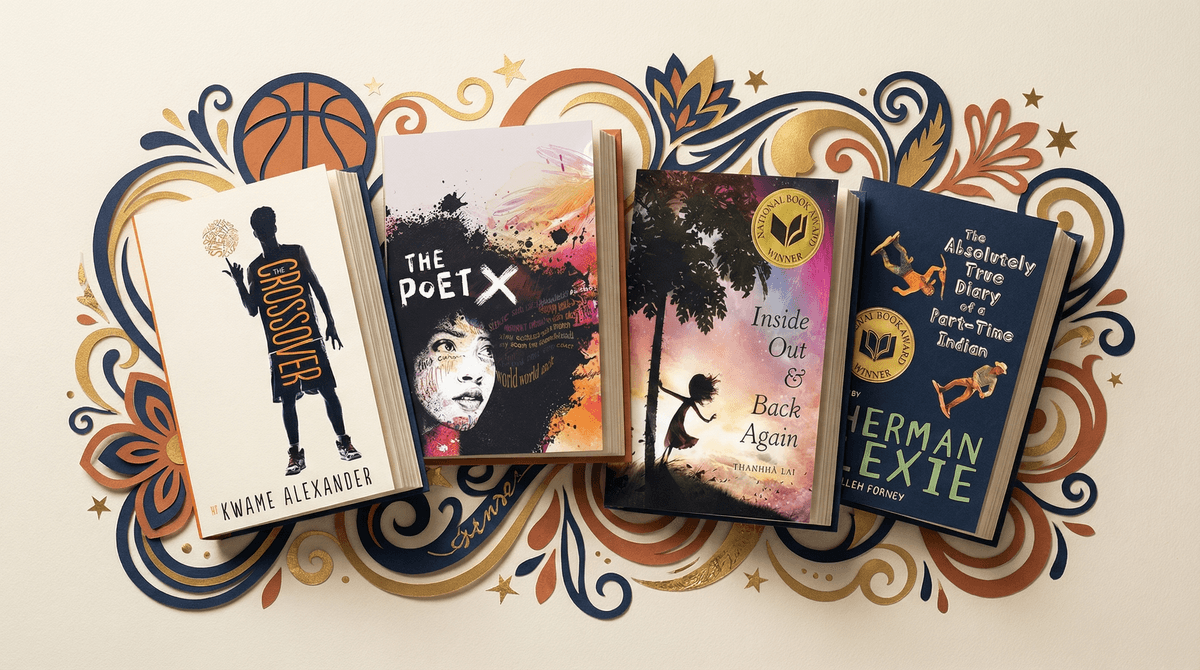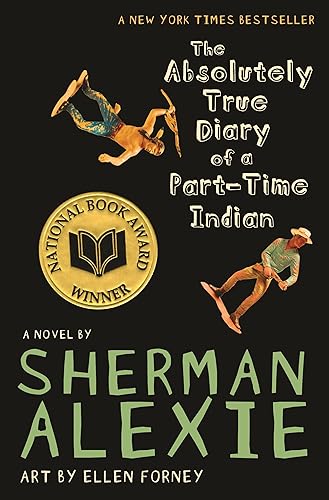
The Absolutely True Diary of a Part-Time Indian

The Absolutely True Diary of a Part-Time Indian

book

2009, Children's Books, Growing Up & Facts of Life

WISE
83%

WISE Score

4.6

Amazon

Award-winning, brutally honest, and funny novel about a Native teen leaving the rez for an all-white school—heavy themes, huge heart.

Amazon4.6
Common Sense Media

Where to Read

Our reviews and ratings are 100% unbiased, but as an Amazon Associate, Screenwise earns an affiliate fee if you buy a book or game by clicking one of our links. We don't get any credit if you just Google it instead :)

Screenwise Verdict

This is one of those books that sticks with you—funny enough to keep you turning pages, honest enough to punch you in the gut, and important enough that it should be required reading.

Sherman Alexie doesn't pull punches. Junior's life on the Spokane reservation is hard: his parents are alcoholics, his best friend is angry and violent, people die, and poverty is crushing. When Junior decides to attend an all-white school 22 miles away, he's called a traitor by his community and faces brutal racism at his new school. It's heavy.

But here's the thing: it's also genuinely funny. Junior's voice is sharp, self-deprecating, and hilarious. The cartoons throughout aren't just decoration—they're how Junior makes sense of his world. This isn't a 'message book' that feels like medicine. It's a real story about a real kid trying to survive and maybe, possibly, thrive.

The mature content is significant—profanity, sexual references, death, alcoholism—but it's not gratuitous. It's life on the rez, told honestly. Parent reviews consistently say the content serves a purpose, giving readers authentic insight into contemporary Native American experiences that are rarely portrayed in literature.

For mature middle schoolers and high schoolers, this is essential. It builds empathy, challenges assumptions about poverty and privilege, and shows what code-switching and straddling two worlds actually feels like. At 4.6 stars on Amazon with over a million copies sold, it's beloved for good reason. Just make sure your kid is ready for the real, unvarnished version of Junior's story.

Age Fit

Best for ages 13-17, though some mature 12-year-olds could handle it. The profanity, sexual references, and heavy themes (death, alcoholism, poverty, racism) make this inappropriate for younger readers, but it's essential reading for teens ready to engage with complex social issues through an authentic, funny, and heartbreaking voice.

WISE Breakdown
Wholesome
72

Emotionally honest and age-appropriate for teens, dealing with poverty, alcoholism, death, and racism with humor and heart. Models resilience, friendship, and the courage to pursue a better life despite harsh circumstances. The tone balances heavy themes with genuine warmth and Junior's self-deprecating humor. Portrays parents as flawed but loving, doing their best in impossible situations. Not sanitized—shows real pain—but ultimately hopeful about human connection and personal agency.

Imaginative
88

Genuinely original voice blending humor and heartbreak through Junior's perspective. The integration of cartoons throughout (by Ellen Forney) adds a creative visual layer that reflects how Junior processes his world. The narrative structure invites readers into a specific cultural experience while making it universally relatable. Alexie's writing style is fresh, funny, and unafraid to break conventions—it doesn't feel like a typical 'issues' book. Based on the author's own experiences, giving it authentic imaginative grounding.

Safe
58

Contains significant mature content that parents should know about: frequent profanity, racial slurs (used contextually), references to alcoholism and poverty, masturbation jokes, some sexual references, violence (bullying, fights), and multiple deaths of family members. According to parent reviews, 'the violence, alcohol use and swearing all serve a purpose' in depicting contemporary Native American reservation life. This isn't gratuitous, but it's heavy and frequent enough that it would be inappropriate for younger readers to encounter unexpectedly. Common Sense Media and parent reviews consistently note this is best for mature middle schoolers and up.

Enriching
94

Exceptional educational and empathetic value. National Book Award winner that provides rare, authentic insight into contemporary Native American life on reservations—poverty, systemic challenges, cultural identity struggles. Tackles code-switching, belonging, grief, racism, and class differences with nuance. Builds empathy for marginalized communities while telling a universal coming-of-age story. The humor makes difficult topics accessible without diminishing their weight. Over one million copies sold, widely taught in schools. Encourages critical thinking about identity, privilege, perseverance, and what it means to pursue your dreams when the odds are stacked against you.

Parent Info

Why It Might Be Great

  • National Book Award winner that's actually readable and funny, not just worthy—Junior's voice is sharp, self-aware, and genuinely hilarious
  • Rare, authentic window into contemporary Native American reservation life, poverty, and systemic challenges that most kids never learn about
  • Tackles identity, code-switching, and belonging with nuance—what it costs to pursue your dreams when your community sees it as betrayal
  • The illustrated diary format with cartoons throughout makes heavy topics more accessible and shows how Junior processes trauma through art
  • Builds real empathy without being preachy—you'll laugh, you'll cry, and you'll think differently about privilege and resilience

What to Watch For

  • Frequent profanity, sexual references (masturbation jokes), and mature themes throughout—not a sanitized 'school book'
  • Multiple deaths of loved ones, alcoholism, poverty, racism, and bullying—emotionally heavy material that serves the story but can be tough
  • Racial slurs appear in context; this is an honest portrayal of reservation life and the racism Junior faces, not gratuitous
  • Best for mature middle schoolers (13+) and up who can handle complex, sometimes dark subject matter with nuance

Conversation Starters

  • "Junior faces racism and feeling like an outsider at his new school. Have you ever felt like you didn't belong somewhere? How did you handle it?"
  • "Junior's best friend Rowdy feels betrayed when Junior leaves the rez. Do you think Junior made the right choice? Can you understand both perspectives?"
  • "The book shows how poverty and lack of opportunity affect the reservation. What systemic issues does Junior face that are beyond individual choices?"
  • "Junior uses humor and cartoons to cope with really hard stuff. How do you process difficult emotions or experiences?"
  • "What does it mean to be caught between two worlds? How does Junior navigate being Native and also wanting opportunities off the rez?"

Deep Dive

The "forbidden fruit" factor

If you see this book on a restricted list at your local library, don't assume it’s there because it’s trashy. It’s usually there because it’s honest. Sherman Alexie writes about the Spokane Indian Reservation without the filters we usually see in YA literature. There is no "noble savage" trope here; instead, there are jokes about masturbation, a lot of swearing, and a crushing, recurring cycle of funerals.

Because it’s so frequently challenged, it has become a sort of rite of passage for teens. If you’re trying to navigate the Freedom to Read with your kid, this is the perfect test case. It isn't trying to be "gritty" for the sake of an edge; it’s gritty because Junior’s reality is. Reading it feels like getting a secret transmission from a world that most suburban kids only see as a footnote in a history textbook.

Why the cartoons matter

The secret weapon of this book isn't the prose—it’s the art by Ellen Forney. Junior is a cartoonist, and his drawings are interspersed throughout the text. They aren't just "illustrations" of the scenes you just read. They are how Junior processes his world.

When words fail him, or when the reality of poverty and racism becomes too heavy to describe, he draws. For a kid who might be a reluctant reader or who feels like standard "literary" books are too stuffy, these drawings provide a visual break that actually deepens the emotional stakes. It’s one of the best examples of National Book Award Winners for Kids where the "prestige" doesn't make the book feel like a chore.

The "if your kid liked X" move

If your kid grew up on Wonder by R.J. Palacio, think of this as the older, more cynical cousin. Both books feature a protagonist with physical differences (Junior was born with "water on the brain" and has seizures) navigating a new, hostile school environment. But where Wonder leans into "choose kind," Part-Time Indian leans into survival.

It also pairs well with graphic novels like American Born Chinese. If your teen is interested in the "code-switching" required to move between a minority culture at home and a dominant white culture at school, this book is the definitive text on how that feels. It’s awkward, it’s painful, and Junior often feels like he’s betraying his own people just by wanting a better education.

Facing the hard stuff

The alcoholism in this book is pervasive. It isn't a "very special episode" plot point; it is the background noise of Junior’s life. People die in this book—frequently—and almost always because of alcohol. If you’re looking for Books About Addiction for Teens, this provides a brutal look at how systemic poverty and substance use are intertwined.

It’s a heavy lift for a 12-year-old, but for a 14-year-old who thinks they’ve seen it all, it’s a reality check. Junior doesn't win by "fixing" the reservation; he wins by getting out, and the book is very clear about the guilt that comes with that success. It’s a complex, messy ending that respects a teenager’s ability to handle the truth.

Ask Anything

Get a personalized guide on any topic